
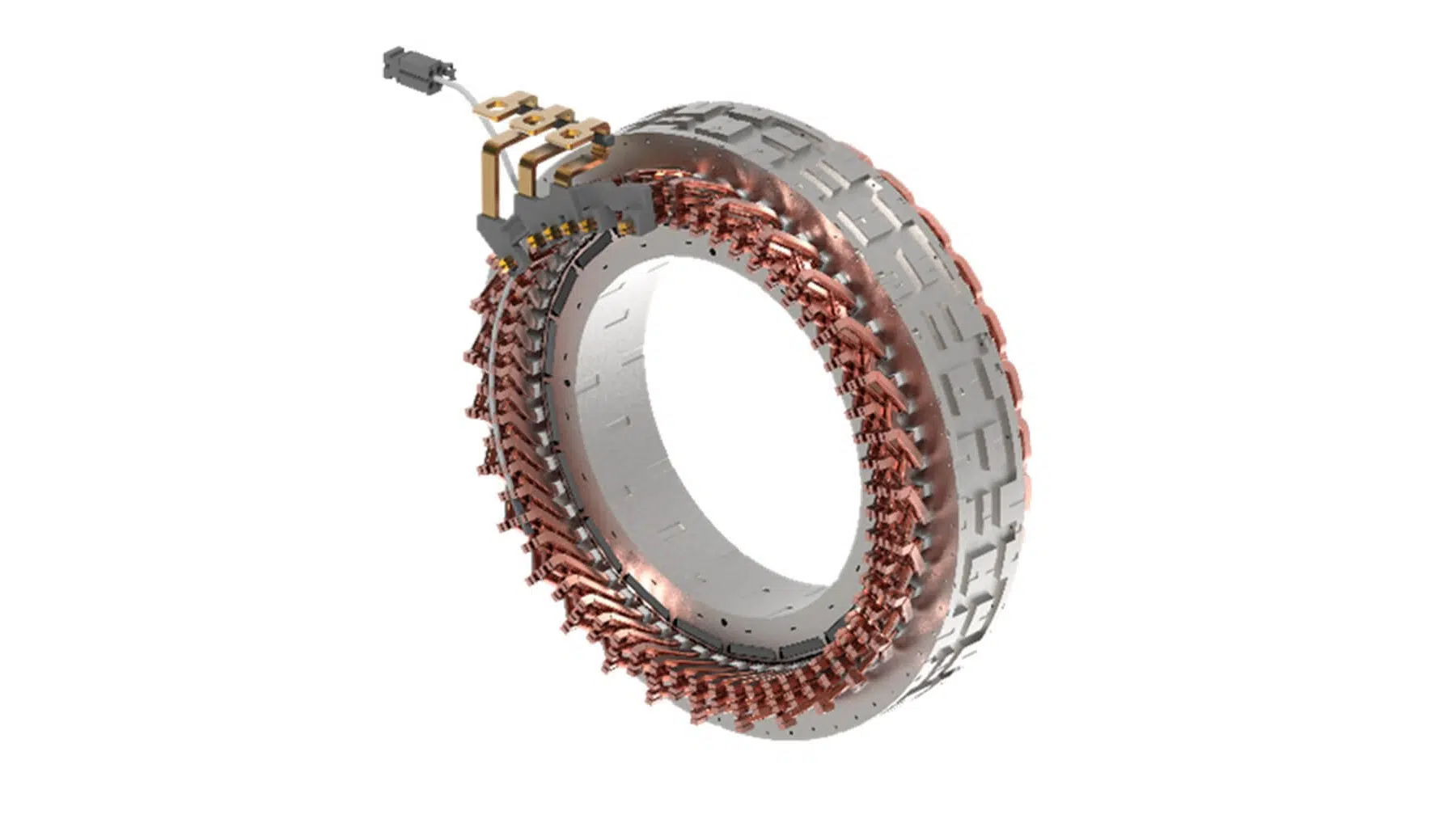
Hydrogen has been applauded and hailed as the future of sustainable fuels. However, China has another plan, perhaps a better one. The Asian country is pressing hard and breaking automotive boundaries with its electric propulsion and its latest collaboration deal with BorgWarner, which was confirmed recently. Three significant Chinese automakers have signed agreements with the international automotive supplier to supply four cutting-edge electric motor projects.
BorgWarner reported that it has recently acquired four new projects with three significant domestic Chinese brands as part of its ongoing expansion of its new energy vehicle motor business. According to the business, one of the projects involves supplying 400V high-voltage hairpin (HVH) motors to a well-known Chinese supplier of new energy vehicles for its 200kW hybrid rear-drive platform. Production is scheduled to start in August 2025.
Four innovative motors that have the potential to revolutionise the market
Chinese automakers will incorporate BorgWarner’s new electric motors into a variety of passenger and commercial vehicles. These motors are predicted to revolutionise the electric vehicle (EV) market by delivering increased power output, increased efficiency, and enhanced durability. The motors are made to satisfy the increasing need for high-torque, longer-lasting electric vehicles.
They have high-performance materials and cutting-edge cooling technologies. In contrast to hydrogen fuel cell technology, which still has issues with infrastructure, cost, and efficiency, these new motors offer a quick and scalable way to produce large quantities. Dr. Stefan Demmerle, president and general manager of BorgWarner PowerDrive Systems said,
“We are pleased to extend our success in China with several new electric motor business wins for a variety of hybrid and electric applications. We are dedicated to continuously innovating our technology and improving our manufacturing processes to deliver high-quality products and services to meet the evolving needs of new energy vehicle customers.”
With the support of BorgWarner, China automakers are not stopping! They are adopting the next generation of electric motors quickly to remain relevant within the industry as well. They are expected to improve overall performance, shorten charging times, and extend vehicle range, making hydrogen-powered alternatives less alluring.
What is special about this collaboration development with BorgWarner?
The Ultra-Short High-Voltage Hairpin (S-HVH) technology from BorgWarner uses streamlined manufacturing techniques to provide extremely short end turn lengths, which shorten the motor’s total length. In addition to lowering axial volume, boosting power density, and using less copper, the S-HVH eMotor technology reduces end size by more than 5mm when compared to typical HVH winding, according to the business.
This results in increased efficiency and cost savings. Easy factory upgrades are made possible by the technology’s compatibility with current production processes. It is compatible with both 400V and 800V platforms and supports a large variety of new energy vehicle models.
The reasons behind China’s retreat and withdrawal from Hydrogen
First of all, there is nothing wrong with hydrogen. It is one of the most sustainable fuel resources automakers can utilise to replace fossil fuels. However, China’s reasons could potentially be associated with the current hydrogen issues that are yet to be solved, such as high production costs, lack of refueling infrastructure, and energy inefficiency (transporting hydrogen results in higher energy losses).
China has made it plain that the future generation of automobiles will be powered by electric motors rather than hydrogen. To keep its automobile industry ahead of the curve, the nation is placing bets on effectiveness, cost, and quick deployment. China’s actions speak louder than words, even though hydrogen was formerly thought to be the most clean energy source for automobiles.
The nation is demonstrating that electric vehicles are the way of the future, with four new electric motor projects already in progress. One thing is becoming clear as the world observes China’s quick developments: the hydrogen age might already be coming to an end. We just need to brace ourselves as we keep tabs on what China has next that could blow our minds again.
Read the whole thing?
Get the week's signal, not the noise
Our sharpest reporting on energy, climate and nature — free, once a week.


