

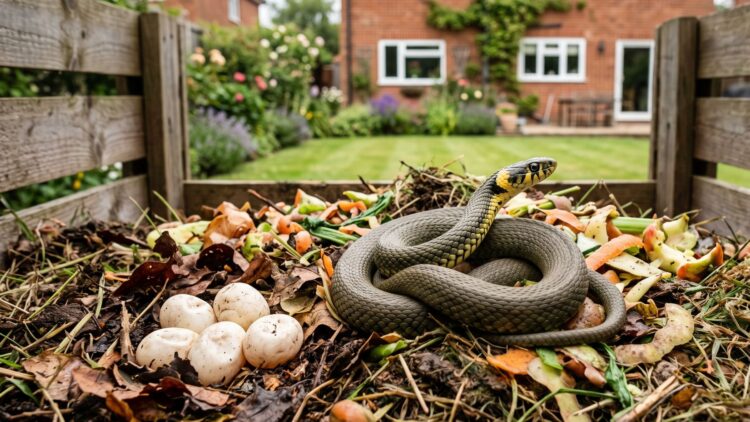
In the far corner of a British garden, a heap of grass clippings and old peelings sits slowly rotting.
Most people would call it garden waste and nothing more.
It looks like the least interesting spot on the whole plot.
The snake it shelters is one most gardeners would be thrilled to meet.
Yet deep inside that warm pile, something alive is waiting to break out of shells.
The heat rising off the rot is doing a job the British summer simply cannot.
And the creature it serves is the longest snake in the country.
The gentle giant of the hedgerow
The grass snake is Britain’s longest snake, and a large female can pass four feet.
Despite the size, it is harmless to people and carries no venom at all.
You can know it by the olive green body and a bright yellow and black collar.
It hunts frogs, toads, and fish, and swims as easily as it slides through grass.
When threatened, it often plays dead or releases a foul smell rather than fight.
In the water it can stay under for many minutes while chasing a meal.
Across England and Wales it turns up in ponds, ditches, and long grass.
Its numbers have slipped in recent decades, so every clutch of eggs matters.
It is also the only snake in Britain that lays eggs instead of giving live birth.
A cold country and an impossible task
Here is the catch that shapes everything about its life.
A snake is cold blooded, so it cannot warm its own eggs the way a bird can.
In hotter countries the ground and sun handle that work by themselves.
Britain sits too far north, and its summers rarely hold enough steady heat.
Cool, damp British soil offers none of the constant warmth the eggs demand.
Warmth is not a comfort for these eggs, it is the difference between life and death.
Bury a clutch in ordinary soil here and it would simply go cold.
For thousands of years the snake solved this with heat it did not make.
It sought out dung piles, rotting reed beds, and heaps of decaying leaves.
Those slowly burning piles gave the eggs the warmth the sky refused to provide.
When the garden replaced the wild
Over the last century many of those wild warm sites vanished from the land.
Wetlands were drained, farms were cleaned up, and old dung heaps disappeared.
As the countryside lost its rotting corners, the snake found a new one.
The ordinary compost heap turned out to be a near perfect replacement.
A compost heap works because rotting matter releases real heat as it breaks down.
Millions of gardens now hold exactly the kind of warm decay the snake needs.
Come June and July, a pregnant female goes looking for that heat.
She reads the temperature with her body and picks the warmest, safest pile.
Warmth, cover, and a low chance of disturbance all meet in that one spot.
A good heap can pull in females from surprising distances away.
What happens deep in the heap
Down in the core of the pile, the numbers get remarkable.
A single female lays 10 to 40 eggs, white and leathery rather than hard shelled.
She buries them where the rot holds a steady warmth in the seventies and eighties.
Several females may even share one heap, layering their clutches in the same warm mass.
The eggs can swell a little as they draw moisture from the damp vegetation.
The decomposing garden waste then does the incubation, week after week.
The heap stays warm even through cool nights, holding the clutch at a safe temperature.
Six to ten weeks later the eggs hatch, and tiny snakes wriggle out into autumn.
An everyday pile of clippings had become a working nursery.
What the British sun could not manage, a heap of kitchen scraps pulled off instead.
How to keep the nursery running
None of this means the snake depends on your compost alone.
It used natural piles long before gardens existed, and still does where they remain.
But with wild sites scarce, a garden heap is now real help.
Conservation groups suggest leaving a rough pile undisturbed through late summer.
If you turn the compost in July or August, check gently for eggs first.
A hidden clutch looks like a cluster of soft white ovals stuck together.
A single undisturbed heap can serve the same snakes for many years running.
Other everyday structures shelter wildlife too, from horned lizards on dry ground to a honey bee colony in a wall.
Leave the heap alone, and Britain’s longest snake may hatch beside your vegetables. That forgotten corner is busier than it looks.