At depths that would crush a submarine, scientists have discovered an impossible sanctuary. Living skyscrapers made of pure glass.
These deep-sea sponges are behaving like living towers of silica, creating shelter for a world of small creatures. A recent Japanese expedition found several unexpected renters living in these odd sponges. Like translucent lobsters and worms that glow.
How can underwater life thrive in such an inhospitable environment under the Pacific?
The crystal abyss: How an impossible deep-sea glass home was discovered
Glass sponges are some of the strangest creatures in the ocean.
They are made from silica, the exact same material used to make glass. These glass sponges can only be found thousands of feet under the ocean surface. The skeletons of the sponges form delicate ‘cage-like’ structures with a hollow chamber inside them.
Scientists have known for a long time that animals live around these sponges.
But inside them? That is certainly not what we were expecting. Japanese researchers found that the sponges were far more than just a host. They were living ‘apartments’ in the sea with a world of life inside them.
How are these creatures able to live inside these glass sponges?
Walls of glass sponge hide a hidden world of life that is thriving
The researchers from Japan focused on studying the world of animals inside these glass sponges.
Biologists have found a world of creatures living at astonishing depths in the ocean. But none of them were living inside a glass ‘apartment’. At these extreme depths, the sponges provide shelter for some creatures.
They can provide long-term security for animals as well as a home in the sea.
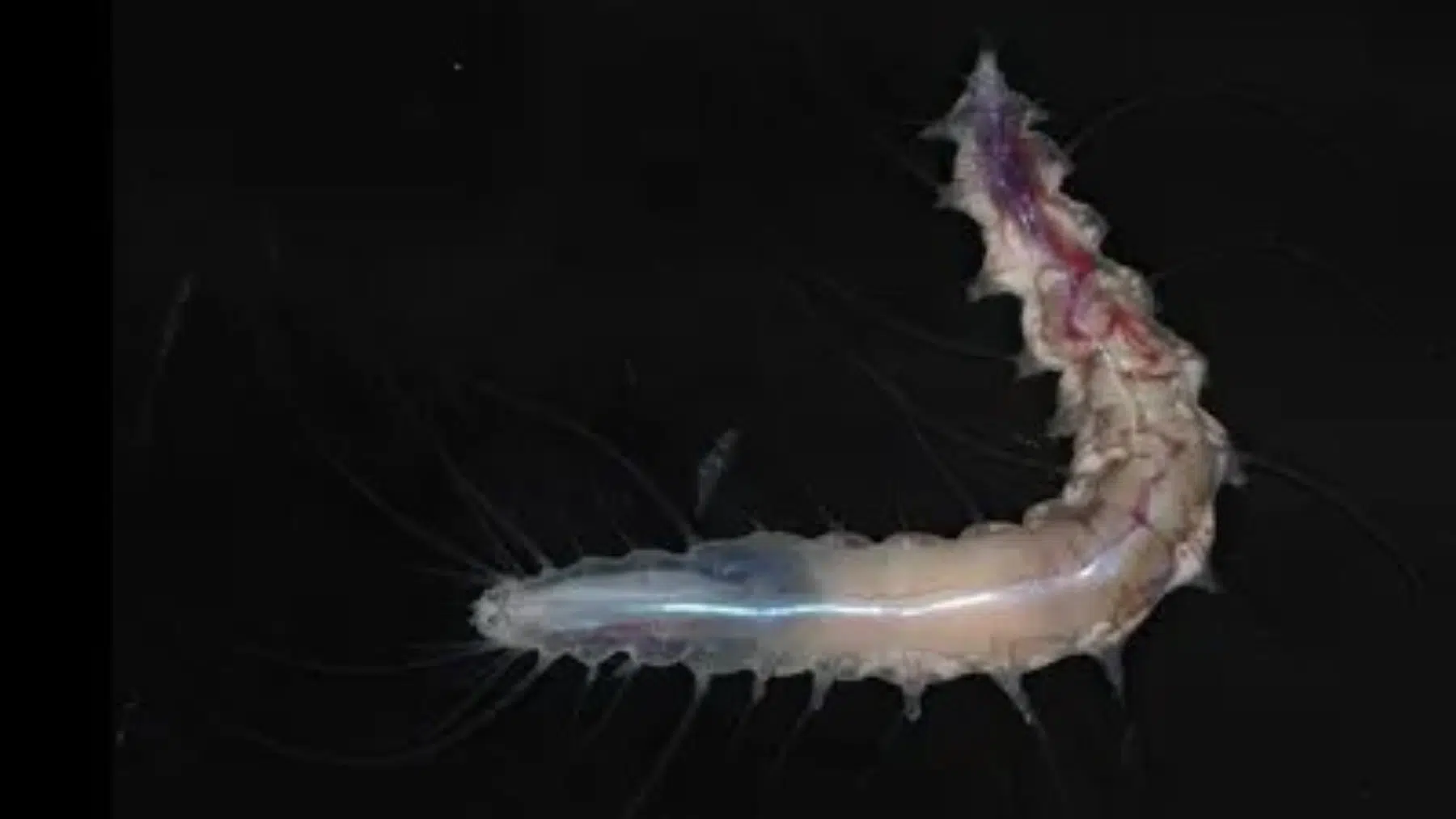
The researchers found crustaceans that looked like translucent lobsters in the sponges. They also found several species of worms that shine a light in the inky darkness of the sea.
Hidden underneath the surface, a world exists that boggles the mind.
From ancient frozen waves of sediment to the more recent glass sponges. The ocean is as mysterious as it is awe-inspiring. The Japanese researchers proved that these animals in the glass sponges were not accidental visitors.

Many of the tiny creatures showed evidence of an adapted life in the sponges.
Why is this new reality so unique? The study, “Single origin and convergent host use of hexactinellid sponge symbiosis in Hesionidae (Annelida: Polychaeta) with descriptions of two new deep-sea species Get access Arrow” published in Zoological Journal of the Linnean Society, has the answers.
An isolated habitat for a hidden world of life under the sea
The glow-in-the-dark animals in the glass sponges pointed to another realization.
These aren’t just sponges; they are the high-rises of the abyss.
Japanese researchers just peeked through the ‘windows’ and found a neon cast of tenants: translucent lobsters and bioluminescent worms.
The reality is that these sponges are functioning like isolated biological ‘islands’ under the ocean. They create safe environments in a very hostile part of the world. The seafloor of the Pacific can be a dark and arid landscape.
In the barren desert of the deep seafloor, food and safety are non-existent.
These sponges act as biological islands—vertical fortresses that offer the only protection and nutrition for miles.
The glass sponges address this by creating vertical living spaces for sea creatures.
The hollow skeletons of the sponges protect the smaller creatures from the dangers of the deep.
Think of how coral reefs do the same in far shallower waters.
But here, the reef is actually inside a glass sponge. The researchers found that some animals eventually “move out”. And only return during specific stages of their evolution. Protecting the ocean now means keeping these glass sponges in mind.
Lose one, and we lose a hidden ecosystem of life under the ocean.
Thankfully, we now have enhanced technology to protect the world. Which will be necessary to keep these underwater glass ecosystems thriving and full of life. What will we find deep under the ocean next?
Read the whole thing?
Get the week's signal, not the noise
Our sharpest reporting on energy, climate and nature — free, once a week.