
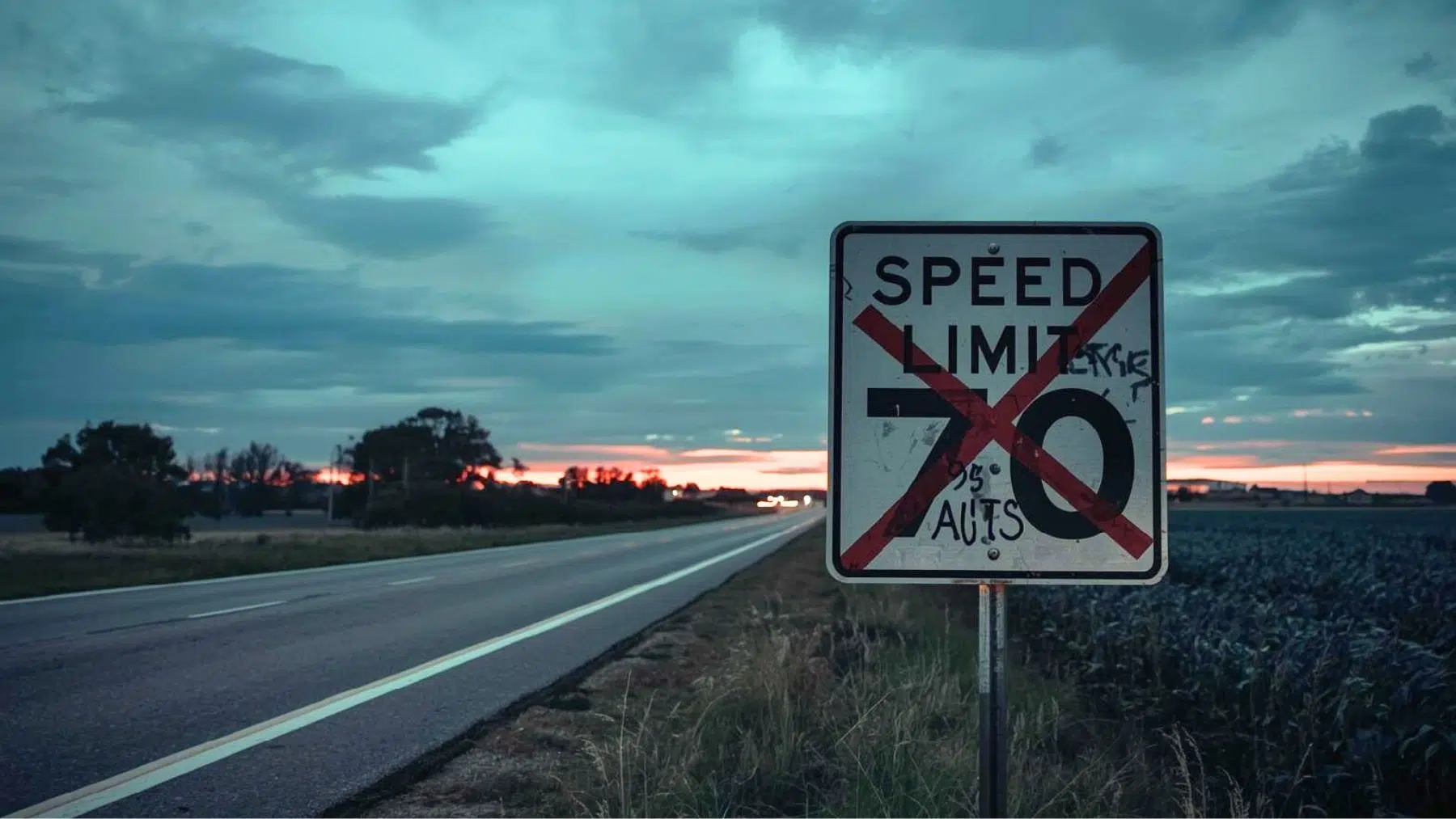
For many drivers, speed limits are meant to slow things down. Driving too fast is dangerous, but driving too slowly can be a hazard on the roads as well. Slower highway limits may cause speed discrepancies, which are a leading cause of accidents. That is why Missouri is pushing to raise speed limits on rural interstates and freeways, aligning with neighboring states and with modern vehicle technology that allows for safer travel at higher speeds.
Why are slower limits actually quite dangerous?
When a speed limit on a large road is a lot slower than the natural flow of traffic, it creates quite an unsafe driving environment. Interstates and freeways are roads that are meant for consistent, higher-speed driving, so when one vehicle is going a lot slower than others in order to stick to the limit, it actually disrupts traffic flow and increases the risk of collision.
The main problem with these scenarios is the speed discrepancy. Large differences can cause confusion on the roads and can result in drivers having to brake suddenly or quickly change lanes to avoid slower vehicles. This discrepancy often results in rear-end collisions, sideswipes, and multi-vehicle crashes.
Another issue is that slower speeds create driver frustration or ‘road rage’ that can lead to risky behaviour, which is another safety concern. In today’s world, we have the technology and road infrastructure to support faster driving, so it is about time that states increased their limits for the safety of their citizens.
What do Missouri officials have to say?
Senator Burger, who pre-filed the bill for the 2026 legislative session, says:
“We’ve basically been at 70 miles per hour since probably the mid-70s, roughly maybe early 80s. And technology has gotten so much more advanced as far as cars and trucks are concerned. I just think it’s time to raise it to 75.”
Today, older limits may not be applicable anymore, as heightened technology allows for much faster but still safe driving. Burger explains further:
“I have adaptive cruise control which slows you down automatically. I have the crash resistance which stops you in an emergency. I have blind spot alert, airbags, seat belts, every safety bell and whistle that you can have. I realize not all the vehicles out there are brand new. I realize there’s a lot of older vehicles at the same time, but every day the old ones are getting replaced with newer ones, and everybody’s upgrading their vehicles all the time across the state. So there’s no reason for our speed limits not to be at 75.”
Missouri Senate Bill 1408 would raise the limit
Currently, Missouri Senate Bill 1408 has not yet enacted, but it would raise the limit on rural interstates and freeways to 75 miles per hour, from the current 70 miles per hour. It has currently been first read by the Senate and has many more steps to go through before reaching enactment. If it did come into effect, it would only be in August this year.
Burger is not completely confident that it will become part of the law and expresses his opinion:
“You know, 2% of the bills I think that were followed last year got to the governor’s desk. So, I say every bill has a slim chance of passing, but I seem to have a very, very large amount of support.”
This raised limit would match those that have been implemented in other states, as officials realise the importance of keeping up with current technology and advancements in cars and road infrastructure. Although the bill has many more approvals to go through, if it is passed and comes into effect in August, drivers in Missouri will rejoice in the more normal speed at which they will be allowed to drive.
Read the whole thing?
Get the week's signal, not the noise
Our sharpest reporting on energy, climate and nature — free, once a week.


