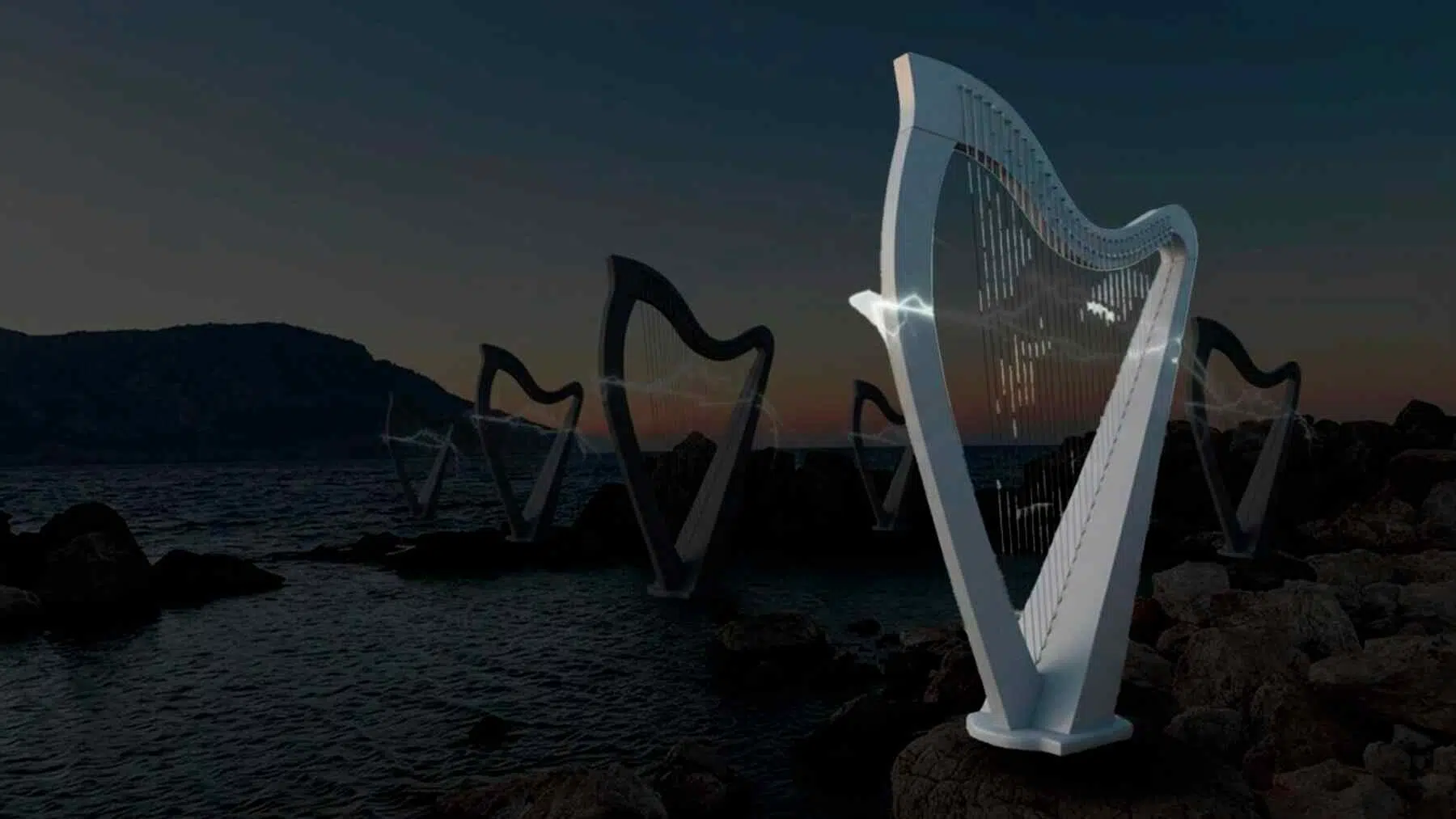
Images of Greece’s coastal “wind harps” spread like wildfire.
They looked elegant, futuristic, and almost too perfect.
These tall structures supposedly sang in the wind while generating clean energy. It was a dream of music, art, and sustainability.
Millions believed the images instantly.
But something didn’t add up.
No official plans existed. No installations were found.
Slowly, an uncomfortable question emerged. Could a viral sensation be nothing more than a digital ghost?
The Greek wind harp illusion: How we wanted to fall for it
The idea felt irresistible from the start.
Wind-powered structures producing energy and music simultaneously. Combining everything that the public has been dreaming of.
Clean energy generation, culture, and innovation. All in one beautiful design.
The images convinced millions.
Social media quickly amplified the story, as it normally happens. Shares transformed into headlines. Headlines into belief.
But there was a gap.
No announcement by a government. No confirmed projects.
Regardless, the idea spread faster than the facts around it.
That’s when questions began to emerge. How can a concept generate so much trust?
Without any evidence, doubts emerged among those who know about the industry.
What exists in reality—and what people misunderstood
There is a real concept behind these images.
But it’s definitely not what the internet claimed.
Wind can create sound through instruments called Aeolian harps. They use strings that vibrate naturally in the wind.
New energy-generating technology is becoming a regular occurrence. But those come with demonstrable evidence.
This system had none of that.
The Aeolian harps produce noise. But they do not generate usable electricity.
Some people have aimed to combine energy generation with art. Is that what the internet went wild for?
A new energy-producing system that makes music?
Wind turbines are the only method we know of to generate energy from wind.
But combining energy with art and music? Is it even possible?
Millions across the internet thought so.
In modern-day society, there is no working technology like this.
No “harps” that turn energy into music. Yet the images made the system feel real.
Perhaps it was an AI-generated image? Those have become popular on the web.
The illusion kept spreading throughout the world. But no evidence emerged of their actual existence.
So what exactly was behind this new viral sensation in Greece?
Dreams dashed by reality, the wind harps were never real
The evidence needed to confirm that these wind harps were real never arrived.
Just images of what could have been.
Or perhaps what we were hoping for.
Renewable energy is growing. But the impact of this transition has been revealed.
But this clean energy dream was just that, a dream.
As no official Greek authority confimed there existence. The viral images were nothing more than fake pictures.
No verified installations of the “wind harps” exist anywhere in the country.
The images most likely were AI-generated ones. They were designed to look futuristic yet believable.
The concept itself mixes reality with fiction. An unholy alliance that is becoming more prevalent.
Why the story spread rapidly on the internet
Wind harps do exist. But they can not generate energy, not on a usable scale at least.
The story spread because it ticked all the right boxes. We need energy.
And most of it still comes from oil.
So an image of a new system that combines the best of humanity was naturally going to spread.
In reality, Greece never installed these wind harps. Never have, never will.
They were nothing more than an AI-generated dream.
And as the AI sector expands, will we see more of these fake images emerging?
The idea raised more confusion than it should have. And proves we are susceptible to fake news.
Even in the energy sector.
Read the whole thing?
Get the week's signal, not the noise
Our sharpest reporting on energy, climate and nature — free, once a week.