
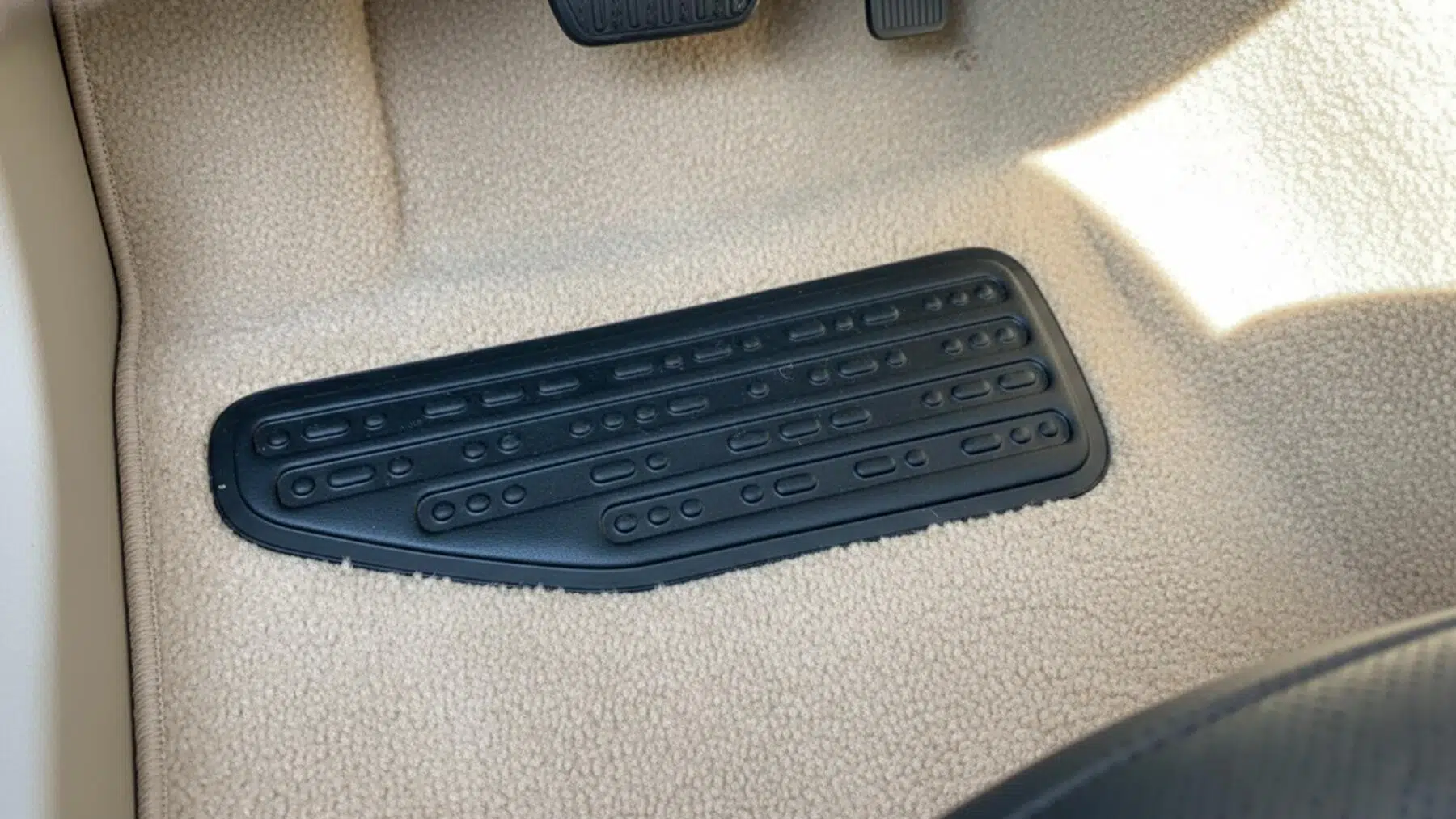
What appears to be nothing more than a brake pedal at first can become an unexpected source of information for Jeep owners. While the brake pedal is a functional part, which is operated many times during its life and is rarely inspected, Jeep designers have seen vehicles as a platform for telling stories. So, they’ve started hiding in plain sight and in the most unlikely of places.
Jeeps are designed to inspire a connection with the vehicle
Design elements are intended to inspire a sense of discovery among owners and to create a sense of connection with the vehicle, as if the vehicle were created by people and not a machine. As modern cars continue to evolve, car manufacturers continue to include intentional design elements that are meant to provide a sense of connection with the owner through discovery, reward the owner’s curiosity, and provide a sense of satisfaction. There are few automobile manufacturers that have incorporated this philosophy as much as Jeep has.
For years, Jeep designers have placed hidden symbols throughout their vehicles. These symbols are found inside headlight assemblies, along windshield edges, under floor mat assemblies, and even deep within interior trim assemblies. And because these elements are not included in owner manuals and are not advertised as such, ownership of a Jeep becomes a continuous treasure hunt.
Discovering the most interesting messages at your feet
It isn’t until after a driver has purchased a new Jeep and begins to inspect every aspect of the vehicle that they will discover that some of the most interesting messages are often located at their feet.
When looking at specific Jeep brake pedals and surrounding foot well areas, a driver may notice very fine dots, dashes, or other designs on the brake pedal or around it. Most people would assume that these are minor errors in manufacturing. But according to Jeep design history, designers have deliberately used these marks to send messages to the owners of the vehicle who are paying close enough attention.
These hidden coding elements, which are a combination of Morse Code-inspired patterns, represent a larger design philosophy than just creating fun symbols. When Stellantis announced the global marketing campaign “Call of Adventure” in 2022, they confirmed that Jeep had re-imagined its iconic seven-slot grille as a means of Morse Code. The dots and lines of the grille were designed to replicate Morse Code, and could be decoded to reveal words and messages, but only to those who choose to do so.
The philosophy behind this design language extends into the interior of Jeep vehicles
Designers have intentionally placed coded patterns and symbolic references in unusual locations, such as pedal assemblies, as a nod to the idea of exploration, discovery, and Jeep’s military heritage. Some examples of the use of these markings include referencing internal design codes or spelling out messages related to adventure and freedom, and in doing so, remaining consistent with Jeep’s image, but do so without stating it explicitly.
Why would a manufacturer want to hide messages where almost no one looks?
Because Jeep believes that the best relationship that an owner will develop with a vehicle is based on discovery, rather than explanation. Stellantis stated that the goal of using this type of design element is to allow Jeep to communicate directly to those who consider themselves explorers – individuals who take pleasure in discovering connections between things on their own.
The next time you get into your Jeep and are about to depress the brake pedal, take a moment to pay attention to details in the cab before you do. These are usually overlooked beneath your feet and may be trying to tell you something that has been there all the time, waiting for you to notice.
Read the whole thing?
Get the week's signal, not the noise
Our sharpest reporting on energy, climate and nature — free, once a week.


