Some evidence of life from outside our planet is hard to ignore, and after the Asteroid Terrestrial-impact Last Alert System (ATLAS) detected an interstellar object that is making its way through our solar system, theories of alien technology are starting to gain traction. Aliens have been a part of the imagination of scientists and sci-fi lovers for centuries now. From the construction of the pyramids to UFO reports, everyone knows a case in which aliens have been seen – or at least they thought so.
Life outside the Earth hasn’t been proved yet
The search for life outside the Earth has led scientists to study more in the cosmos than the oceans. NASA has been actively searching for any sign of organic life forms in other planets inside and outside our solar system, with Mars being the easier place to find other life forms – but until now they have not been successful.
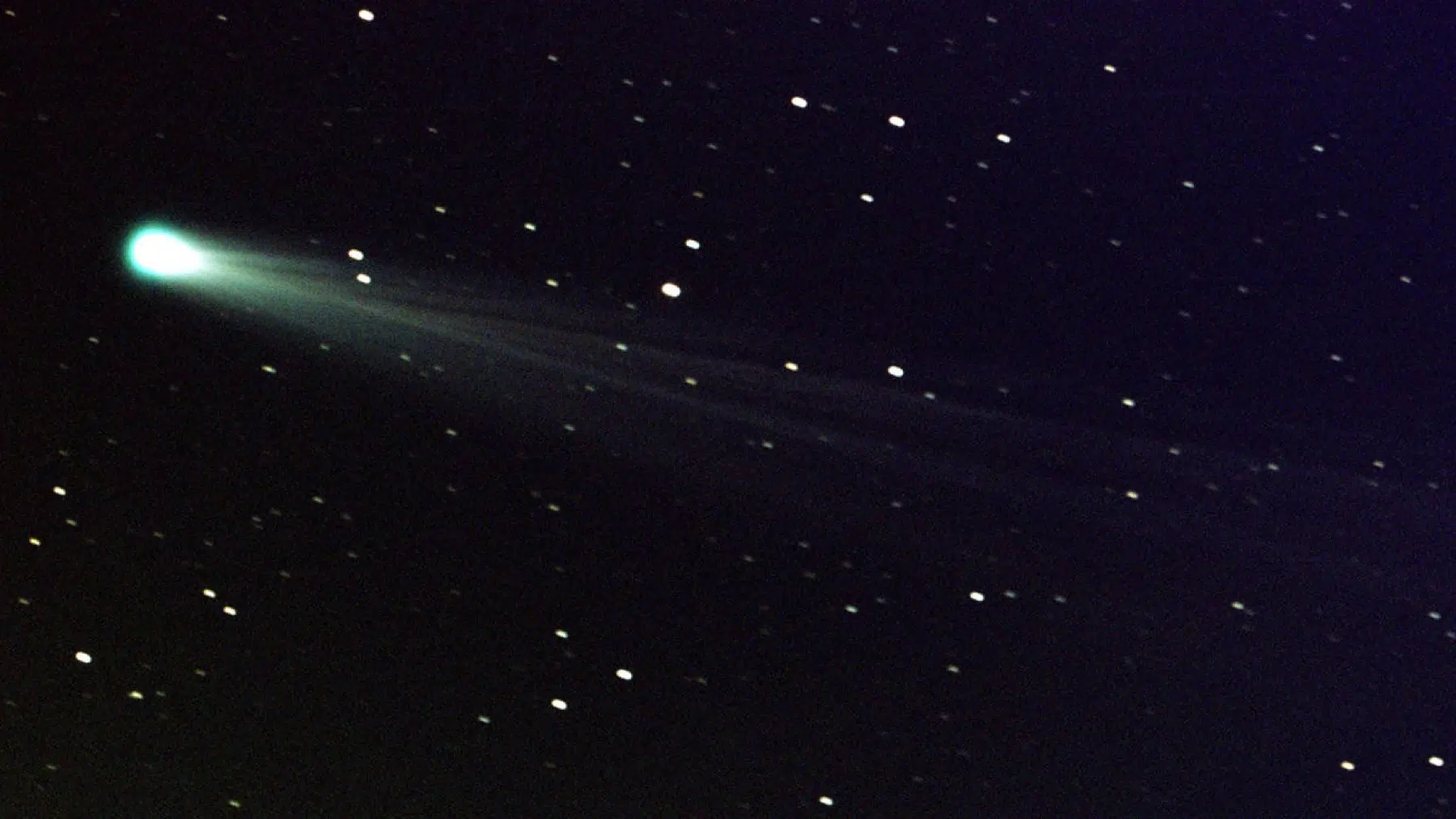
Now, as a cosmic object is making its way to the Earth, theories about what it could actually be – beyond a comet or an asteroid – are starting to gain momentum. On July 1st, the Asteroid Terrestrial-impact Last Alert System (ATLAS) detected a big rock coming to Earth, but it will pass thousands of kilometers away from our planet. This had an astronomer from Harvard creating a new theory: extraterrestrial technology is approaching the planet.
A new theory suggests the asteroid is alien technology
3I/ATLAS was spotted on July 1, racing toward the sun at over 130,000 mph (210,000 km/h). Less than a day later, astronomers confirmed it was not from our solar system. At first glance, it looks like a typical comet, with a hazy cloud of ice, gas, and dust stretching nearly 24 kilometers across. Early models suggest it may be older than our entire solar system, which would make it the oldest comet we have ever seen.
Still, not everyone is convinced it’s just a comet. A new paper posted on July 16 by three researchers raised a different idea: what if this isn’t just a rock — but a piece of alien technology. They do not claim to have proof, and they describe the paper more like a thought experiment. But they do highlight a few strange features that could point to something more.
Harvard researcher justified the theory
One of the researchers behind the study is Harvard’s Avi Loeb — a name that has become almost synonymous with extraterrestrial technology theories. He leads the Galileo Project, which is focused on spotting signs of non-human technology, whether in the form of UFOs or deep space objects. Last year, he led a mission to recover debris from the Pacific Ocean that he believes could be fragments of alien technology from a meteor that slammed into Earth.
In a blog post explaining their theory, Loeb brought up the “dark forest hypothesis” — the idea that alien civilizations might be purposely hiding to avoid being attacked. If 3I/ATLAS turns out to be a form of alien technology, he warns, it could suggest that something doesn’t want to be found. When 3I/ATLAS gets closest to the sun in late October, it’ll be on the opposite side of the sun from Earth. Loeb thinks that might not be a coincidence.
Scientists cannot study the object
because it’s moving so fast, scientists say it would be nearly impossible to launch a spacecraft to catch up with it in time. That, according to Loeb and his team, could be another subtle clue that this isn’t just a regular comet, but something built — not formed. Whether it’s natural or something else entirely, 3I/ATLAS has sparked a fresh wave of curiosity around extraterrestrial technology.
Read the whole thing?
Get the week's signal, not the noise
Our sharpest reporting on energy, climate and nature — free, once a week.