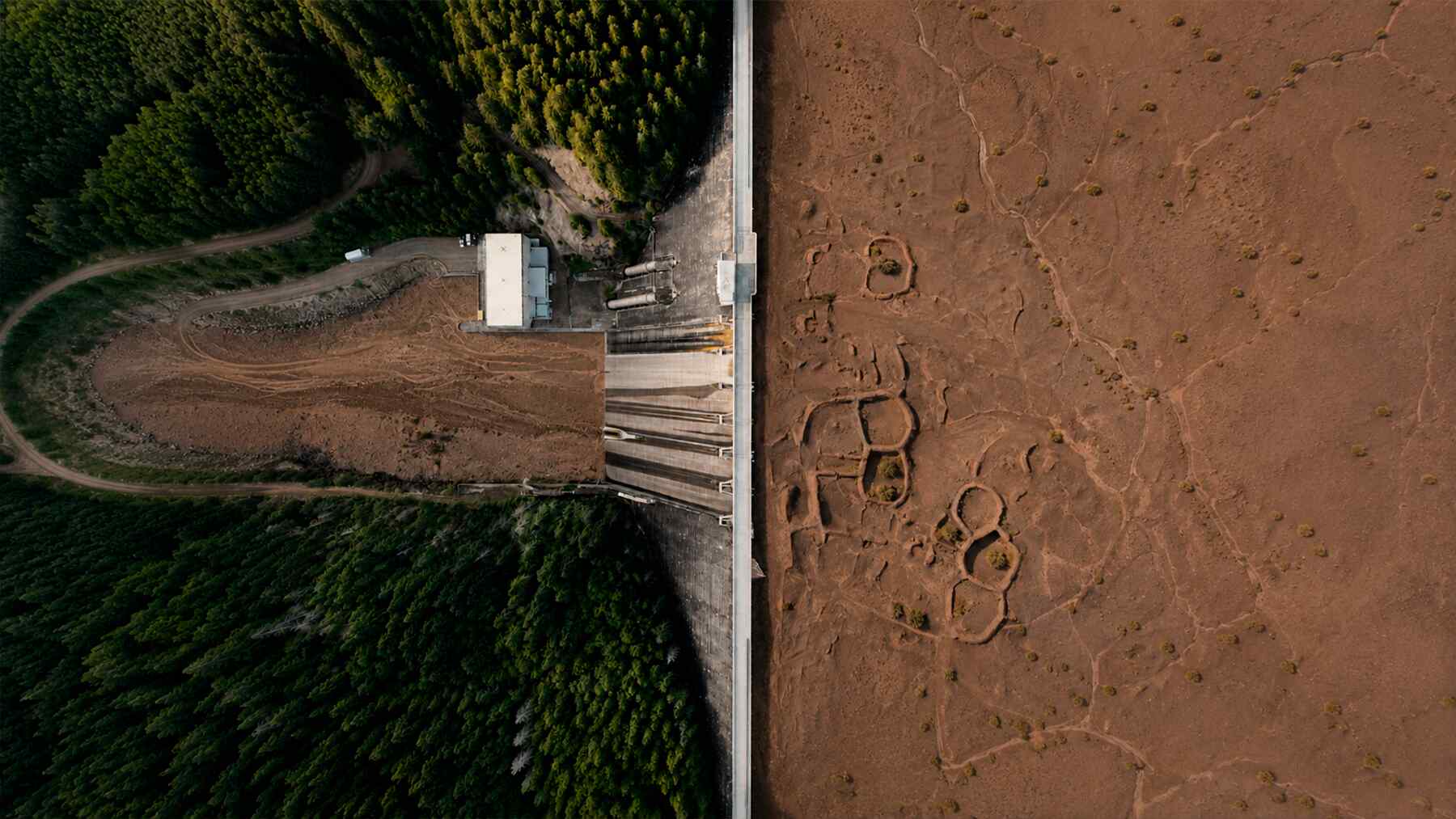
A hydroelectric dam in eastern Türkiye started offering up its ghosts.
The process was a lazy one as the water dropped gradually. But then the scale started becoming clear.
Workers first noticed isolated roofs and walls, believing them to be relatively recent ruins of little interest.
Details started catching archaeologists’ attention. Such as how structures so old could remain so “untouched.”
What has this disappearing water just exposed to the world?
How a shrinking reservoir exposed a secret world
Seasonal drought and falling reservoir levels exposed areas not seen by humans since before record.
Even experienced researchers failed to equate this site to anything they had seen before.
As the stone structures started becoming visible, it became possible to identify specific types.
Archaeologists had to work against time to map the ruins. Water conditions could change at the drop of a thunderstorm.
Researchers counted dozens of remarkably intact buildings spread across the ancient waterbed.
History shows that the location sits along important trade and migration routes that crossed eastern Anatolia in its time.
What was discovered beneath younger buildings hinted that the area may have developed through multiple civilizations.
And this likely took place over thousands of years. This is far older than archaeologists originally expected.
What can the site teach us about the civilization of the time?
Signs of life in the depths: A microcosm of civilization preserved
Emerging from the mud were homes alongside old religious buildings and stone burial sites.
Every aspect of life taken care of in the ancient ways.
Some still featured standing interior walls. Others preserved doorways and staircases leading into partially collapsed rooms.
Religious structures were also uncovered from under the mud.
Several mosques survived well enough for archaeologists to study architectural details normally destroyed over time. Nearby tombs revealed older occupation layers beneath more recent buildings.
Researchers believe parts of the settlement existed long before Ottoman rule reached the area.
Some foundations may predate Roman control entirely.
The changing reservoir conditions created a narrow window for investigation.
That urgency pushed archaeologists to document as much of the site as possible before the landscape changed.
What they ended up finding has been detailed by Turkish Archaeological News.
Water as an agent of preservation rather than destruction
It’s not just the appearance of a city frozen underwater that had researchers galvanized.
Archaeologists documented at least 78 visible structures, including roads—enough to generate numerous avenues of study.
Some likely belonged to relatively recent centuries before the dam flooded the valley decades ago.
Beneath those layers, researchers identified much older remains hidden underneath later construction.
The settlement was not tied to one historical period alone.
Researchers believe earlier civilizations occupied the valley long before later Islamic architecture appeared there.
The tombs and burial sites may help archaeologists date different occupation phases more precisely through future analysis.
There may be even more layers below. But the window for scrutiny is not permanently open.
What part did the water play?
Submerged environments can shield ruins from erosion, farming, and modern construction damage.
Once exposed again, however, those same remains are at risk from sunlight, wind, and temperature shifts. That is why researchers had to hop to it when the reservoir receded.
Hydroelectric dams across Türkiye have revealed similar discoveries before.
In recent decades, falling water levels exposed Roman roads, ancient mosaics, and entire medieval settlements.
Still, archaeologists say discoveries are still once-in-a-lifetime opportunities.
For now, the settlement sits partially uncovered along the reservoir edge, caught between two worlds. One belonged to the modern dam above it.
The other disappeared beneath the water long before the reservoir even existed.
For a moment, the modern world and the ancient past met on a dry lakebed.
History doesn’t always stay buried—sometimes, it just waits for the water to clear.
Read the whole thing?
Get the week's signal, not the noise
Our sharpest reporting on energy, climate and nature — free, once a week.