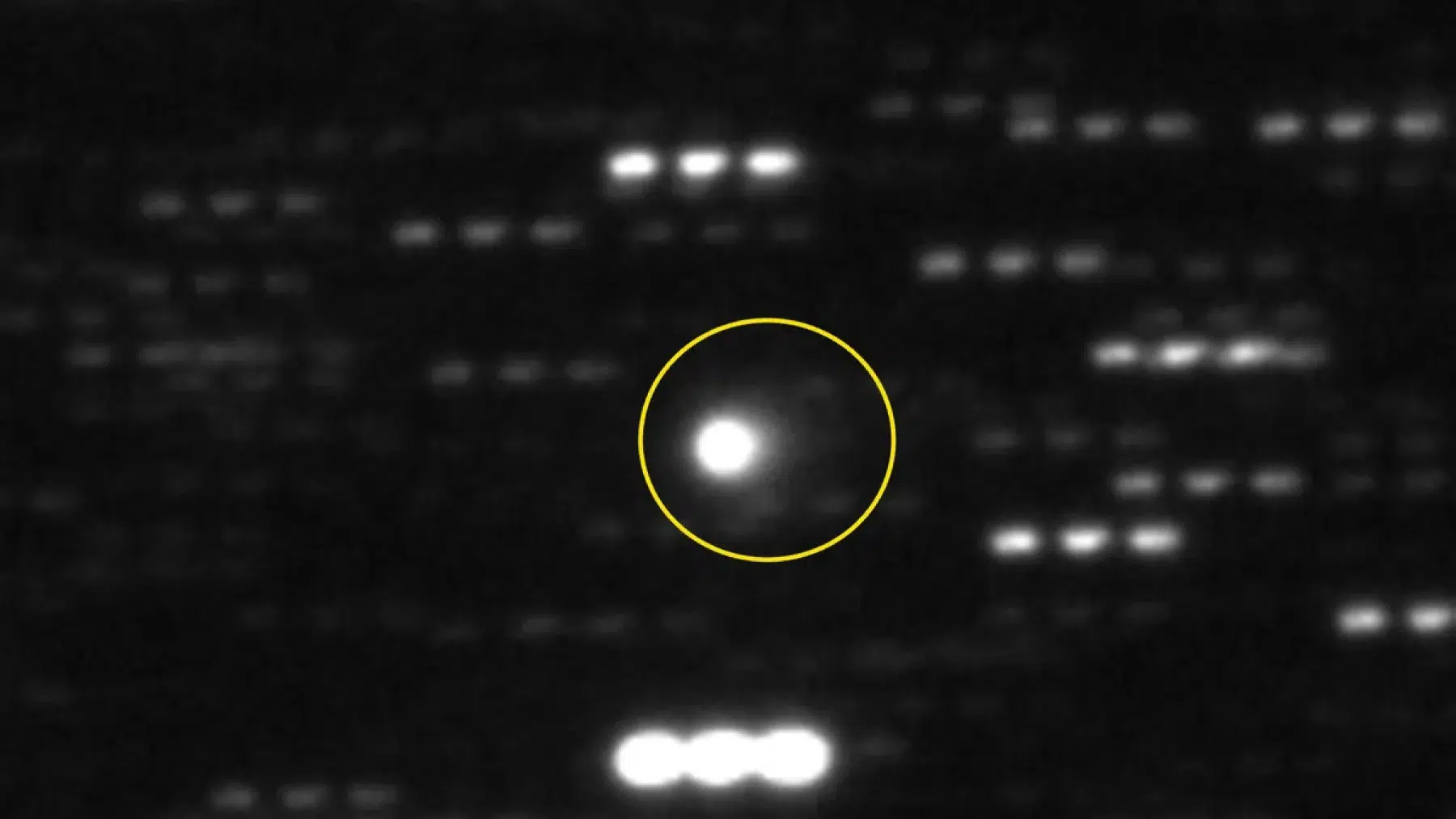
NASA has spotted something coming to our solar system using the planetary defensive system, Atlas. Our solar system came into existence around 4.5 billion years ago, yet human beings have only existed for a few thousand years. As Carl Sagan once explained, if we compressed the entire history of the universe into a single year, both Earth and humanity would have appeared on December 31st. While many star systems exist throughout the Milky Way, the one we call home is currently the only known to support life.
Planet formation occurred differently than you think
Earth stands out among the planets in our system for having ideal conditions to support life — and the presence of liquid water is a major factor in that. Without the early delivery of water via comets in the first few billion years, life as we know it likely wouldn’t have developed. There’s a chance that water was also brought to planets like Mars, but NASA is still working to detect any clear signs of it there.
The formation of most planets occurred around the same period, shaped by the solar nebula. The gas giants — Jupiter, Saturn, and Neptune — had strong gravitational pulls that allowed them to gather much of the surrounding matter, steadily increasing in size. NASA revealed some comets collided with planets under formation. Now, this could happen again.
NASA has found out that a comet is heading towards Earth.
On July 1st, a telescope from the NASA’s ATLAS survey program, based in Rio Hurtado, Chile, picked up something unusual heading toward our solar system. It turned out to be a comet — and not just any comet. This one came from beyond our cosmic neighborhood. Now officially called 3I/ATLAS, it entered from the direction of the constellation Sagittarius and is currently cruising at a distance of about 323 million miles from us.
Since the initial report, scientists have gone back and found earlier images of the object from June 14, thanks to other ATLAS telescopes and the Zwicky Transient Facility in California. More telescopes have joined in since, all tracking its journey. NASA says there’s no risk of it hitting Earth. Around Oct. 29, it’ll make its closest approach to the Sun, at around 130 million miles out, just inside Mars’ orbit.
Study while it’s visible
As it moves along, astronomers across the globe are racing to learn more about its size and what it’s made of. It should stay visible through September with ground-based telescopes. According to NASA, after that, the Sun will block our view for a while — but by December, we should catch another glimpse as it swings out the other side.
What confirms that 3I/ATLAS came from beyond our solar system is the way it moves. Its path isn’t a regular loop around the Sun — not even close. This thing is flying in on a one-way ticket. Its orbit is hyperbolic, which means it’s not held by the Sun’s gravity like most of the stuff we track out there.
Where is the comet now?
Its orbital eccentricity is 6.2 — and anything over 1 is already enough to say it’s from outside our solar system. The first known interstellar visitor, ‘Oumuamua, had an eccentricity of about 1.2. The second, 2I/Borisov, clocked in at 3.6. But 3I/ATLAS? It passed both.
Right now, 3I/ATLAS is cruising inside Jupiter’s orbit — about 323 million miles (520 million km) from Earth and 420 million miles from the Sun. It’ll get closest to Mars first, swinging within 18 million miles (30 million km) on Oct. 2. Then it hits its closest point to the Sun — called perihelion — on Oct. 29, at around 130 million miles (210 million km) out.
Read the whole thing?
Get the week's signal, not the noise
Our sharpest reporting on energy, climate and nature — free, once a week.