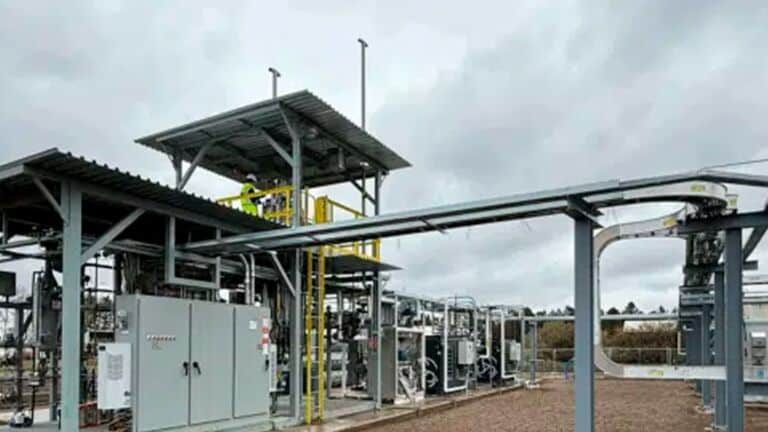
The intention of developing renewable energy solutions is to eliminate the burning of fossil fuels like oil and gas for fuel. An ambitious, multi-faceted generation project off the coast of Maine is expected to contribute to the fight against climate change by supporting a microgrid on the island of Eastport. The undertaking involves a fascinating combination of tidal and solar power that could end up being a model for similar projects in the U.S. and beyond.
The U.S.’s easternmost city is desperate for a reliable power supply
Eastport is the easternmost city in the United States, known for being home to one of the deepest and once one of the busiest import ports in the country. The electrical transmission line that serves the island is 40 miles long, and electricity has to travel up the coast of Maine, through and around rocky outcroppings, and finally over a long causeway to reach its destination.
There are around 1,300 residents in Eastport who rely on this single power supply to service the remote community, whose location comes with a harsh climate featuring strong winds and heavy rains. The storms that slam the region of the Atlantic Ocean, such as the back-to-back winter coastal systems in January 2025, often result in a loss of power on the island when the connection to the mainland supply is affected.
Eastport’s backup system went down and never came up again
Eastport used to have a functioning backup generator that would kick in when wild weather resulted in a power loss, but it broke down in 2018 and was never repaired or replaced. This means that residents either have to outlay money on generators of their own or simply resign themselves to sitting in the dark for hours until the electricity supply is restored.
Jeanne Peacock, an Eastport city councilor and founding member of the city’s energy committee, summed up the situation:
“We’re Yankees. We’re used to it. We got candles and lanterns stashed away, and we usually get a bucket of water when it looks like the power is going to go out. But it would be nice for everybody else if that didn’t happen.”
Other exciting moves are being made in the solar energy world, such as a Stanford University innovation that the research team believes will enable panels to function at night.
Eastport is ripe for a renewable energy facelift
Eastport residents and economic stakeholders are desperate to see the city freed from the impacts of power outages, which range from the usual inconveniences like interruptions in household activities to more severe repercussions like the shutting down of heating systems in winter.
This situation sees the community at the forefront of the State of Maine’s transition to clean energy and it’s serving as a leader in the successful implementation of independent energy solutions. A new plan to integrate tidal power with solar electricity generation into a microgrid for the community of Eastport has locals feeling hopeful about eliminating outages.
What’s the next step in setting up Eastport’s solar-and-tidal-powered microgrid?
Eastport’s community got together to develop a solar and tidal system with enough capacity to support a microgrid and the installation is getting off the ground. Nick Battista, the chief policy officer at the Island Institute, a Maine-based nonprofit that’s working to ensure the implementation of the project, highlighted the superiority of the energy integration plan:
“This very small city on the very eastern edge of the United States is developing what would be a world-class energy facility.”
The strategy involves generating power on the island that will be fed into a battery array, which would then feed the microgrid. The microgrid will remain connected to the standard power grid and operate normally in periods of sufficient supply. In the event of an interruption, the microgrid will operate separately from the main grid and supply power for up to four hours. This will allow residents to turn on their lights, run their refrigerators and freezers, and heat their homes.
How will the integrated power system work?
The plan involves a solar array with a 1 MW capacity that will join an existing solar installation of 1.8 MW. However, solar power is not enough, considering that it’s not reliable 24 hours a day, or even every day.
That’s where the tidal supplement comes in. A 1 MW to 2 MW tidal power generator will be submerged that features long circular blades that turn with the ocean movements.
The Eastport community is hopeful that these concentrated efforts will deliver proof of concept for tidal power options, especially in out-of-the-way places like Eastport.
Japan is also doing great things in terms of solar innovations, but on a much larger scale and in a different direction. The country has unveiled what’s being described as the world’s first solar super-panel and the technology is expected to see systems delivering the equivalent power of 20 nuclear reactors.
Read the whole thing?
Get the week's signal, not the noise
Our sharpest reporting on energy, climate and nature — free, once a week.