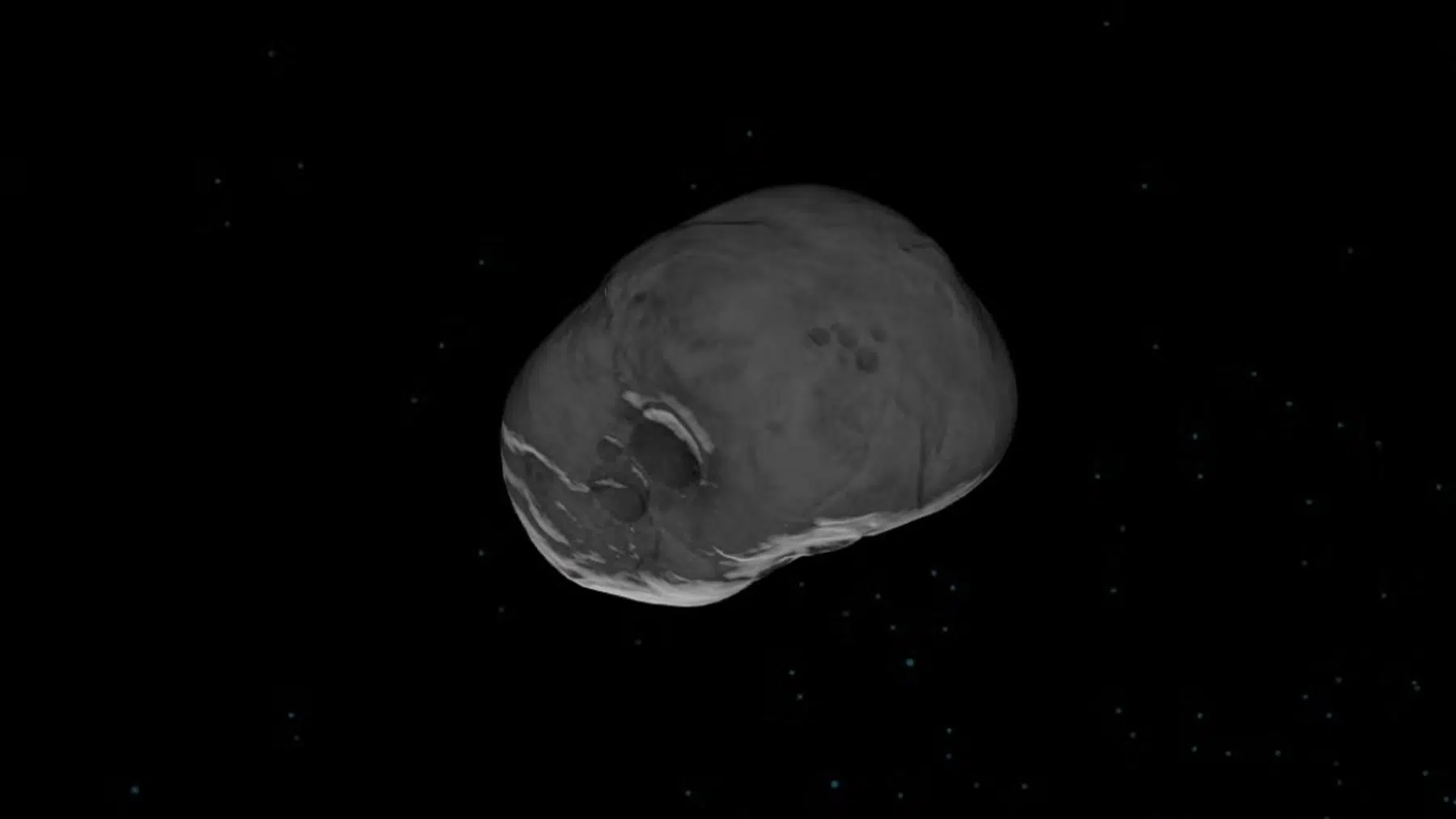
NASA has once again intrigued science enthusiasts and skywatchers by discovering and spotting an asteroid that is said to be getting closer to Earth. It has also drawn attention because of its size. NASA’s James Webb Space Telescope made this discovery. Known as 2024 YR4, scientists claim it is the size of a building. Experts have expressed that there is more to this discovery besides it posing a threat to the Earth or placing humanity in danger. Additionally, NASA has utilised technology to get accurate information about this asteroid, helping humanity comprehend and monitor any dangerous things from the solar system.
How technology identified the giant asteroid: What the naked eye could not see
The James Webb Space Telescope (JWST) was invented to detect the earliest galaxies since it was launched in 2021. However, as the years went by, it has proved to be more useful than just detecting galaxies, but in this case, asteroids too, including 2024 YR4. The asteroid is not only big but also reflective, according to scientists and that is why it is a fascination. JWST finding such asteroids in space is revolutionising space explorations.
NASA’s 2024 YR4 poses no threat to Earth
In the science community, there has always been the narrative that asteroids are dangerous and could harm the Earth and humanity. Some science blogs and researchers claim that the earth will come to an end due to a giant asteroid destroying it. However, according to a research report by the Webb Space Telescope, as the JWST turned into a watchful eye, the 2024 YR4 poses no significant threat to Earth.
Initially, when it was discovered, experts reported that this asteroid was a potential threat to Earth and could impact Earth in 2032, but by the end of February, NASA announced the risk had been significantly lowered to near-zero. Although it is categorised as a “near-Earth object” (NEO), scientists have given us assurance that it will not harm the Earth anytime soon. It is just closer to our planet because of its orbit, although it is millions of kilometres away.
NASA will still continue observing space using the James Webb Space Telescope
Webb Space Telescope claims that while scientists and researchers are confident that the 2024 YR4 asteroid is not harmful, keeping tabs and observations is still essential to try to identify other asteroids that could be a threat to Earth, and by using the correct telescopes, it gives us an understanding of where we stand as a universe. Furthermore, scientists can set planetary defensive systems if they can identify anything unsafe.
NASA used both the NIRCam (Near-Infrared Camera) and MIRI (Mid-Infrared Instrument), and this is why
According to NASA, it is quite difficult to measure the accurate diameters of asteroids based on the sunlight reflected from their surfaces, and usually, that is how the majority of telescopes detect asteroids. Scientists discovered that it is possible to measure the heat given off by asteroids using MIRI; this way, they can directly determine its size. The NIRCam data covers the reflected light, and using it alongside the MIRI data gives not only the size but also a measure of how reflective the asteroid’s surface is. That is how they saw it as a building-sized asteroid.
The story of asteroid 2024 YR4 is scientific, not horrifying
Information provided by NASA and scientists reflects asteroid 2024 YR4 as a mere discovery and not something horrifying. It indicates how far the science community has come in identifying some of the hidden objects in the universe and space. Human resourcefulness and creativity are seen in the use of a telescope that can provide information or data based on what has been discovered millions of kilometres away. NASA’s planetary defence program and the global community of astronomers, orbit calculators, and impact physicists, among other scientists, are studying 2024 YR4 and other near-Earth asteroids.
Read the whole thing?
Get the week's signal, not the noise
Our sharpest reporting on energy, climate and nature — free, once a week.