Billions of invisible particles are passing through your body right now — and you don’t feel a thing. Some of them have been traveling for more than 10 billion years, carrying the energy of stars that exploded long before Earth existed.
These are neutrinos, the “ghost particles” of astrophysics. Almost all of them pass through everything in their path without leaving a trace. But deep inside a mountain in Japan, an upgraded detector may finally be sensitive enough to catch them — possibly as soon as this year.
99% invisible: the hidden energy of dying stars
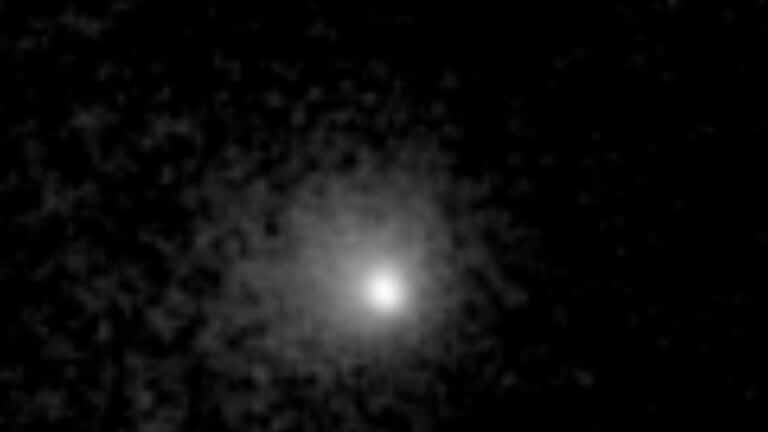
When Tycho Brahe spotted a blazing new light in the sky in 1572, he was witnessing one of the rarest and most violent events in the cosmos — a massive star tearing itself apart. It was bright enough to see with the naked eye for two years. Yet for all its spectacle, that visible light represented only a fraction of the true energy released. Roughly 99% of a supernova’s energy escapes not as photons, but as neutrinos.
Only about 1% of stars are massive enough — around eight or more times the mass of our Sun — to end their lives in a supernova. When they do, the scale is hard to overstate. The neutrino burst from a single explosion carries more energy than the Sun will radiate across its entire 10-billion-year lifetime.
Neutrinos carry no electric charge and interact almost not at all with ordinary matter. Planets, stars, entire galaxies — none of it slows them down. Billions pass through your body every second without leaving any trace, which is precisely what makes them so difficult, and so scientifically valuable, to study.
Super-Kamiokande’s upgrade and the hunt for the diffuse supernova neutrino background
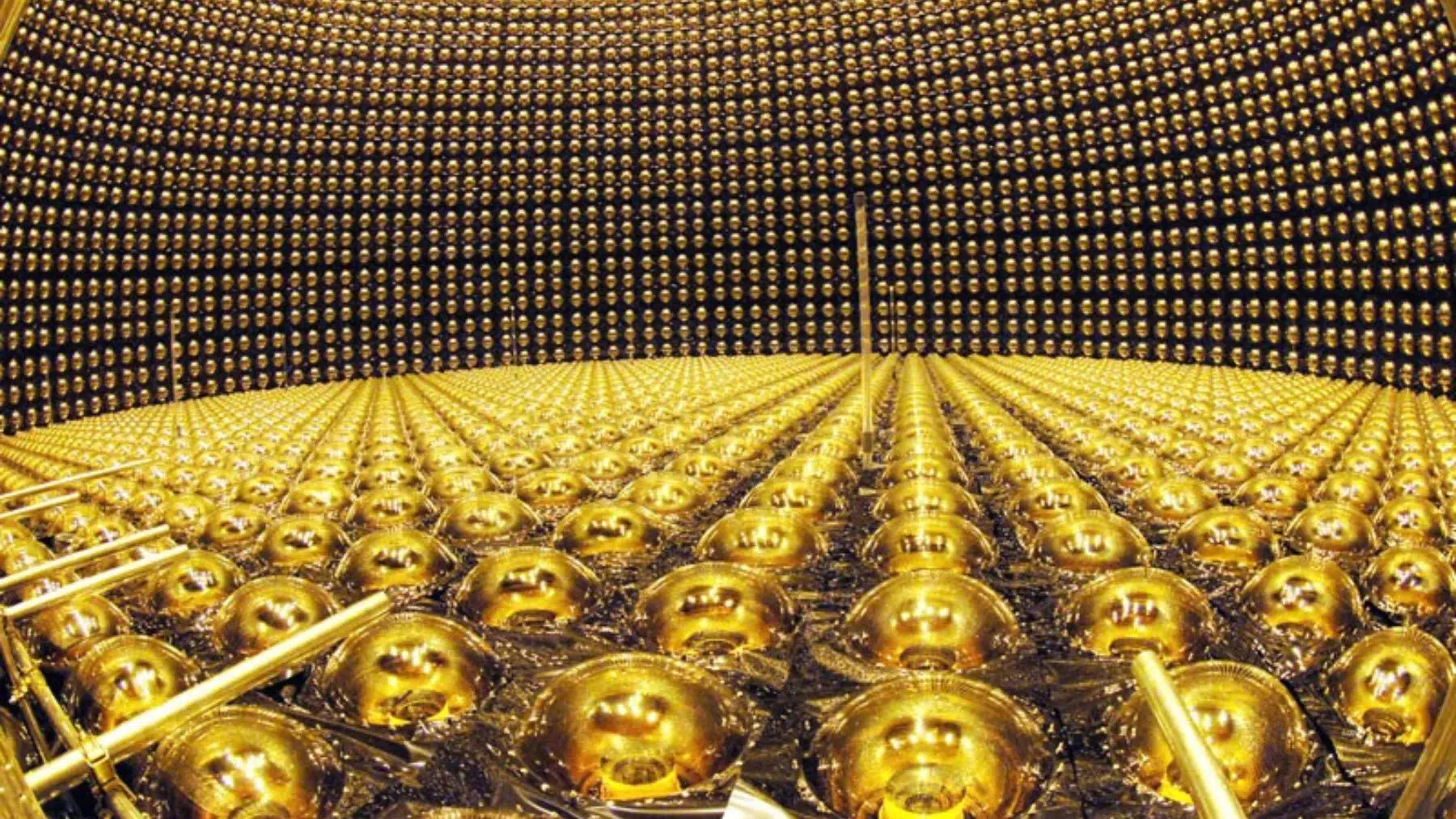
Buried roughly a kilometre underground in the mountains of western Japan, the Super-Kamiokande detector has long been one of the world’s most sensitive neutrino observatories. A recent upgrade significantly improved its ability to detect the faint signals that supernova neutrinos leave behind, pushing it closer to a historic threshold.
The target is something called the diffuse supernova neutrino background, or DSNB — the cumulative signal of every supernova that has ever occurred across the universe. Detecting it means picking up the combined, faint trace of billions of stellar deaths spread across cosmic time, not catching neutrinos from a single nearby explosion. Scientists believe a first clear detection could come as early as 2026.
Across the universe, a massive star explodes roughly once per second. In our own galaxy, supernovae occur only once every few decades — far too infrequent to study systematically. The DSNB offers a way around that limitation.
What ancient neutrinos could reveal about the universe
If the DSNB is detected, it would give scientists access to something genuinely unprecedented: particles produced by stellar explosions stretching back more than 10 billion years, long before Earth formed. These neutrinos have been traveling unimpeded through the expanding universe ever since, carrying information about conditions inside collapsing stellar cores.
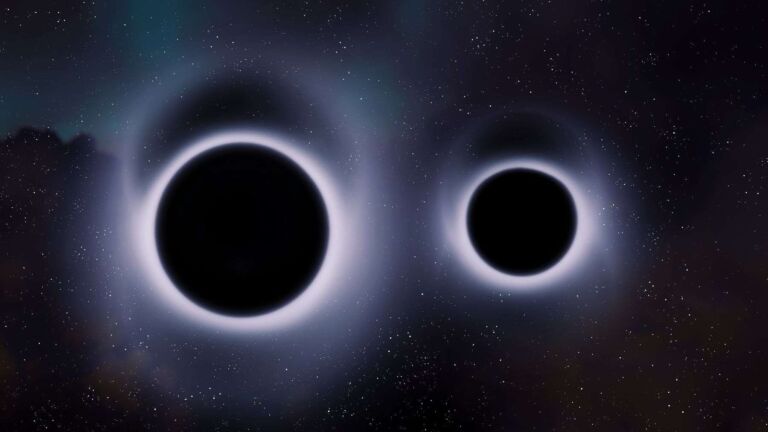
One of the central open questions in astrophysics is what actually happens when a massive star’s core collapses. Does it form a neutron star — an extraordinarily dense object only about 20 kilometres across, roughly the length of Manhattan — or does it collapse further into a black hole? The two outcomes produce different neutrino signatures, and the DSNB could help distinguish between them.
A combined signal from billions of supernovae could constrain models of core collapse, neutron star cooling, and the rate at which black holes form across cosmic history. It wouldn’t resolve every question at once. What it would do is sharpen the boundaries of what’s physically possible, guiding theoretical models in ways no single nearby supernova ever could.
A new era in astronomy, written in ghost particles
A confirmed detection of the DSNB would represent more than a technical milestone. It would be the first time astronomers observe not just one stellar death, but the collective record of every massive star that has ever lived and died across the entire observable universe.
That shift in scale matters. Modern astronomy has grown increasingly skilled at studying individual events — a nearby supernova, a neutron star merger detected in gravitational waves, a gamma-ray burst pinpointed across billions of light-years. The DSNB would add something different: a statistical portrait of stellar death written across all of cosmic time, placing this potential discovery within the broader project of multi-messenger astronomy, which combines light, gravitational waves, and particles to build a fuller picture of the universe.
What comes next depends on what the signal actually looks like, if detected. Its shape and intensity could favor certain models of black hole formation over others, or reveal unexpected features in the history of star formation. Researchers will need to disentangle the DSNB from background noise and compare results with theoretical predictions refined over decades.
For now, Super-Kamiokande waits — patient, sensitive, and ready. If 2026 delivers the first clear signal, astronomers will have found a way to listen to stars that burned out before our planet existed, their final messages arriving, at last, after a journey of billions of years.
Read the whole thing?
Get the week's signal, not the noise
Our sharpest reporting on energy, climate and nature — free, once a week.