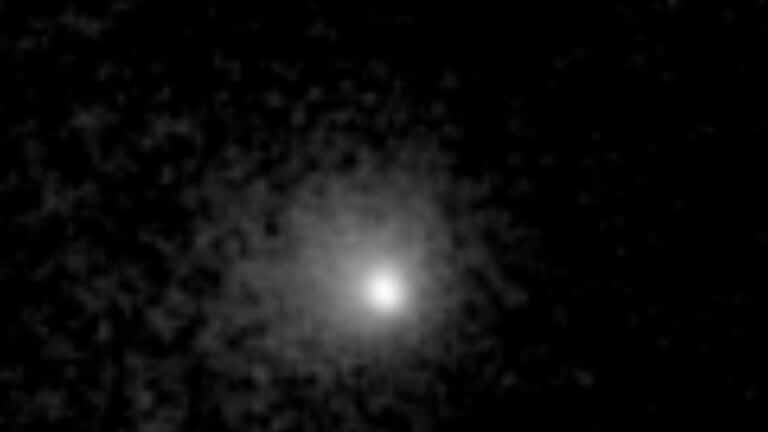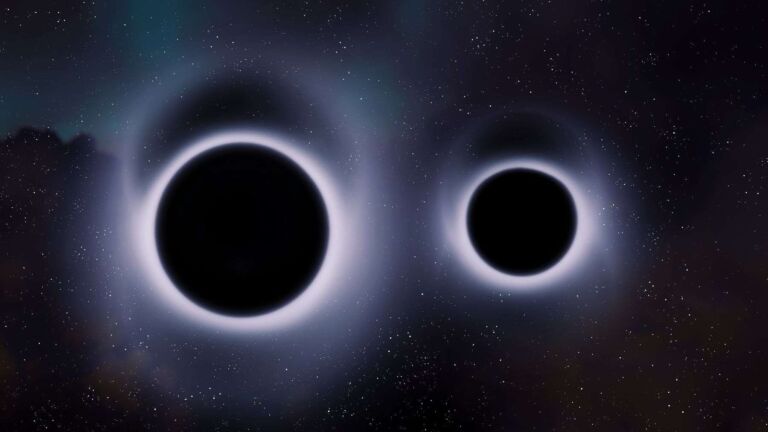
Astronomers spent nearly six years searching for what they called a “cosmic ghost”.
Late August 2025 is when the Zwicky Transient Facility in California caught it.
A distant star died in one violent blast. But somehow, that same explosion appeared five times.
The probability of seeing something like this was minuscule.
How can one identical event be seen as many times as five?
How one supernova exploded five separate times
A supernova is flashing us from an incomprehensible 10 billion light-years away.
Equally amazing is that it’s been doing so since the universe was four billion years old.
In theory, there’s no land-based telescope on Earth that should even be able to see this.
Fronting the blast were two masses that caused a unique phenomenon.
The result was a series of images combining to create an eerie cosmic cross.
And it turns out, Albert Einstein already predicted this 100 years ago.

The superluminous variant of supernovae are already incredibly rare. The special quality of light they emit is a factor of hundreds greater than ordinary supernovas.
Until now, no one had ever seen a superluminous supernova magnified and split at the same time.
A six-year endeavor to facilitate flawless alignment
It took the dedicated research team six years to find candidate lenses. The alignment had to be perfect.
In August 2025, it finally happened.
The superluminous supernova, SN Winny’s explosion was first captured by the Californian Zwicky Transient Facility.
The Nordic Optical Telescope was commandeered for early spectroscopy.
Crucially, four extra images were delivered by the Liverpool Telescope.
And finally, Keck Observatory contributed the next night’s data, being the last piece to complete the five-point puzzle.
Shock rippled through the W.M. Keck Observatory.
One supernova exploded – producing five separate paths of light.
Two gravitating lensing galaxies barred the way between the explosion and Earth, and their incredible mass warped spacetime.
The light was forced to take curved paths around them.
But the catch was, each of these routes was slightly longer. Naturally, the shortest route brought light to Earth first.
It would take years for the longest to get here.
Can one star explode five times? The physics behind the phenomenon
Timing differences allow researchers to determine the expansion rate of the universe.
Astronomers track this via a single number: the Hubble Constant.
The cosmic distance ladder calculates distances to galaxies near us by measuring objects step-by-step.
Due to the accumulation of small errors at each step, systematic uncertainty accumulates rapidly.
The cosmic microwave background analyzes the universe at the beginning of time directly.
This depends on the assumptions we’ve made about the unfolding of the universe.
Results vary by several percent, which we call the Hubble tension. This poses a challenge to the standard model of cosmology.
Gravitational lensing is a third method.
Delays between images rely on the mass of the lens and the expansion of the universe.
Unlike the distance ladder, this method utilizes a single measurement.
Errors tend to snowball, throwing off the final calculation.
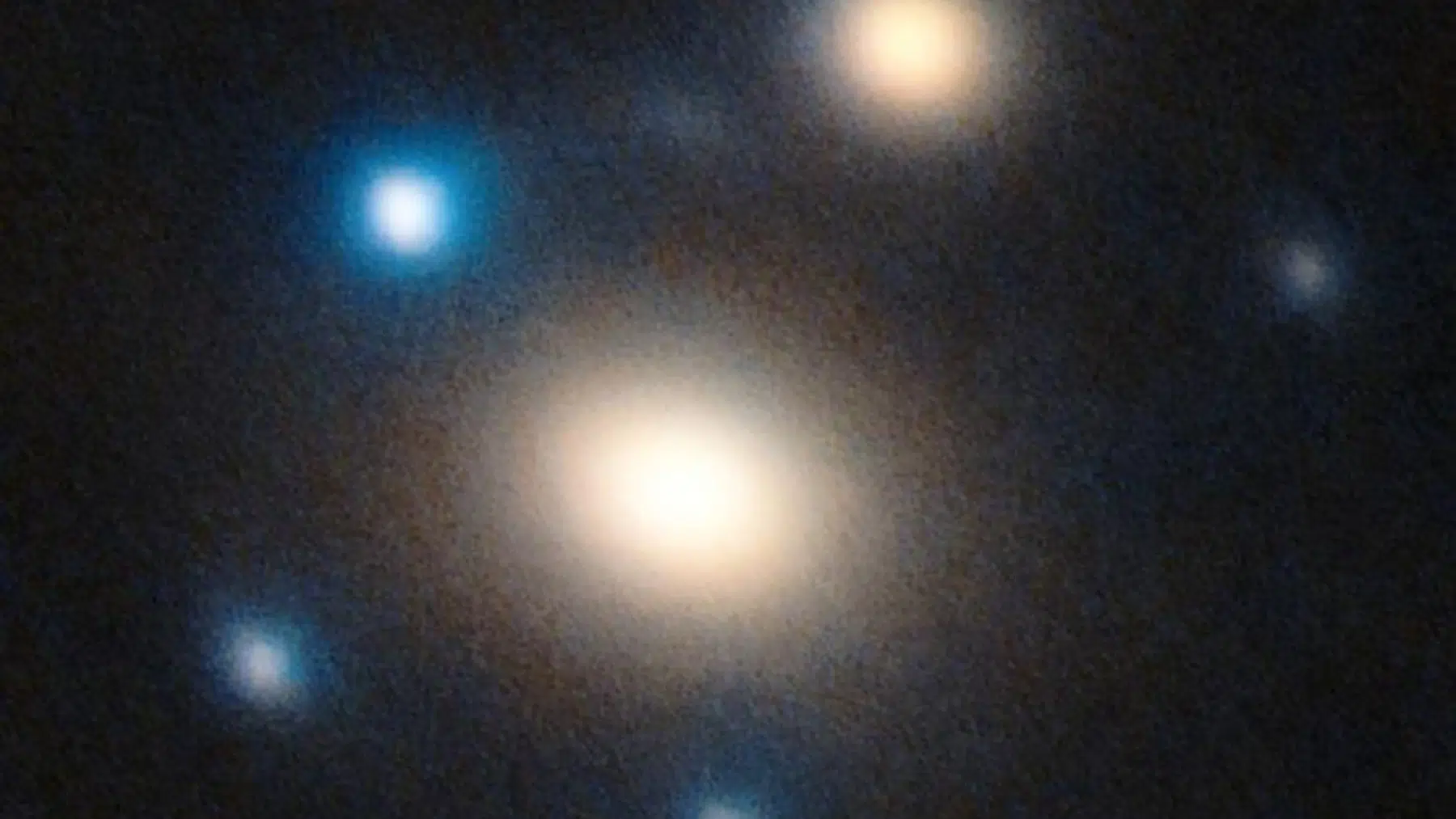
The Large Binocular Telescope in Arizona produced the first high-resolution color image of Supernova Winny (SN 2025WNY).
Two galaxies in the foreground managed to warp spacetime to create a cosmic replay. This multiplied a single explosion into five blue echoes.
The chances of capturing a superluminous supernova perfectly aligned with a dual-galaxy lens is a one-in-a-million shot.
And most lensed systems create either two or four images. Five is uncommon.
What’s next for cosmic mapping?
Smoothness increases the accuracy of measurements.
Hubble and Webb are racing to capture precision maps at extreme angles before the light fades.
Vera C. Rubin Observatory will begin scanning the entire sky systemically.
We expect that this massive sky-scanning facility is expected to unlock hundreds more lensed supernovae.
Magnification will reveal how galaxies formed when the universe was young.
How much of what we see in the night sky is exactly as it appears, and how much is just a beautiful trick of the lens?
Read the whole thing?
Get the week's signal, not the noise
Our sharpest reporting on energy, climate and nature — free, once a week.