
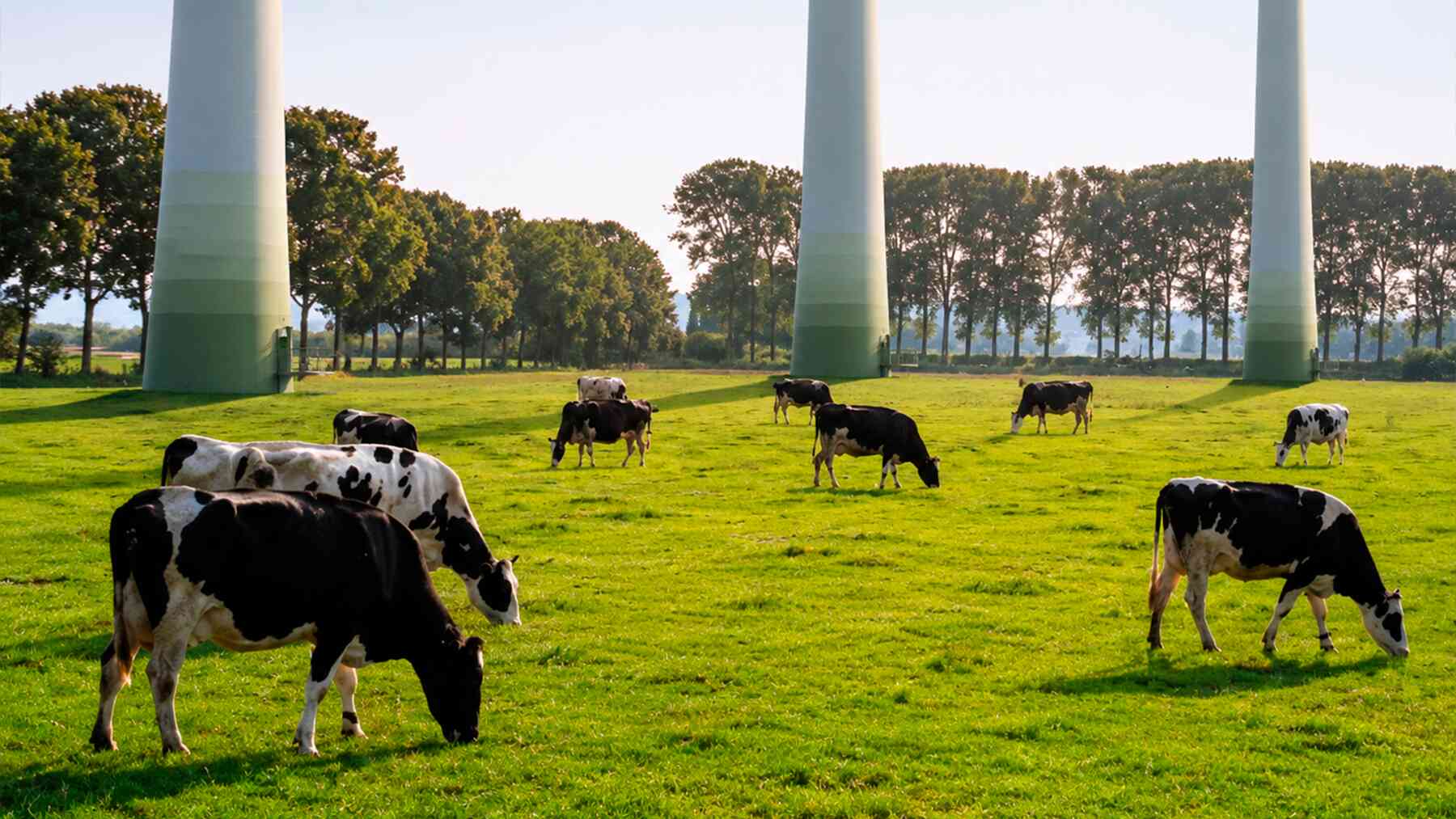
For generations, cattle have ruled the Flint Hills of Kansas.
Now, the horizon on the ocean of grass is different, with 50 wind turbines rising above the prairie.
Residents panicked, believing that industrial energy would destroy the ranch way of life. But they forgot to ask the livestock how they felt.
The giant infrastructure is here to stay. But something else happened besides clean energy generation.
How did cows find a genius way to make these spinning steel towers part of their everyday pasture?
How a Kansas ranch started a new way of life after a century
Ferrell Ranch in Kansas was started by Pete Ferrell’s grandfather way back in 1888. It sits at the highest point of the Flint Hills, with 7,000 acres inside the property line.
The landscape is a sea of tallgrass prairie, and cattle have been kings for as long as the first ranches have existed.
2005 arrived with big changes, and the view changed forever.
A developer chose the Ferrell Ranch to build a 150-megawatt wind farm. Suddenly, 50 turbines were going up in a field.
The local community went into panic mode. Lawsuits were filed to halt construction.
Some critics described the blades as a blight on the view. Others accused Ferrell of chasing government handouts.
Everyone thought the industrial giants would scare the livestock and destroy the traditional ranching lifestyle.
But humans underestimated bovine resilience. While everyone was arguing, the herd calmly watched the turbines rise above.
What was their reaction to the ‘invasion’ of technology?
Energy becomes a rancher’s most valuable cash crop
The ranching business is volatile. Prices aren’t steady, and the threat of drought is constant.
For Ferrell, wind became a cash crop. The lease of his land for turbines provides a steady income that doesn’t rely on rainfall.
He signed a 35-year contract to keep the land in the family for the next generation.
And he’s never looked back, says the Environmental Defense Fund.
Ferrell used the math to defend the project.
He measured every square inch of his expansive ranch and calculated the project’s exact footprint. The exact land use out of 7,000 acres was just 50 acres, including roads and bases. That’s just one acre per turbine.
Critics still pointed to the local ecosystem and prairie chicken population, saying there was no chance of doing no harm.
Studies revealed that the birds were just fine after construction, and the land functioned as it always had.
While humans were busy calculating square footage and debating tax policies, the cattle were making their own observations.
A 20-year success story: We can learn from the cows
Two decades later, and the energy experiment is a success all around.
The prairie chickens bounced back. The ranch survived the toughest dry spells. And best of all, the family debt is covered for the next generation.
So, how did the cows make this energy technology part of their pasture?
Cattle are practical creatures, more so than humans
They do not care about green energy, local politics, or fossil fuels. They care about comfort.
When the Kansas summer heat hits the Flint Hills, a beefy cow needs relief. The cattle realized that the massive steel tubes provide a strip of shade that sweeps across the grass all day.
The concrete bases and gravel access roads were another bonus. During the muddy spring season, the herd uses them as high, dry ground to rise above.
The cows did the opposite of avoid the installation. They embraced the multimillion-dollar machines like larger-than-life mechanical trees.
What else could we figure out if we looked at the world through the practical eyes of a cow?
Read the whole thing?
Get the week's signal, not the noise
Our sharpest reporting on energy, climate and nature — free, once a week.


