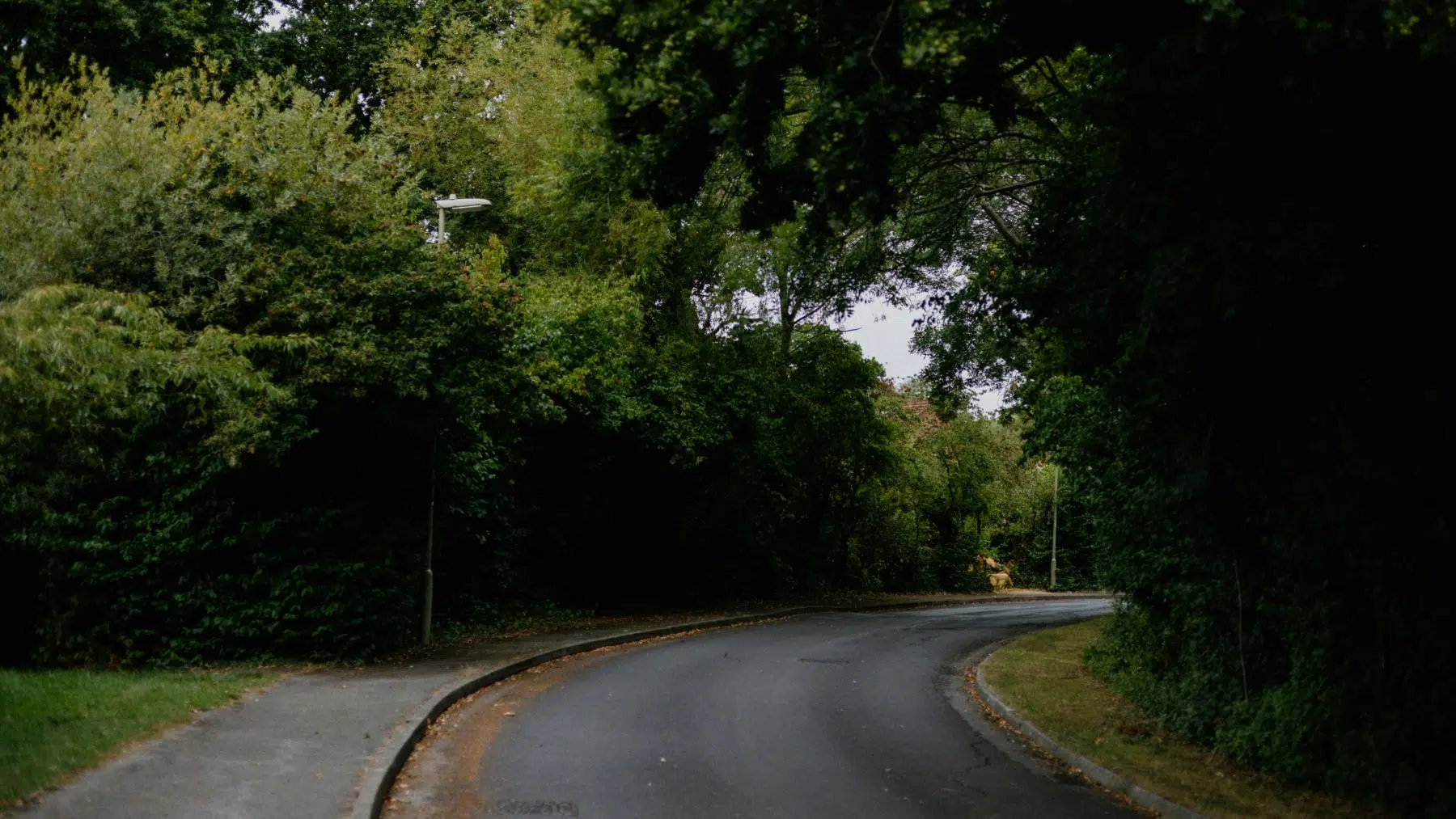
You’re used to roads being just that — roads.
Asphalt. Lanes. Traffic lights. Nothing alive about them.
But what if the street beneath your tires could soon react, adapt, and even respond to the environment around you?
Across parts of the world, engineers are testing what some call “living roads” — and the concept could make its way to the United States sooner than you think.
What if they came here?
We have lowered speed limits, but what else?
When you think about road safety, one of the clearest facts from decades of research is that speed matters. Lower motor-vehicle speeds are strongly linked with fewer crashes and, crucially, with less severe injuries when crashes do occur.
That’s not a guess — it’s a core finding in traffic safety science used by policymakers around the world. Slower traffic gives drivers more time to react, shortens stopping distances, and reduces crash forces.
In some European cities, for example, lowering urban limits to around 20 mph has become accepted practice because it dramatically improves safety for everyone on the street.
But speed limits are only one piece of the puzzle. Engineers and planners also look at how the street itself feels — the width of lanes, visual cues, and physical features. That’s why systems like this “pole” tech are being tested near crosswalks.
Could “living roads” solve the problem of speeding?
Still, even with laws and engineering guidance, a lot of drivers don’t slow down as much as they should.
Studies show a surprising pattern: a large share of vehicles on many roads exceed posted limits by significant margins, even where those limits are meant to protect pedestrians and cyclists. This isn’t just casual misjudgement — it’s a reflection of how design and habit can override rules on paper.
That’s where the tension really shows up. Speed limits, enforcement cameras, and fines are widely used and expanding — you’ll see more automated speed enforcement systems designed to catch violators when officers aren’t present.
But cameras and penalties treat the outcome of speeding, not the cause: the human instinct to drive fast when roads feel open and clear.
That’s where design and geometry come into play — and that’s where the discussion gets more surprising.
New road designs may soon improve safety
One of the design strategies gaining attention is the idea of “shared space” — a road environment where cars, pedestrians, and cyclists occupy the same area with minimal demarcations like curbs or priority lanes.
This concept, originally developed by Dutch traffic engineer Hans Monderman, flips the usual paradigm: instead of telling drivers what to do with signs and barriers, it creates an environment where the safest thing to do is drive slowly and watch for others.
Shared space isn’t just theoretical. Empirical evidence from pedestrian priority street projects in cities like Seoul, Korea, has shown that vehicle speeds drop significantly after implementing shared-space design elements, and people report feeling safer walking there.
Yes, you would have to get used to driving differently.
The logic is simple: when drivers can’t rely on separation and lane markings, they slow down to negotiate space with pedestrians and cyclists. That mental speed bump effect — where the design itself cues caution — can be stronger than signs alone.
At the end of the day, safer roads aren’t just about lowering a number on a sign. They’re about changing how you experience the street the moment you turn the wheel.
Speed limits matter. Enforcement matters. But if a road feels wide, empty, and built for speed, most drivers will respond to that instinctively — even if the sign says otherwise.
For you, that could mean fewer close calls, calmer neighborhoods, and streets that feel less like corridors for traffic and more like places where people actually live.
The future of road safety may not look like stricter warnings. It may look like streets that quietly guide you to make better choices — without you even realizing it. It’s time to make changes, and also to check this on your license plate to avoid a $1,000 fine.
Disclaimer: Our coverage of events affecting companies is purely informative and descriptive. Under no circumstances does it seek to promote an opinion or create a trend, nor can it be taken as investment advice or a recommendation of any kind.
Read the whole thing?
Get the week's signal, not the noise
Our sharpest reporting on energy, climate and nature — free, once a week.