Every winter, the same thing happens across large parts of the U.S.: snow falls, roofs turn white, and solar panels quietly stop working. No sunlight, no energy — just frozen silence. It almost feels like winter has a power switch, and it knows exactly when to flip it.
But in Minnesota, one couple looked at this yearly shutdown and thought: what if snow doesn’t get the last word?
When winter shuts down clean energy
Northern states deal with long, harsh winters, and Minnesota is one of the hardest hit. Heavy snowfall can cover solar panels for days, sometimes longer. When that happens, electricity production drops sharply — or stops altogether.
Homeowners notice it quickly. Businesses notice it even faster. After a big storm, panels can sit under thick snow while the sun shines above them, completely blocked.
For years, this was treated as normal. Winter meant waiting. Waiting for snow to melt. Waiting for panels to wake up again. Losses were expected, accepted, and rarely questioned.
Why snow has been such a stubborn problem
Clearing snow from solar panels isn’t simple. Roofs are icy and dangerous. Snow rakes are awkward and risky. On large solar farms, manual removal is almost impossible.
Some systems rely on panel angles to help snow slide off naturally, but that doesn’t always work — especially after heavy or wet snowfall. As a result, panels can stay buried long after a storm ends.
Across snowy regions, winter has quietly limited how much solar energy can be produced. Until now, there hasn’t been a safe, easy answer.
The idea that finally lets panels fight back
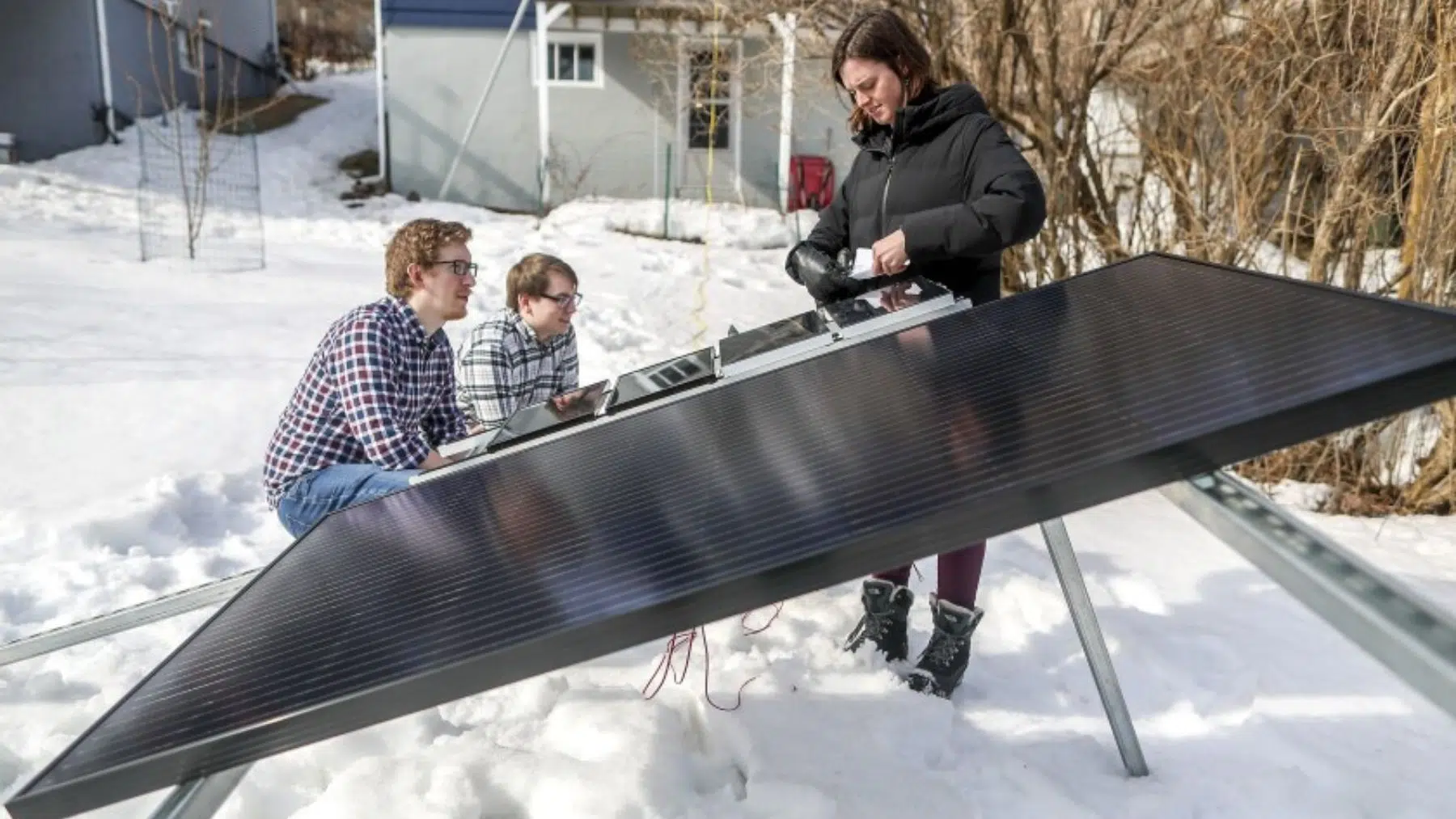
This is where Karl Wagner and Danielle Rhodes, a couple from Duluth, Minnesota, come in.
After losing three days of solar production at their own home due to snow, Wagner decided to stop waiting for winter to cooperate. Instead of scraping snow off panels, he worked on a way to gently melt it from underneath.
His solution, known as “Solar for Snow,” uses a thin heating layer built into the solar panel itself. The material can sense where snow is sitting and warms only those spots. As the snow loosens, it slides off — often within hours.
No climbing on roofs. No shovels. And the panels can keep producing electricity during much of the winter instead of staying shut down.
Recognition, rewards, and what comes next
The idea didn’t go unnoticed. Wagner received a $50,000 prize from the U.S. Department of Energy through its American-Made Solar Prize program. He also received support from Minnesota Power and Heliene, a local solar manufacturer.
Still, challenges remain. Adding a heating layer increases costs. The system needs a small power connection. And like all solar panels, it must last 25 years or more.
Wagner is now focused on simplifying the design and lowering costs so the technology can be used widely. If successful, this approach could change how solar panels are built in cold climates — and finally stop winter storms from knocking clean energy offline.
For snowy states across America, that could mean one big change: solar panels that don’t take the winter off.
Read the whole thing?
Get the week's signal, not the noise
Our sharpest reporting on energy, climate and nature — free, once a week.