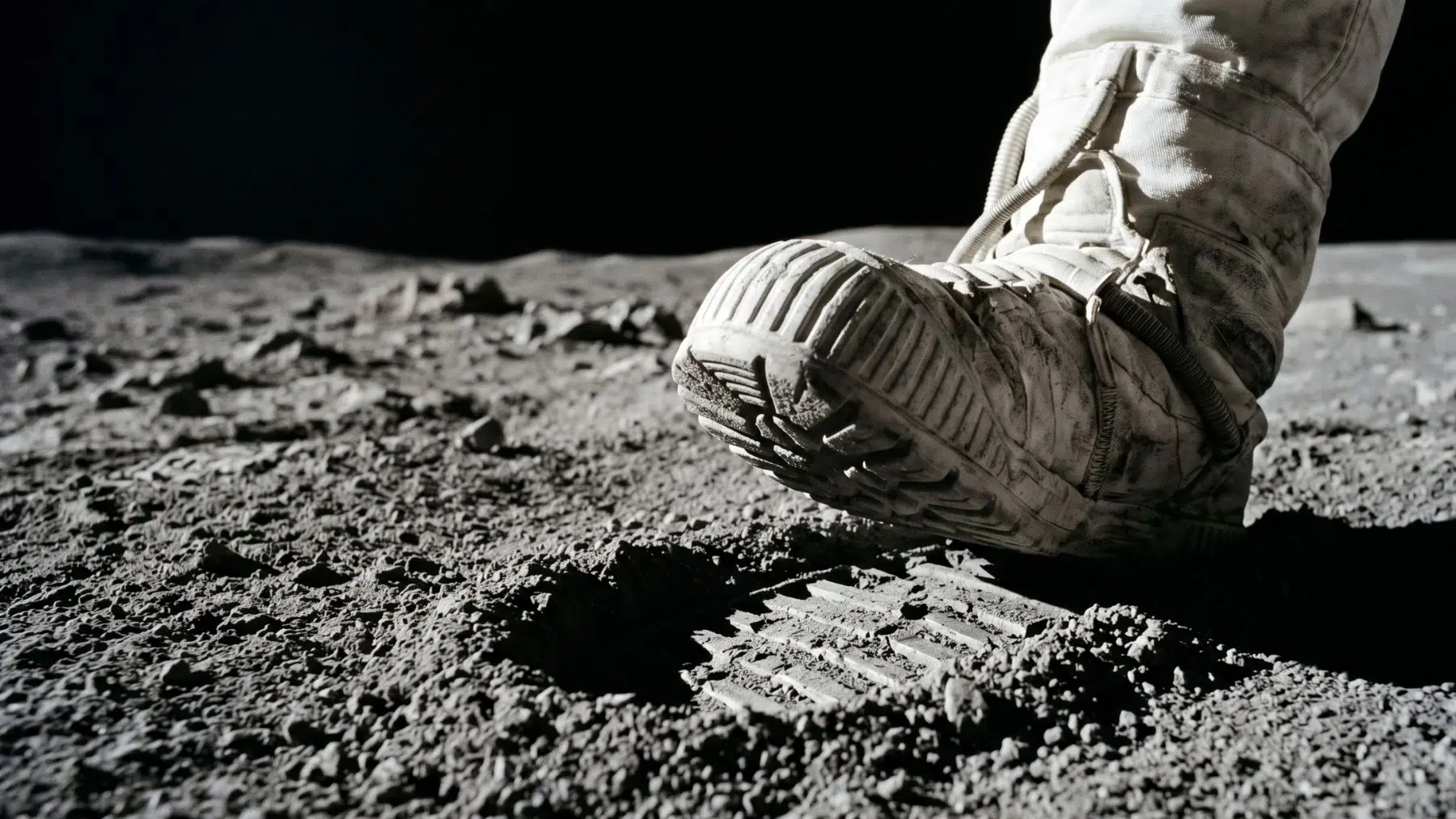
Most people picture the Moon’s surface the way the first Apollo photographs showed it, a pale, powdery plain as soft as the talcum in a bathroom cabinet.
It looks about as threatening as flour spilled on a kitchen counter.
But scientists who have spent decades studying what that gray powder actually is have reached a deeply unsettling answer, and it has changed how every future Moon mission is now being designed.
The Moon has no way to smooth its edges
On Earth, every grain of sand and every speck of dust has been worn down over time.
Wind drags particles against each other for thousands of years, water rounds them in riverbeds, and weather slowly knocks off their sharpest points.
The Moon has none of that. Without wind or water to erode the edges, its surface keeps a layer of grit that has never been softened by anything.
Lunar dust is razor sharp powdered glass, formed over hundreds of millions of years by micrometeorites slamming into the Moon, shattering rock into shards and melting sand into glass beads with jagged rims.
Every grain is, in effect, a tiny blade. And there are billions of them, lying several meters deep across the entire surface, waiting to be disturbed.
It does something no ordinary dust can do
Sharp edges alone would be bad enough. But moon dust has a second, stranger property that caught scientists off guard the first time they looked closely.
Lunar dust carries an intense electric charge. Ultraviolet light drives electrons out of the grains by day, while the solar wind bombards the surface with fresh electrons by night, leaving the regolith in constant electrical agitation.
The effect is like rubbing a balloon on your hair and watching strands leap toward it, except the force here is far stronger and reaches every grain across an entire world.
That mix of blade sharp shape and powerful charge means the dust grips everything it touches and refuses to let go. Brushing it away only drives those edges deeper into whatever they have claimed.
The Apollo astronauts felt it immediately
When the first crews stepped onto the surface, they met the powder problem within minutes. It proved far more troublesome than any rehearsal on Earth had suggested.
Wiping a sun visor scratched straight through its protective gold film. Dust crept into the suit joints and fouled the sealing rings.
During Apollo 17, Harrison Schmitt and Gene Cernan struggled to move their arms on the surface because dust had gummed up the shoulder joints of their suits.
Researchers later found the grit had worn through three layers of a material much like Kevlar on Schmitt’s boot over a single excursion.
Inside the lander, the dust smelled strongly of burnt gunpowder. No one had expected that, and no one has fully explained it since.
The invisible halo that showed how far it travels
Here the story takes an extraordinary turn.
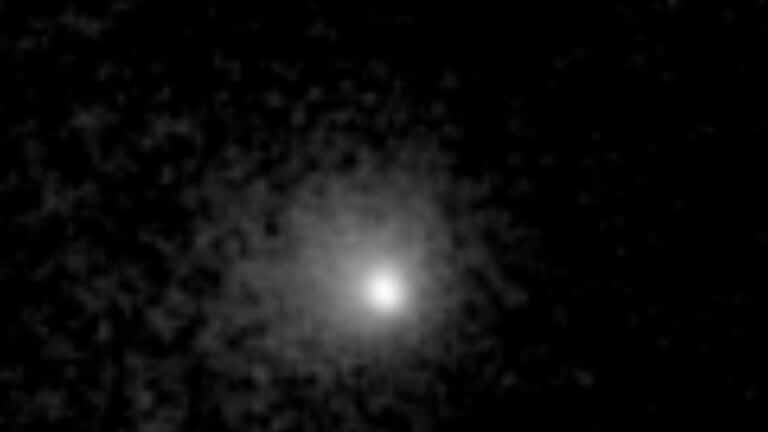
When India’s Chandrayaan-3 lander touched down at the lunar south pole in August 2023, the orbiting camera of its predecessor, Chandrayaan-2, caught something never fully documented from space before.
The landing flung an estimated 2.06 tonnes of regolith across about 108 square meters, forming a bright ghostly halo around the vehicle that was visible from orbit.
That ring made something concrete that scientists had long warned about: even one rocket landing reshapes the ground around it, throwing sharp charged grains outward fast enough to damage nearby instruments and landers.
For anyone hoping to build something up there, or land the supplies needed to survive, that halo is a warning written in gray powder across a hundred square meters of ancient, undisturbed ground.
The most dangerous dust in the solar system has a hopeful answer
NASA now treats moon dust as one of the central engineering challenges of Artemis, its plan to put humans back on the lunar surface this decade.
Teams are testing electrostatic shields that flick charged particles away before they settle, fabric coatings drawn from semiconductor manufacturing, and surface treatments that stop the sharpest grains from bonding to a suit.
None of these fixes is finished yet, which is exactly why the work continues at pace.
There is reason for optimism, and it comes from an unexpected place. A 2025 laboratory study found that the finest, breathable fraction of lunar dust did less damage to human lung cells than an equal dose of ordinary city air pollution.
That does not make it harmless. Apollo crews still came back with watery eyes and a congestion they nicknamed lunar hay fever, and scientists are still mapping exactly how the dust acts inside the lungs.
But it casts the danger as an engineering problem, and those, given enough time and enough determined people, get solved. The Moon’s ancient powder has waited billions of years. The crews heading back are already learning its secrets, one sharp grain at a time.
Read the whole thing?
Get the week's signal, not the noise
Our sharpest reporting on energy, climate and nature — free, once a week.