Stand at the edge of the sea and breathe in.
That sharp, briny smell is not the salt, it is a gas made by life, breathed out by tiny ocean creatures too small to see.
For a while, scientists believed they had caught that exact smell drifting through the air of a planet 124 light years away.
It looked like the strongest hint of alien life ever found, until the rest of science took a hard look.
It is one of the great science stories of the decade, and not for the reason the headlines suggested.
The smell that means life
The molecule behind that ocean scent is called dimethyl sulfide, or DMS.
On Earth, it is made almost entirely by living things, mostly the microscopic algae that drift through sunlit seawater.
Out at sea, that scent can drift hundreds of miles inland on the wind before it fades.
The oceans that make it cover more than 70 percent of our planet’s surface.
Because life is nearly the only thing that makes it, scientists have long treated DMS as a possible fingerprint of life.
Find it in the air of another world, the thinking went, and you might have found biology.
That is exactly the search that led astronomers to a faint, far away planet.
The ocean world that might not exist
The planet is called K2-18b, circling a small red star about 124 light years away.
It is bigger than Earth and smaller than Neptune, a size long thought to be a dead end for life.
Its star is a red dwarf, far cooler and dimmer than our sun.
Worlds like this, wrapped in hydrogen, were mostly ignored in the hunt for life until recently.
But some scientists proposed a bolder idea, that it could be a water world, a deep global ocean under a thick hydrogen sky.
In 2023, the James Webb Space Telescope found methane and carbon dioxide in its air, which fit that ocean picture.
Even so, the idea of a warm global ocean out there was hard to resist.
For a planet no one can ever visit, it was a tantalizing clue.
The headline that circled the world
Then came the claim that made news everywhere.
To read the air of a planet that far away, astronomers watch starlight shine through its atmosphere as it passes in front of its star.
Each molecule leaves its own fingerprint in that light.
In 2023, and again more strongly in April 2025, one team reported signs of DMS in the planet’s atmosphere.
The lead scientist called it the strongest evidence yet of possible biological activity beyond Earth.
Outlets around the world ran with it, and for a few weeks it felt like the discovery of the century.
But a careful scientist never says life on the first look, and neither did the data.
When the rest of science checked the math
Here is the part the headlines mostly skipped.
Within months, several independent teams pulled apart the very same data.
One group found that 87 percent of their analyses showed no DMS at all, and that the signal was likely just instrument noise.
A NASA led study confirmed the planet is rich in water but found no solid evidence of the molecule.
The faint mid infrared signal sat right at the edge of what the telescope can even measure.
Other molecules could produce almost the same pattern, so the match to DMS was far from certain.
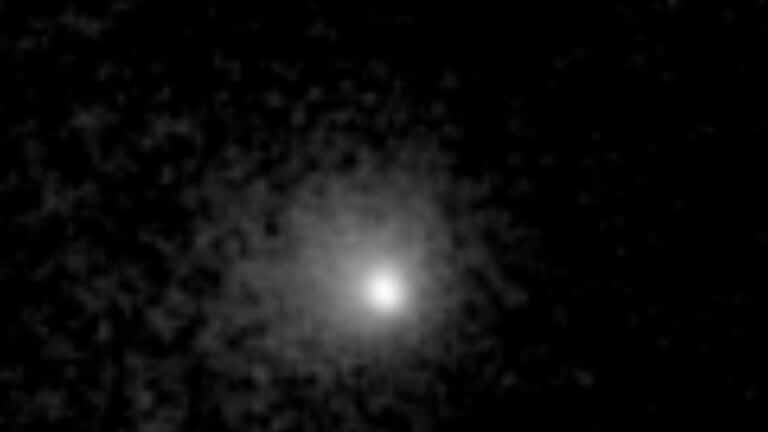
Worse for the life story, DMS has since been found on a comet and floating in deep space, where nothing is alive.
So the one thing that made the molecule special, that only life makes it, turned out not to hold up.
Why the story still matters
None of this means the search failed.
It means science worked exactly as it should, a bold claim followed by relentless checking.
Finding true proof of life will take far more than a single faint line in a spectrum.
It will take the same signal, on the same world, seen again and again by different eyes.
The ocean smell molecule is still real, still fascinating, and still worth hunting for on other worlds.
Red dwarf stars like this one are the most common in the galaxy, so ocean planets may be out there in huge numbers.
Webb will keep staring, and the same patient search has already traced organic molecules on other worlds and mapped the faint chemistry between the stars.
For now, the honest answer is that we simply do not know yet.
The next time you breathe in at the shore, remember we are now sniffing the whole galaxy for that same signature of life.
Read the whole thing?
Get the week's signal, not the noise
Our sharpest reporting on energy, climate and nature — free, once a week.