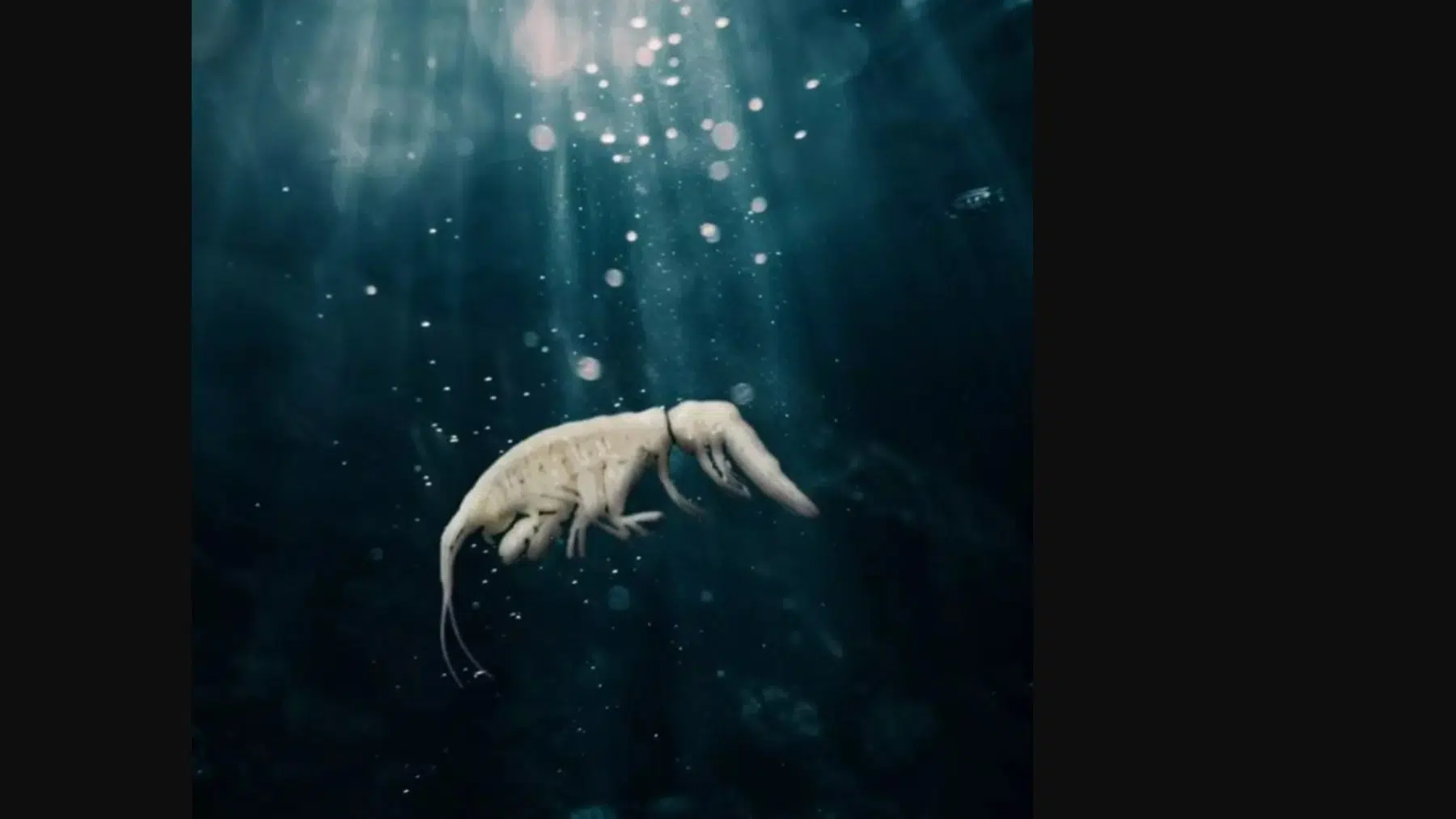
One thing about Earth and its seas, there will always be something mysterious. Scientists have discovered something about 8 kilometres below the sea—something terrifying and this is something that has never been seen before. It is found in the uncharted depths of the Atacama Trench, off the coast of South America and it is called Dulcibella camanchaca. This just enlightens us that we will never tell ourselves that we know all about our planet and its oceans.
Uncovering the sea abyss: Dulcibella camanchaca’s discovery
The deep seas of the earth are one of the most mysterious places. From the freezing temperatures to total darkness, you would conclude that nothing would make a living there because, truthfully, some species cannot survive there. In the deep seas, there are rules that are just completely different. However, just when researchers thought it was a no-go area, this discovery shocked them.
It was during the 2023 expedition when marine biologists and scientists discovered something terrifying and a predator in the Atacama Trench, 8 kilometres deep into the sea. As reported by The Sun, this predator, which was roughly 4 centimetres long, was appropriately named Dulcibella camanchaca. The word “camanchaca” comes from the Aymara word meaning “darkness,” which reflects its deep-sea environment.
Online media reports claim that the Dulcibella camanchaca is an amphipod, a shrimp-like creature. What makes this sea creature stand out is its ability to hunt for food on its own. These kinds of creatures or those similar to it, are known to scavenge the ocean floor and the D. camanchaca actively searches for its prey; hence, it is regarded as a predator.
Deep-sea predator anatomy: Adaptations to harsh environments
The D. camanchaca can adapt to harsh, freezing cold, deep, dark conditions under the seas, and it has learnt to survive in those kinds of conditions. In addition to making predation more effective, these modifications also show the evolutionary stresses imposed by the harsh deep-sea environment. The finding of a predator of this kind calls into question our comprehension of life in these isolated environments and encourages more research into the ecological dynamics of deep-sea ecosystems.
Deep-sea discovery significance: Consequences for marine science
The beauty of these mind-blowing discoveries is that they allow us to see the mystery and beauty of our Earth, seas and universe as a whole. It keeps us on our feet because clearly there is more to discover, and the significance is that we are able to understand the formations, events and future predictions of the Earth and perhaps connect the dots as to why certain creatures behave in certain ways and so forth.
Additionally, the identification of Dulcibella camanchaca highlights the richness of our biodiversity, especially in areas that might have been ignored and thought of as not relevant. It also allows us to appreciate technology and how it is in constant development to help scientists dig deep into the seas to learn about what lies beneath.
The Times of India also emphasise that since biologists and scientists are studying creatures such as D. camanchaca and how they survive and thrive in such harsh environments, it means there are still other harsher environments that haven’t yet been tapped and sooner or later we will learn more about them. There is still more to learn about the deep seas, and more creatures to be discovered too.
Even if deep-sea habitats are far away, humans can still have an impact on them. Pollution, climate change, and deep-sea mining are some of the activities that threaten to disturb delicate ecosystems that we hardly understand. The urgency of preserving these secret worlds before we lose species we never even knew existed is highlighted by the finding of Dulcibella camanchaca.
Read the whole thing?
Get the week's signal, not the noise
Our sharpest reporting on energy, climate and nature — free, once a week.