Every summer, the people of Juneau watch a frozen clock count down.
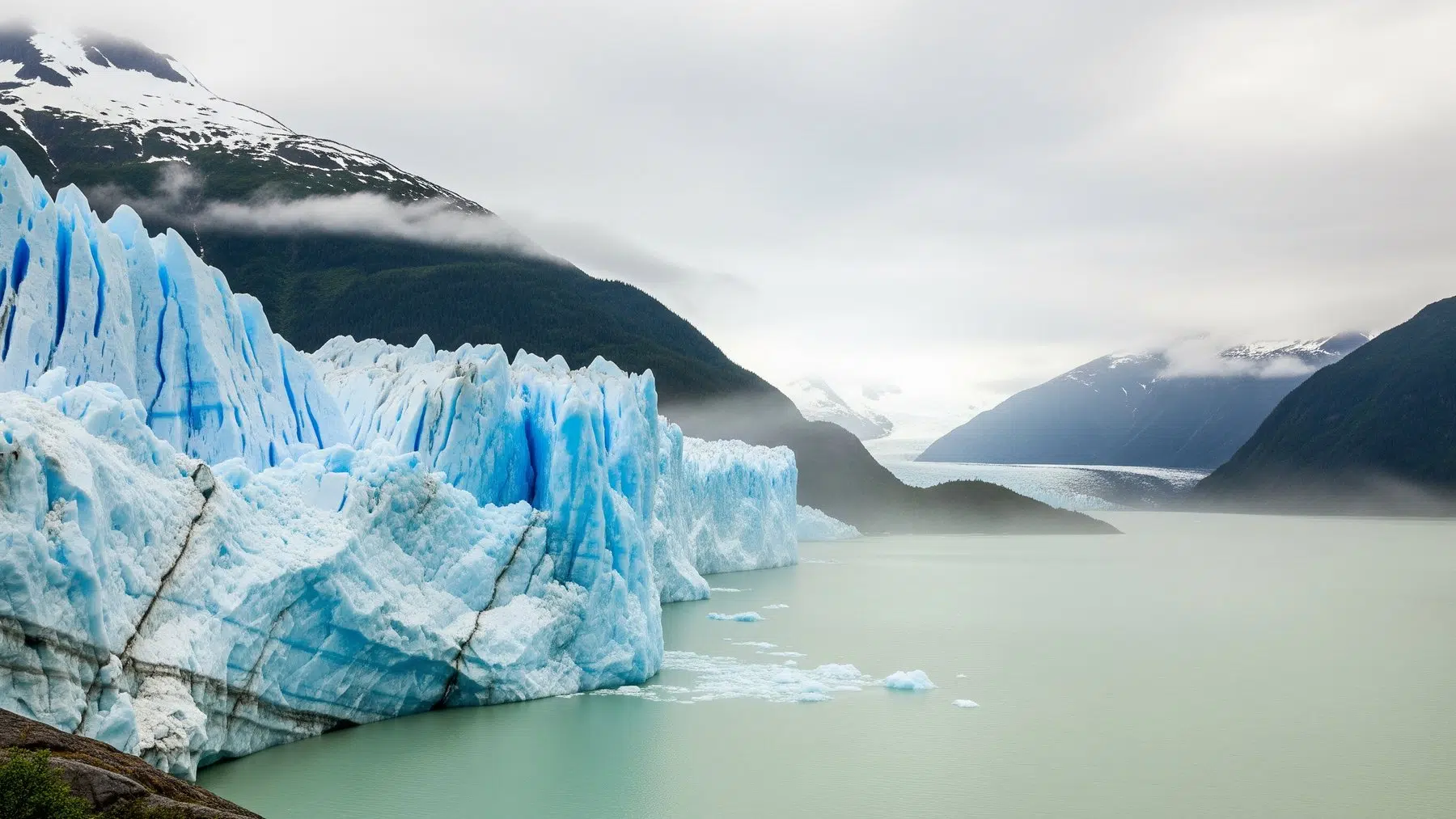
High above the city, tucked behind the vast blue wall of the Mendenhall Glacier, a bowl of meltwater called Suicide Basin slowly fills through the warm months, brimming toward the edge of the ice dam holding it back.
Then, without much warning, the ice gives way.
In August 2025, it happened again, and this time the river went higher than ever, breaking records set just twelve months earlier and flooding streets that had barely recovered from the year before that.
A city that has learned to dread summer
Juneau, Alaska’s capital, is home to about 30,000 people, and the Mendenhall Glacier sits only twelve miles from its center.
For most of the city’s history, that glacier was simply a wonder, a shimmering blue landmark that drew tourists out on warm weekends.
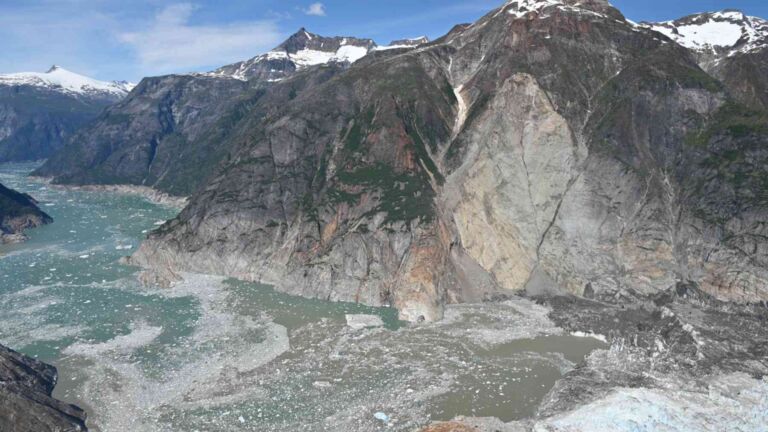
That changed gradually as Suicide Glacier retreated, eventually leaving behind an empty rocky bowl.
That bowl, Suicide Basin, now acts like a giant bucket, filling with rain, snowmelt and ice through the summer months.
Eventually, the basin gets so full that it escapes the surrounding ice of the Mendenhall Glacier.
For years, the escapes were minor enough to ignore.
Residents would scan the river gauge numbers out of habit, then go on with their day.
Not anymore.
The floods are arriving bigger each time
The summer of 2023 brought a flood that felt like a once-in-a-generation event.
Then 2024 topped it by a full foot, sweeping through neighborhoods and damaging nearly 300 homes, an event declared a major disaster.
The city spent the following months installing roughly 10,000 HESCO barriers along 2.5 miles of riverbank.
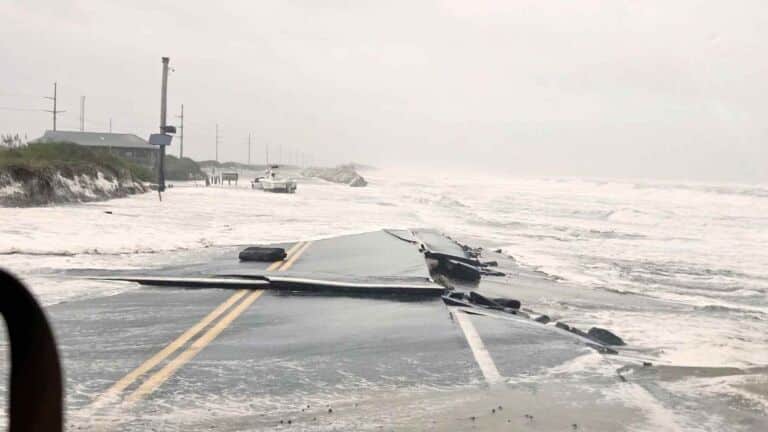
On August 13, 2025, the Mendenhall River passed its 2024 record of 15.99 feet, cresting at 16.65 feet.
For the third consecutive year, a wave of water gushed out of the glacial lake threatening the capital city.
The barriers held.
The records, though, did not.
Why the water keeps finding a way out
The mechanism driving this is almost theatrical in its strangeness.
The basin fills annually until hydrostatic pressure lifts the glacier dam up and erodes a subglacial channel, causing drainage to surge until the entire lake is gone.
In other words, the whole lake drains underneath the glacier, through a tunnel carved by pressure alone.
Scientists monitoring Suicide Basin note that this year’s ice dam was measurably thinner than in 2024, yet the basin held about as much water because melting ice had widened its capacity over the previous twelve months.
A thinner dam, a bigger bucket.
The flood, almost inevitably, grew larger.
The Juneau Icefield feeding it all
The Mendenhall is not a lone actor.
It is one of more than a thousand glaciers knitted together across the Juneau Icefield, a frozen plateau straddling the Alaska-Canada border and covering nearly 1,500 square miles.
Glacier volume loss on the icefield doubled after 2010, reaching nearly 6 cubic kilometers of ice lost per year.
Its snow-covered area is shrinking five times faster than it was between 1979 and 1990.
Dark rocks revealed by retreating glaciers retain more heat than white snow, warming the remaining ice faster still, a feedback loop that makes every thaw more powerful than the last.
Scientists warn the icefield may be approaching a tipping point from which recovery becomes impossible, a conclusion published in Nature Communications.
Between 10 and 15 million people worldwide are now exposed to glacial lake outburst flooding like what is unfolding in Juneau.
What holds back the next wave
The U.S. Army Corps of Engineers is at the start of a yearslong study examining permanent solutions, including a levee.
That timeline frustrates many residents, who watch each summer wondering whether the barrier walls will be enough.
Some have begun building their own berms of gravel and timber at the edges of their yards, small personal bets against the river.
But 2025 carried a genuine piece of hope: the barriers worked.
While the river reached a new record high, the worst-case scenario was avoided largely due to flood prevention efforts made by state and local officials after past flooding.
Scientists monitoring the ice loss accelerating across Alaska and beyond say the engineering response in Juneau is exactly the kind of adaptation that buys communities critical time, and research into what warm water does beneath ice suggests that time may be shorter than it looks.
Juneau has learned, season by season, that the glacier will not wait for a permanent fix.
So the city builds higher walls, watches the basin more closely, and hopes the ice holds one more summer.
Read the whole thing?
Get the week's signal, not the noise
Our sharpest reporting on energy, climate and nature — free, once a week.