You’ve trusted the same three traffic light colors your entire driving life. Red, yellow, green: it’s simple enough… until it isn’t.
Behind every signal on U.S. roads sits a thick federal rulebook that dictates exactly how infrastructure must look and operate. Changing that system isn’t quick.
But under newly updated national standards, one state has activated something drivers aren’t used to seeing. How will ignoring these changes end up costing you?
Outdated, but simple. Why creating new traffic signals isn’t so easy
Here’s the truth that most drivers don’t think about: creating new traffic signals isn’t nearly as easy as it looks.
A signal isn’t just a box with lights. Engineers have to carefully plan how it fits into the flow of traffic, where each light sits, and how timing affects cars, bikes, and pedestrians. That work requires detailed surveys, coordination with surrounding intersections, and deep analysis of traffic patterns so that the new signal actually improves traffic flow instead of making it worse.
It’s a balancing act — safety, efficiency, and consistency all matter. That’s why you don’t see brand-new signal styles popping up every day on roads in the United States.
However, it’s true that new traffic signals have been proposed to address the arrival of autonomous cars. And even a green pedestrian crossing that could change the way we drive on certain roads.
One state did see beyond the immediate. Now it has “created” a new one
So here’s something most drivers don’t realize. The rules for traffic signals in the U.S. just got a major overhaul.
The Manual on Uniform Traffic Control Devices (MUTCD) — the national standard that tells every state how traffic lights, signs, and signals should look and operate — was completely updated in late 2023.
This new 11th edition replaces the old version that had been in place for over a decade.
Once the updated MUTCD became official, states were given a deadline — January 18, 2026 — to start implementing its guidelines and begin adapting their own traffic signal designs to match.
Most states are moving through the process at their own pace, adopting the new standards or tailoring them with supplemental state guidance.
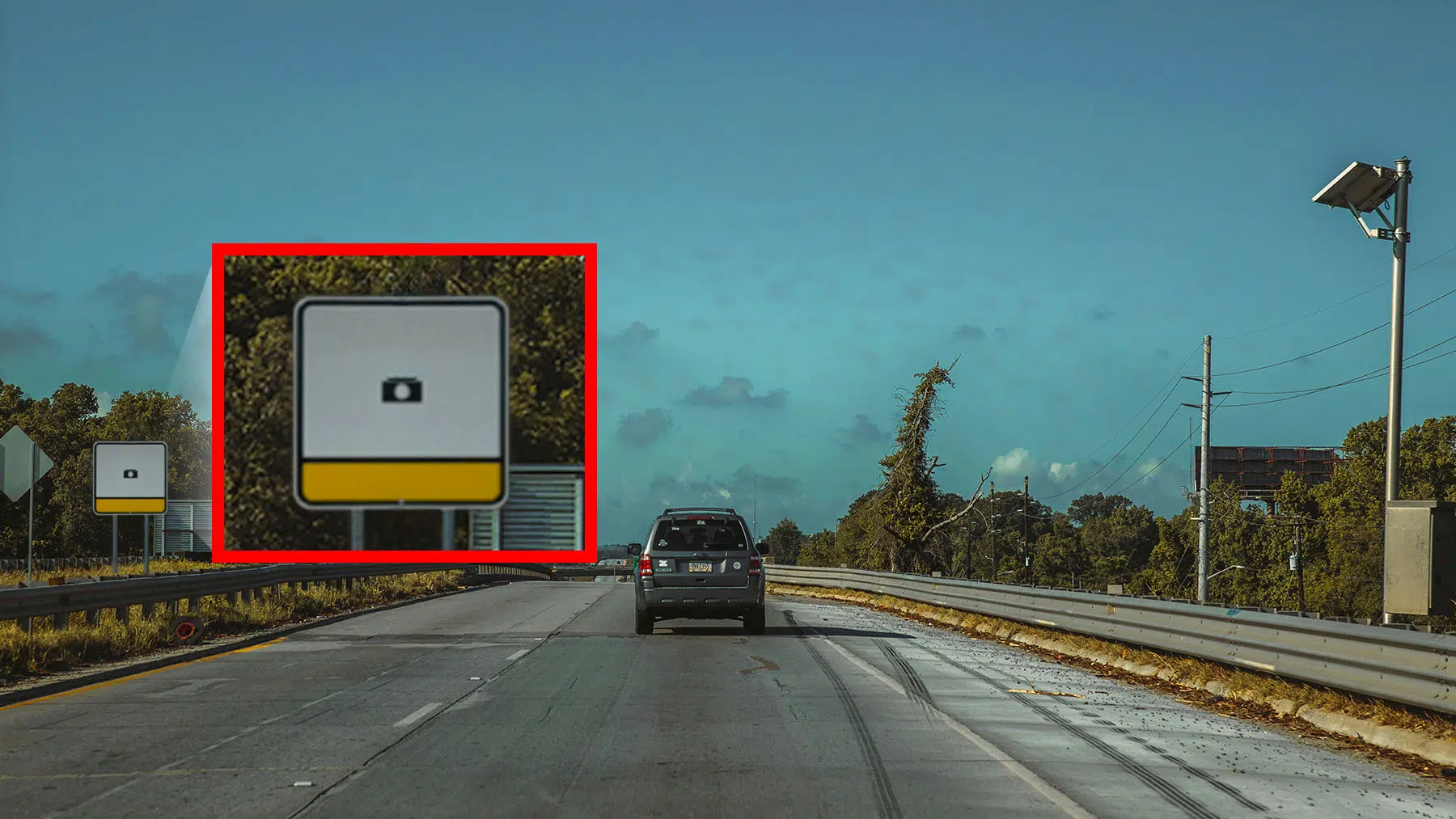
But one state didn’t just update and adopt — it went further and activated a mostly brand-new type of traffic signal under the new rules, complete with fines for drivers who don’t follow it.
And that’s exactly where things are starting to get interesting.
This new traffic signal warns of fines
California just took automated enforcement from concept to reality — and now drivers are being forced to deal with the consequences.
Under the state’s California Assembly Bill 645, cities including Los Angeles, San Francisco, Oakland, San Jose, Glendale, and Long Beach can install automated speed cameras that issue citations when vehicles exceed the posted limit in designated areas like school zones and high-injury corridors.
This isn’t a suggestion — it’s now law. AB 645 doesn’t just authorize cameras. It requires cities running these pilot programs to post clear signage in advance with “Photo Enforced” warnings so drivers know a camera system is ahead.
Once those cameras begin issuing tickets — after an initial warning phase, according to the City of Los Angeles — fines escalate based on how fast you’re going.
Drivers caught 11 to 15 mph over the limit face about $50, while going 16 to 25 mph over jumps to roughly $100. Speeds 26 mph or more above the limit hit around $200, and super-speeding (100 mph+) can result in $500 fines.
What used to be a hidden enforcement tool is now backed by law and clearly signaled.
Ignore it, and you’ll notice the cost in your mailbox — and in your wallet. The solution? The same as always: stay informed and drive patiently.
Read the whole thing?
Get the week's signal, not the noise
Our sharpest reporting on energy, climate and nature — free, once a week.