If you were asked to think of a good place to install a nuclear power plant, would on the ocean be your first thought? Well, that’s the business that UK company CORE POWER is in.
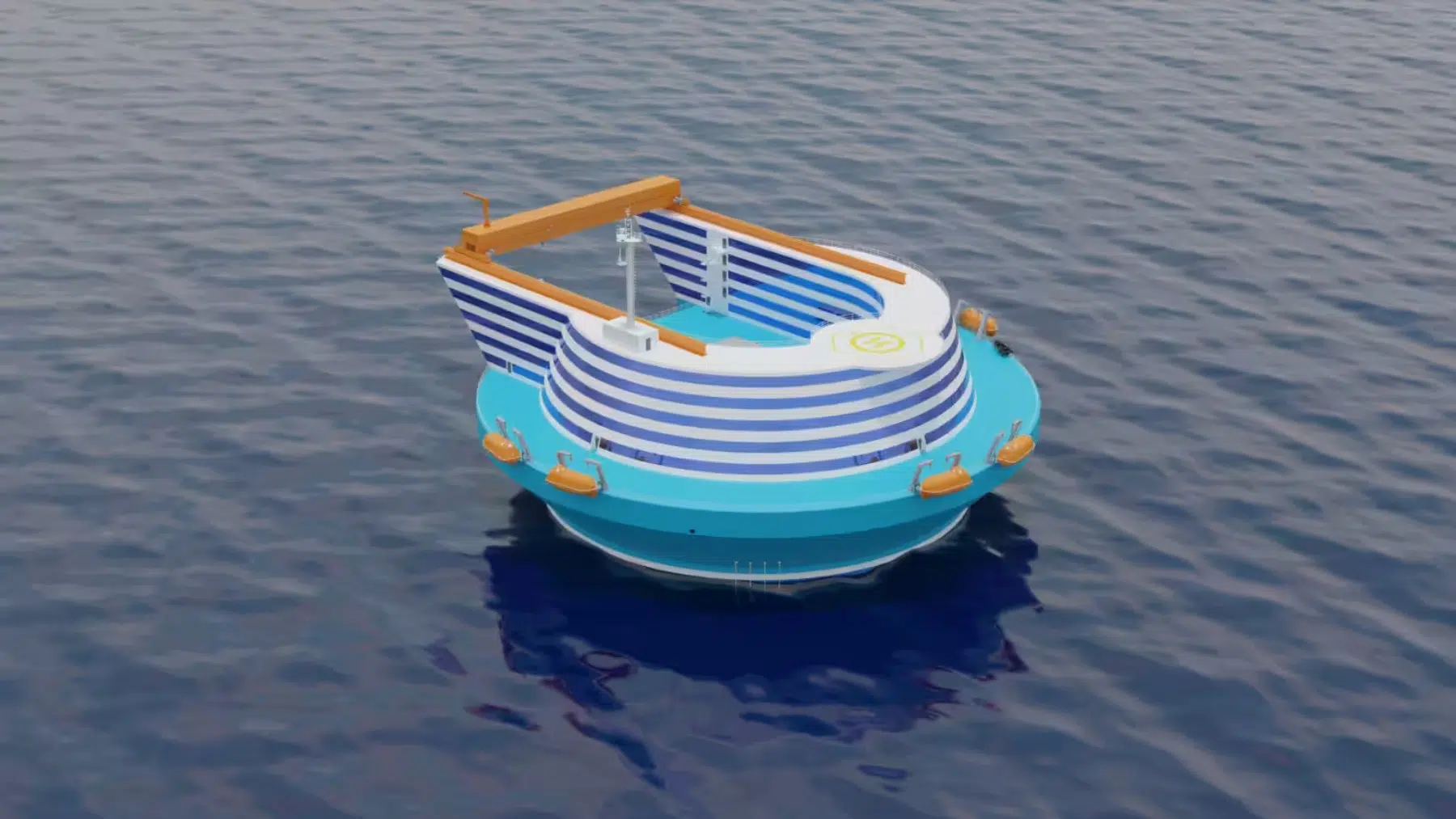
A group of 13 Japanese companies led by Onomichi Dockyard and Imabari Shipbuilding has invested $80 million in a project to build a floating nuclear power plant tethered to the ocean floor, and although it may take up to a decade, there’s already a buzz of activity happening around the major undertaking.
Nuclear power on the ocean: What’s the plan?
Oномichi Dockyard and Imabari Shipbuilding are leading the group of Japanese companies that have come on board with CORE POWER. They join a flotilla of shipowners and other maritime stakeholders buying into the London-based firm, which is run by Norwegian founder and CEO Mikal Bøe. Bøe has experience in shipping, technology, and finance, bringing a unique but ideal blend of skills to the table.
CORE POWER, founded in 2018, specializes in advanced nuclear reactors specifically for maritime heavy industry applications. Zero-emissions objectives are the foundation of their energy solutions with a focus on transportation in the shipping sector.
Demonstrations could take place as early as 2026
CORE POWER is a hive of activity as developers work on an ambitious, complex floating nuclear power plant featuring molten chloride fast reactors. The project is a collaboration between Southern Company from the US, TerraPower, and Orano of France, a nuclear fuel cycle company.
The target date for a demonstration reactor is 2026, and CORE POWER hopes to have the commercialization of the vessel product finalized by the early 2030s.
Nuclear-powered ships are expected within a decade
The International Chamber of Shipping (ICS) conducted a survey among its members classed as “C-suite” (CEOs, COOs, and CTOs) recently that revealed 9% of them expect nuclear-powered ships to be operating across the world’s oceans within the next decade. This reflects a growing trust in nuclear power as a viable and safe option for zero-carbon transport in the shipping industry. Bøe said:
“Floating new nuclear energy can power the production of the green fuels we need, at either end of green corridors and offshore major port areas. We can also see a growing interest in new nuclear-powered large ships with the combination of higher speeds, true zero emissions, and safe port calls bringing economic and competitive benefits to stakeholders.”
Nuclear ships are not the only vessels capable of utilizing nuclear power in the oceans—there are submarines too, of course. If you’ve ever wondered if you can own one for personal use, find out here.
Floating nuclear power plants (FNPPs) are entering the mainstream energy sector
The concept of Floating Nuclear Power Plants (FNPPs) is steadily growing in the public’s consciousness as a viable energy generation option rather than a rare and risky endeavor far removed from the average person’s daily life. Lately, several nations around the world have started considering nuclear power as an acceptable response to both energy security and climate concerns.
FNPPs have an important part to play in future grid stability, that much is clear. Nuclear power will also contribute to many governments achieving their renewable energy objectives and offer flexibility across various other applications, such as the production of e-fuels, desalination, the operation of data centers, and many more.
What are the benefits of nuclear energy?
There are several key advantages to nuclear power generation that make it an attractive future option for power generation, not just in the maritime industry:
- Low carbon emissions
- Energy security
- Energy independence
- High energy output
- Reliable generation
- Cost-efficient in the long term
- Low land footprint
It’s becoming clearer by the day that the age of clean and safe mainstream nuclear power is almost upon us, and the implications are positive now that the safety risks have been virtually negated through advancements in technology. Within a few decades, it’s quite possible that your home and perhaps even your car will be nuclear-powered.
Read the whole thing?
Get the week's signal, not the noise
Our sharpest reporting on energy, climate and nature — free, once a week.