
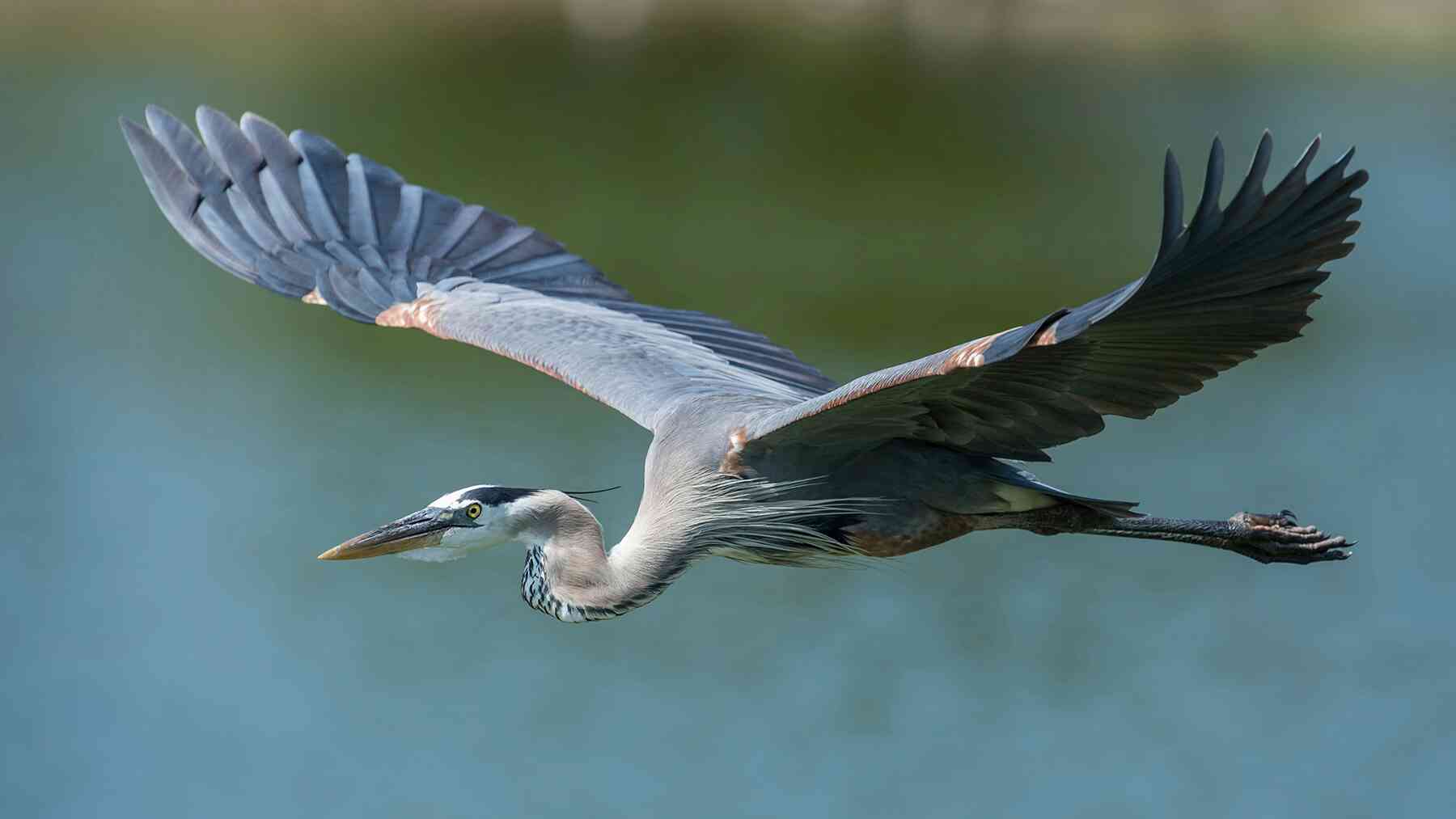
By late May, New York City is teeming with baby birds — fledgling robins hopping through parks, Red-tailed Hawk chicks perched on high-rise ledges, ducklings dotting the ponds. Most of the city’s 8.5 million residents never notice any of it.
Even fewer know about the raucous colonies of Black-crowned Night Herons nesting on obscure harbor islands throughout the New York–New Jersey estuary — the largest such breeding population in the Northeastern United States. For decades, these stocky, striking birds quietly thrived here. Lately, something has been quietly undoing that.
A hidden colony in the heart of the city
The harbor islands where these herons nest range from natural islets just off the Bronx coastline to abandoned human-made landmasses far out into New York Bay. They’re noisy, crowded, and almost entirely invisible to the millions of people living nearby.
Black-crowned Night Herons share these islands with Great Egrets, Snowy Egrets, and Glossy Ibis — a full assembly of long-legged waders that together form one of the most significant colonial waterbird breeding sites in the Northeast.
For 25 years, NYC Bird Alliance has tracked every one of these colonies. Each year during the last two weeks of May, their teams visit 20 islands and count every nest, egg, and chick. It’s a meticulous, long-running dataset — and what it’s now telling is a deeply troubling story.
From comeback story to crisis
Sixty years ago, none of this existed. Wading birds had vanished from New York’s waters by the early 20th century, driven out by hunting, habitat destruction, and severe pollution. Their return followed the passage of the Clean Water Act in 1972. Just two years later, birders spotted 50 pairs nesting on a small island off Staten Island’s north coast.
Over the following two decades, herons, egrets, and ibis gradually recolonized islands across the harbor. By the late 1990s, the harbor colonies supported as much as a quarter of all long-legged waders breeding in the entire Northeast — one of conservation’s quiet success stories, or so it seemed.
Then the numbers started moving in the wrong direction. A study published June 3 reveals the colonies have declined 27 percent since 2000. Black-crowned Night Herons — historically the most abundant species — have lost more than half their breeding population.
A disappearance by 2037?
NYC Bird Alliance’s analysis doesn’t just document a decline. It projects a trajectory. At the current rate, Black-crowned Night Herons could completely vanish from the harbor by as soon as 2037.
Dustin Partridge, the organization’s director of conservation and science, says the team expected to find a downward trend. An existential threat was another matter entirely. “What we’re showing is that they are going to disappear at some point in coming years,” he says.
That disappearance wouldn’t be contained to New York. Because the harbor hosts the Northeast’s largest breeding population, losing it would send ripple effects through the broader regional population — a species already declared endangered in Pennsylvania and Maine, and threatened in New Jersey.
Suspects but no confirmed culprit
What’s causing the collapse isn’t yet clear. Black-crowned Night Herons are known to be unusually sensitive to environmental contaminants — their young fail to thrive when pollutants are present, making them a sentinel species for ecosystem health. Pesticides, PCBs, and heavy metals are all on the suspect list. The complicating factor is that the Hudson River keeps getting cleaner on paper, which makes any contamination source harder to pinpoint.
Predators are another concern. Raccoons can raid nesting colonies so aggressively that an entire island’s breeding population gets erased within two years. Human disturbance plays a role too — jet skiers near shore islands can cause adult birds to abandon their nests entirely during the breeding season.
Racing to find answers before time runs out
NYC Bird Alliance isn’t waiting. This past May, the team deployed acoustic recorders on the islands to measure how frequently human activity disturbs the colonies throughout the breeding season, with plans underway to collect feathers and eggshell fragments for contaminant testing.
On the policy side, the organization is campaigning to add the Black-crowned Night Heron to New York State’s threatened and endangered species list. The state added species to the list for the first time since 1999 last year and has committed to further updates, making this a realistic near-term goal.
Looking further ahead, scientists are developing strategies to attract herons back to unused islands using decoys and audio cues. But Partridge is clear: that step only makes sense once the root cause of the decline is understood. Luring birds back to a dangerous environment would solve nothing.
The window is narrow, but it’s still open. “Good news is we’ve discovered it soon enough,” Partridge says. “We have 10 years to act.” What happens in that decade will determine whether New York’s harbor herons get a second comeback — or quietly disappear from the estuary for good.
Read the whole thing?
Get the week's signal, not the noise
Our sharpest reporting on energy, climate and nature — free, once a week.


