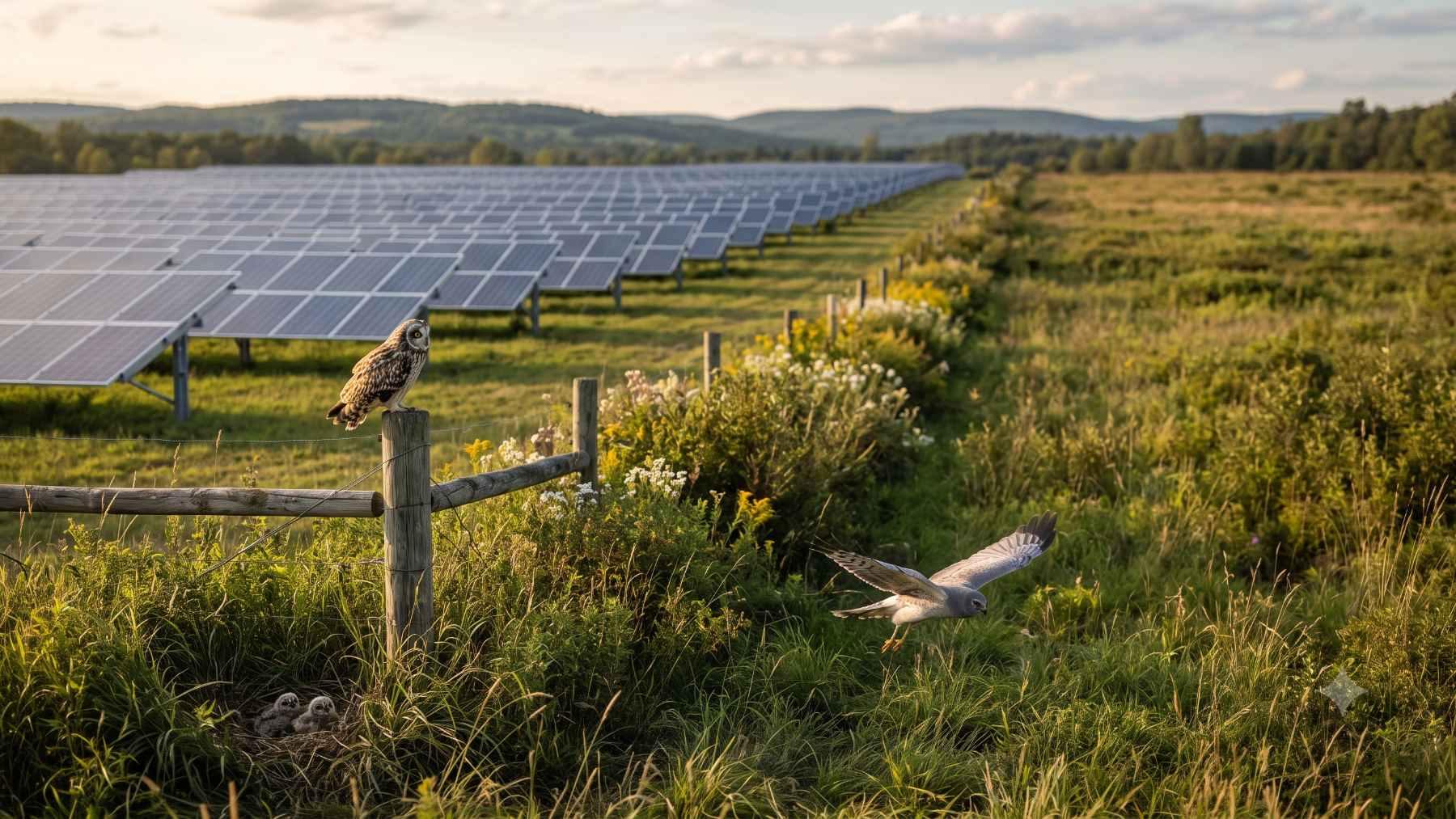
Owls find their prey at lower levels over New York’s open grasslands. Northern Harriers also use these open spaces to locate their prey.
Both need wide expanses of unbroken habitat, which became a problem due to a planned solar farm in Washington County.
As planning progressed, the overall size of the project footprint diminished significantly.
The new design will cover approximately 530 acres instead of the project’s original footprint. This also decreased negative effects on wildlife, wetlands, and agriculture.
What happened next?
Why this grassland became so important
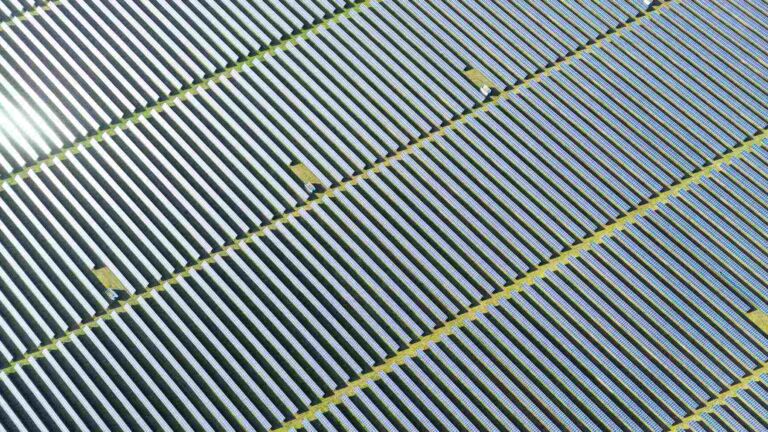
The Fort Edward Solar Project is being built in Washington County, NY. This county contains the Washington County Grassland Bird Conservation Area.
It is home to many declining bird species of the grasslands, including Short-eared Owls and the threatened Northern Harriers. Also depending upon this region for nesting are Bobolinks and Eastern Meadowlarks. Protecting these habitats became one of the primary debates during the permitting process.
New York state officials evaluated the project for a couple of years. Habitat conditions were also examined throughout the review process.
During the evaluation period, the designers made significant changes based on comments from agencies and stakeholders.
By the end of the evaluation, the total area affected by the project had been reduced by 146 acres.
Habitat loss for wildlife had been reduced by 136 acres.
Even though these reductions were made, some still questioned if there would be enough habitat available for grassland bird species in the future.
More than five years of discussions followed
There were many discussions about developing renewable energy and creating new habitat for grassland birds. They also discussed how to protect grassland bird habitat using private property. It took more than five years for Grassland Bird Trust and Boralex to develop a plan they could agree upon.
They also talked about various methods for mitigating impacts on grassland bird populations.
State officials continued reviewing the project as those discussions took place.
According to the NY Department of Public Service, changes made during the review process increased environmental protections.
Grassland Bird Trust expressed ongoing concern about habitat mitigation. Eventually, the organization filed an appeal to challenge aspects of the permitting process. For a short time, the fate of the project was in doubt.
An agreement that changed the outcome
Ultimately, Grassland Bird Trust and Boralex came to an agreement. Under this agreement, the Fort Edward Solar Project could move forward.
The organization would continue protecting grasslands. Those grasslands are located in the Washington County Grassland Bird Conservation Center. Boralex will contribute funds to Grassland Bird Trust to acquire land within the Washington County Grassland Bird Conservation Center.
The land will support long-term conservation efforts for grassland birds and the wider ecosystem.
The group referenced species such as Short-eared Owls, Northern Harriers, Eastern Meadowlarks and Bobolinks.
The organization said the agreement would help maintain grassland bird populations in protected areas across the region.
Once an agreement was reached, Grassland Bird Trust dropped its appeal against Boralex. It said its concerns about impacts on grassland birds had been addressed through the agreement.
What happened to the birds afterward?
The project proceeded under its new terms following the final agreement. So too did the habitat conservation effort.
Instead of terminating as a disagreement between renewable energy and wildlife preservation, this effort produced a solution.
It provided a means for both objectives to proceed simultaneously.
Future solar developments will likely encounter similar challenges. Similar conflicts have already forced some projects to change their original plans.
In other parts of the country, solar developers are facing similar challenges as they try to balance wildlife protection with clean energy goals.
Read the whole thing?
Get the week's signal, not the noise
Our sharpest reporting on energy, climate and nature — free, once a week.