

Antarctica is shifting beneath our feet.
For the emperor penguin, the ground itself is falling away.
What once felt like a distant threat is now a catastrophe happening in real time.
This isn’t just a prediction. It’s a documented collapse.
From melting sea ice to vanishing colonies, the signs are no longer subtle. One of Earth’s most iconic species is now officially Endangered.
What is driving this sudden, silent crisis toward a point of no return?
Antarctica’s warning shot: Why scientists are sounding the alarm
Experts started noticing strange patterns among emperor penguin colonies in Antarctica.
A few breeding sites started failing far earlier than normal. Others simply vanished from satellite imagery altogether.
Gaps appeared almost out of nowhere where thousands of penguins once congregated in numbers.
This raised a new, troubling question for researchers that they could not ignore.
Where were the penguins disappearing to?
Field studies only added to the confusion.
Survival rates among penguin chicks plummeted in monitored colonies. Even the strongest groups started showing signs of stress.
The crisis was no longer an isolated anomaly.
It was something far larger unfolding across the entire Antarctic continent.
A foundation in freefall: When the ground becomes a deathtrap
Emperor penguins depend on sea ice. It is the only stable breeding platform for the birds.
They gather on them during winter, lay their eggs, and raise chicks in an inhospitable part of the world.
Beneath the ice, something strange was taking place.
The ice in Antarctica needs to remain intact for months to ensure survival for the penguins.
However, researchers found that this icy foundation was not behaving as expected.
In some areas, the ice formed far too late for breeding to start.
In other regions, it breaks apart much, much earlier than it should.
Satellite imaging confirmed that something strange was causing this.
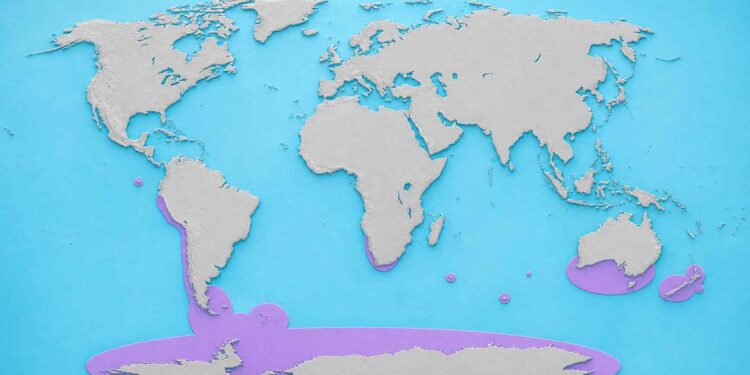
Chicks need the ice for protection. Their feathers are not yet waterproof.
And without the ice, they would simply perish.
The changes were not isolated and remarkably uneven.
But the overall trend was slowly being revealed.
The ice in Antarctica was no longer stable for the emperor penguin.
But why? What was causing this instability?
A report from the World Wildlife Fund has detailed the crisis, backed up by a press release from the International Union for Conservation of Nature and Natural Resources.
A race against time: Why the emperors’ reign is faltering
Climate change affects all living creatures on Earth.
For the emperor penguin, this abstract global shift has become a literal fight for footing.
The ‘fast ice’—the frozen bedrock of their world—is shattering months ahead of schedule.
Researchers have attributed this to climate change and rising global temperatures.
For the iconic penguins, it’s about far more than just an environmental shift.
It is a direct, albeit unintended, threat to their survival.
Their entire life cycle depends on stable sheets of ice in Antarctica.
When the ice breaks, the nursery vanishes. For thousands of chicks, it is a race against time they cannot win.
Meaning that one of the most iconic birds globally is now endangered.
Scientists warn of a rapid penguin population decline by the end of the century
Scientists aren’t just concerned; they are issuing a final notice.
By the end of the century, the emperor penguin could vanish altogether.
Some have estimated population declines of 90%.
That would ravage the penguin population over the coming years.
But the problem is not even isolated to penguins.
They are seen as key indicators of the Antarctic ecosystem. When their numbers decline, a chain reaction starts.
Researchers warn of a future where the once thriving Antarctica is a barren and lifeless land.
The question is no longer when the ice will break, but whether we will let the Emperors’ reign end on our watch.
Read the whole thing?
Get the week's signal, not the noise
Our sharpest reporting on energy, climate and nature — free, once a week.


