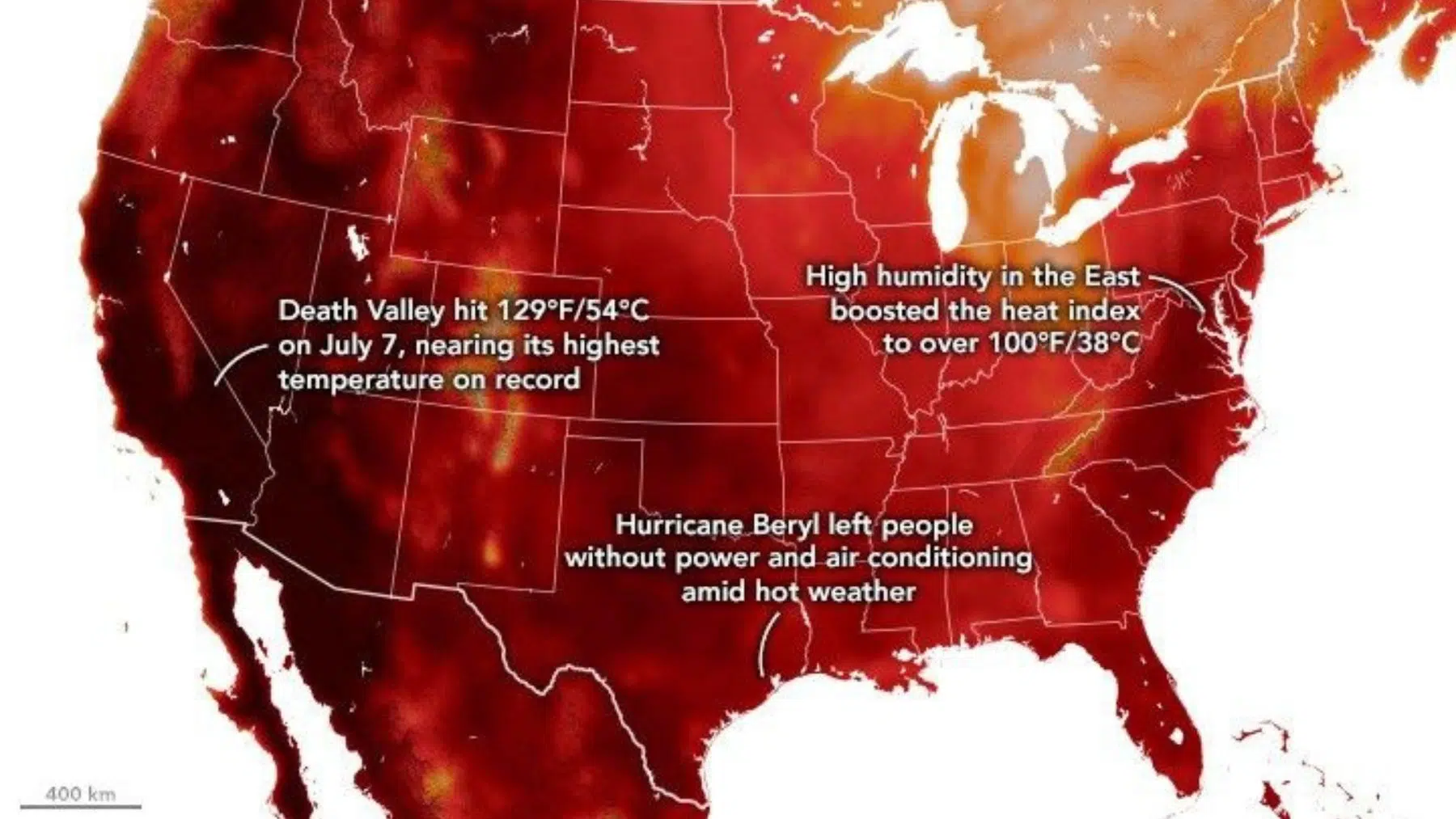
Picture the entire surface of our planet as a single living thermometer, every ocean, forest, glacier and cornfield averaged into one number. For all of recorded history, that number held within a range humans could count on. Then, last year, it did something it had never done in the 175 years we have been watching.
A line that took 175 years to cross
Scientists have been measuring global temperatures since the mid-1800s, building a record of how warm or cool the whole Earth runs from one year to the next. That record held through two world wars, through industrial booms and busts, through every drought and flood and blizzard in living memory.
For most of that time, the line on the chart climbed slowly and steadily. It climbed faster in recent decades. But one number, 1.5 degrees Celsius above the old pre-industrial average, stood as the threshold the world had agreed must not be passed.
In 2024, it was passed for a full calendar year for the first time. The Copernicus Climate Change Service confirmed 2024 as the warmest year on record globally, and the first calendar year that the average global temperature exceeded 1.5°C above its pre-industrial level.
Researchers combing through historical proxy data, including tree rings, ice cores and coral records, found no evidence of a year this warm in at least the past 125,000 years, a span of time so long that the word unprecedented barely captures it.
Why half a degree feels like so much more
A degree and a half does not sound dramatic. You would not notice it walking to your mailbox. But the climate system is not a backyard, it is a planet, and even tiny shifts in its average energy carry enormous force.
The difference between a rise of 1.5 compared to 2 degrees is significant. A warmer world intensifies the severity and frequency of extreme weather events, with cascading impacts on sea level rise, heatwaves, polar ice, biodiversity, health, drought, crop yields and ecosystems.
July 22 marked the hottest single day ever recorded, with the global temperature reaching 17.16°C, breaking every prior daily record in the books. The annual average sea surface temperature over the extra-polar ocean also hit a record high of 20.87°C, sitting 0.51°C above the 1991 to 2020 average.
In practical terms, that extra heat in the ocean surface meant more evaporation, more moisture loaded into storm systems and more energy available to push heatwaves further inland than forecasters expected. The numbers in the data translated, town by town, into days that felt like standing inside an oven.
The forces that pushed us here
Two things drove 2024 over the line. One was long in the making. The other arrived like an uninvited amplifier.
Human-induced climate change remains the primary driver of extreme air and sea surface temperatures, while El Niño, a natural warming of the tropical Pacific that happens every few years, gave 2024 an extra push without causing the underlying long-term rise.
Copernicus also found that 2024 carried the highest atmospheric water vapor content on record. More water vapor means more heat trapped. Combined with record ocean heat, that moisture fueled major storms, and every Atlantic hurricane between June and November was intensified by climate change-driven ocean warming.
Scientists noted that even without El Niño, the baseline from which it lifted temperatures has itself shifted so far upward that a similar natural event a generation ago would not have produced the same extremes. The amplifier is louder because the room is already hot.
What the 1.5°C threshold really means, and what Venus teaches us
Here is where the story takes a turn toward the stars. Venus, our nearest planetary neighbor, may once have been far more Earth-like, but a runaway greenhouse effect drove its surface to between 440 and 460 degrees Celsius. Scientists study Venus as a working laboratory for understanding how greenhouse gases reshape a world over time.
The Copernicus Climate Change Service confirmed that the Paris Agreement target is a long-term average, not a single year. Reaching 1.5°C in one calendar year is not the same as a formal breach of that treaty limit, but it signals that the world is rapidly approaching the agreed threshold. Think of it as a warning buoy, not a shipwreck. The ship can still change course.
Scientists watching Florida’s ocean temperatures saw the same dynamic play out close to home, where extreme readings forced a complete rethink of the baseline they had trusted for years.
The door that is still open
The past ten years, from 2015 to 2024, have been the warmest decade on record. As El Niño wanes, global averages should dip back below the 1.5°C mark. How long they stay there is almost entirely up to us.
Coral reefs, Arctic sea ice and rice crops that feed billions are all caught in the shift. A United Nations study found that holding warming below 1.5 degrees Celsius could save coral reefs from extinction and prevent massive Antarctic ice sheet loss.
The director of the Copernicus Climate Change Service said every major global temperature dataset agrees 2024 was the hottest year since 1850, and that swift and decisive action can still alter the trajectory of our future climate. That is not a bureaucrat softening bad news. It is the clearest thing the data actually shows.
Read the whole thing?
Get the week's signal, not the noise
Our sharpest reporting on energy, climate and nature — free, once a week.