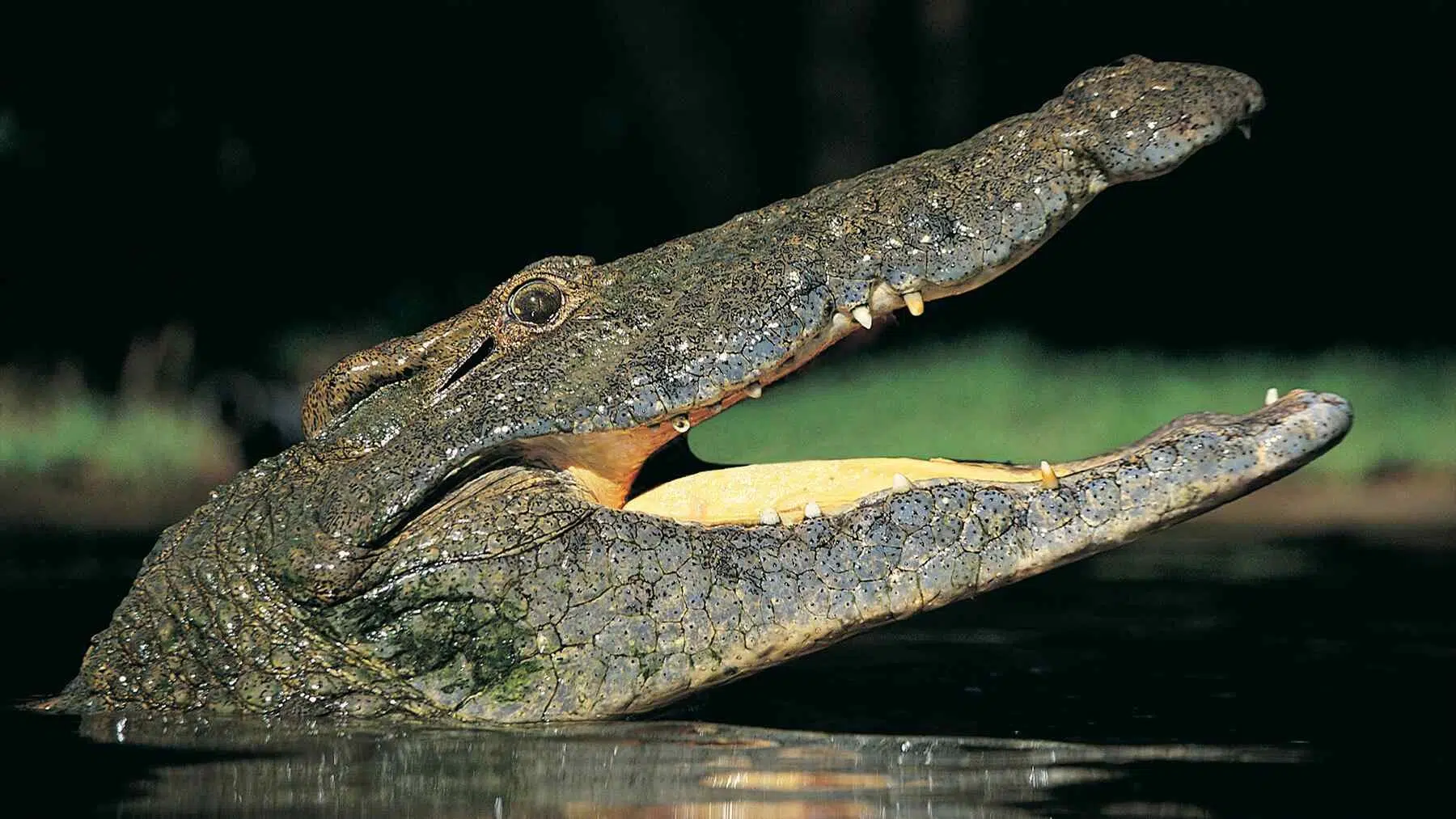
For most people, crocodiles belong on the ground.
Heavy bodies.
Short legs.
Slow movements beside rivers and swamps.
But experts studying ancient fossils found evidence of something that behaved differently.
It began life low to the ground, much like modern crocodilians.
Then its body changed dramatically as it matured.
Its limbs lengthened.
Its posture shifted upward.
Eventually, the animal walked on two legs for extended periods.
Researchers say the transformation would have made the creature look almost unrecognizable.
What was this strange yet familiar creature?
How a fossil left researchers puzzled for a very long time indeed
These particular fossils were discovered in ancient rock layers millions of years old.
At first, even the experts struggled to classify them.
Some bones resembled early crocodile relatives.
Others looked closer to fast-running reptiles adapted for life on land.
The confusion grew once researchers studied the limbs more carefully.
Young individuals appeared built for crawling.
Their bodies stayed low, supported by shorter front limbs and heavier proportions.
Adult fossils told a completely different story.
The hind legs became much longer and more powerful.
Hip structures also changed shape over time.
That suggested the animal gradually shifted posture while growing.
Researchers believe the transformation altered how it moved through its environment entirely.
Instead of remaining low and sprawling, mature individuals likely carried much of their weight upright.
The fossil evidence hinted at an unusual life strategy rarely seen among crocodile relatives.
Scientists started comparing the species with much older reptile lineages known for upright walking.
That comparison revealed just how strange the animal really was.
What researchers discovered about this animal’s movement
The biggest surprise involved how dramatically the body changed during growth.
Juveniles likely moved using a sprawling posture similar to living crocodiles.
Adults appear to have relied heavily on their hind limbs.
Researchers examined proportions, muscle attachment areas, and joint structures.
The anatomy suggested adult individuals could raise their bodies well above the ground.
Some scientists think the reptile may have alternated between different patterns depending on speed and terrain.
The long hind limbs likely improved endurance while traveling across dry environments.
That adaptation would have separated it sharply from modern crocodilians.
Researchers also noted changes in the spine and pelvis structure.
The result was an animal that may have looked oddly dinosaur-like while moving.
That combination fascinated the teams of experts.
Modern crocodiles represent only a small surviving branch of a once far more diverse reptile family.
Ancient relatives experimented with body plans that now seem almost alien compared with living species.
This animal became one of the clearest examples.
A publication in Nautilus Science showed crocodile evolution was once far stranger than most people realize today.
What the unusual crocodile relative actually turned out to be
Researchers identified the animal as an ancient crocodile relative from a much older branch of the crocodilian family tree.
Unlike modern crocodiles, it underwent major body changes while maturing.
Young individuals stayed low to the ground, while adults developed longer hind limbs and a far more upright posture.
Why scientists found it so unusual
The species combined traits rarely seen together.
It began life resembling a traditional crawling reptile.
Then it gradually evolved into a more upright walker as it aged.
Researchers say the transformation may have helped adults move efficiently across land while hunting or traveling longer distances.
The discovery also reshaped assumptions about crocodile evolution.
Today’s crocodiles appear highly specialized.
But ancient relatives experimented with wildly different forms long before modern species existed.
Some swam.
Some ran.
And at least one strange cousin appears to have spent adulthood walking upright through prehistoric landscapes.
Read the whole thing?
Get the week's signal, not the noise
Our sharpest reporting on energy, climate and nature — free, once a week.