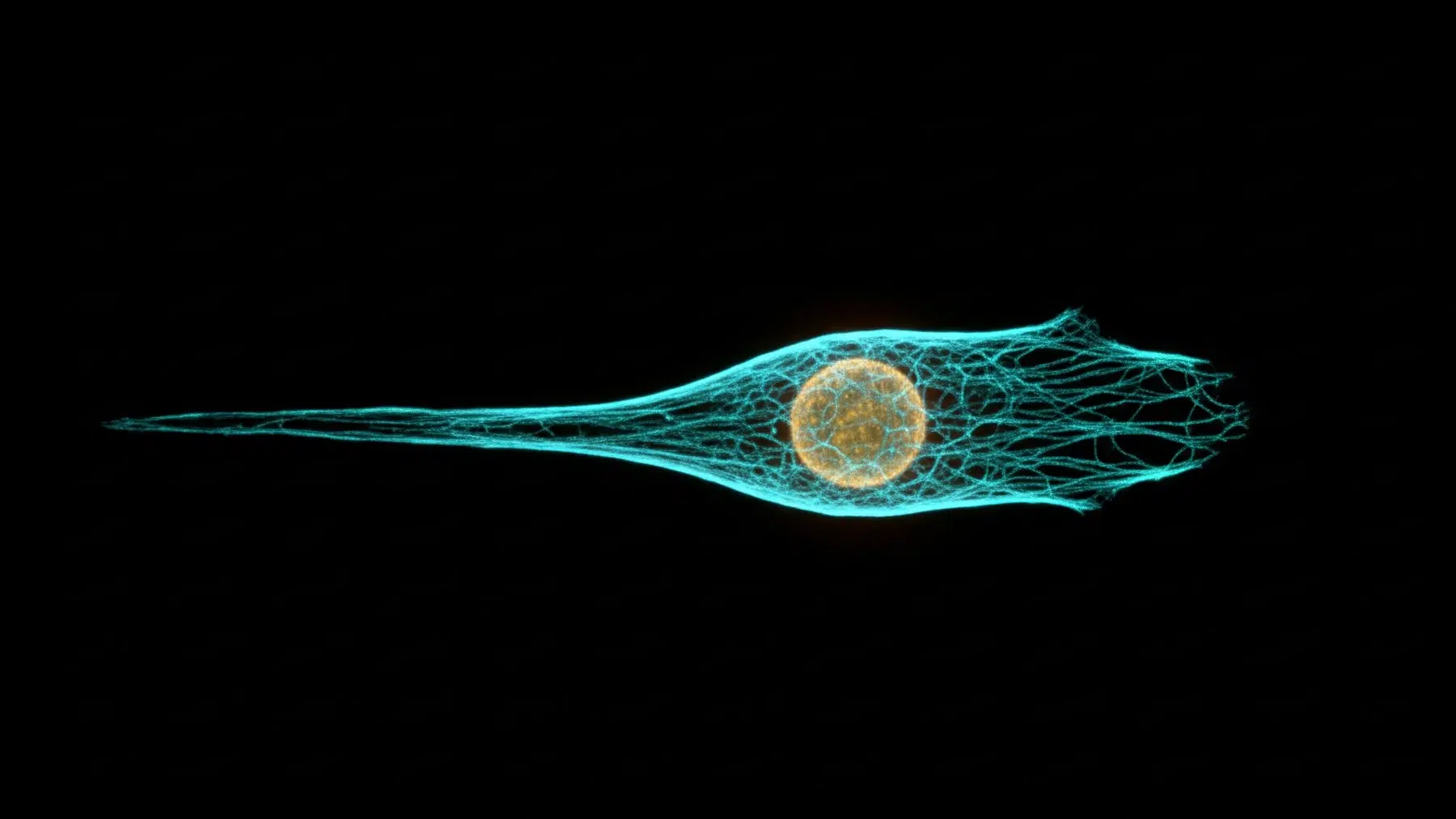
Somewhere in a laboratory on Long Island, microscopy images captured the moment a cell did something it was never supposed to do. The cell belonged to one of the most feared childhood cancers there is, a disease that starts in muscle tissue and has resisted major treatment advances for decades. And then, under the right conditions, it stopped being a cancer cell entirely.
A disease that starts where children are supposed to be strong
Rhabdomyosarcoma is a rare childhood cancer that typically begins in a muscle. The name is a mouthful, so doctors shorten it to RMS, but the reality behind those three letters is devastating for families.
Most rhabdomyosarcomas are diagnosed in children and teens, with more than half of them occurring in children younger than 10 years old.
About 350 to 400 new pediatric cases occur each year in the United States.
The most aggressive form is driven by chromosomal changes that produce rogue proteins, acting as fuel for the tumor’s growth. For those children, the odds have historically been far worse than for other cancer types.
Researchers who have spent careers studying RMS describe a disease that seems almost designed to resist the body’s own defenses, exploiting the very machinery that normally builds muscle.
The same brutal playbook, used for generations
Treatment has long involved chemotherapy, surgery, and radiation, procedures that are especially tough on kids. The side effects can follow a child for the rest of their life, long after the cancer is gone.
Between 1975 and 2017, the five-year survival rate for RMS improved from 53 percent to 71 percent in children younger than 15. Progress has been slow and hard-won.
Families watched other cancers get transformative new treatments while RMS seemed stuck.
One parent at a fundraiser described sitting in a clinic and realizing the treatment her son was receiving was almost identical to what had been offered to children in the 1980s.
The question every oncologist privately wrestled with was whether there was a completely different way to think about the disease, one that did not simply try to kill every cell in sight.
Six years of hunting for a hidden switch
For six years, Professor Christopher Vakoc’s lab at Cold Spring Harbor Laboratory had been on a mission to transform sarcoma cells into regularly functioning tissue cells. The idea sounds almost fantastical: persuade the cancer to give up.
The approach is called differentiation therapy. Instead of poisoning a tumor, you coax the rogue cells to mature into the normal tissue they were always biologically destined to become.
Using genome-editing technology, the team hunted down genes that, when disrupted, would force RMS cells to become muscle cells. It was painstaking work, the kind where failure is the most common result.
That is when a protein called NF-Y emerged, and with it, the first real sign that something extraordinary was within reach.
The moment a cancer cell became muscle
Scientists successfully transformed rhabdomyosarcoma cells into healthy functioning muscle cells. The work, published in the Proceedings of the National Academy of Sciences, came from Cold Spring Harbor Laboratory’s Vakoc lab.
When NF-Y is depleted from the cells, the cancer stops multiplying and starts to take on typical muscle features and functions.
As the cells transform, they take on typical muscle features, including the spindle-like shape of real muscle fibers. “The cells literally turn into muscle,” said CSHL Professor Christopher Vakoc. “The tumor loses all cancer attributes.”
This finding is still at the laboratory stage, and confirming it in human patients will take years of rigorous testing.
The way scientists now think about the human genome as a set of switches rather than a fixed fate is central to why this kind of reprogramming is even conceivable.
Why this particular discovery carries so much weight
The RMS discovery was supported by local families who had lost loved ones to the cancer, who came together and funded Vakoc’s lab in search of a new therapeutic strategy with some desperation.
If doctors could transform cancer cells into healthy cells, it would offer patients a whole new treatment option, one that could spare them and their families a great deal of pain.
The body already knows how to build healthy muscle. What this research suggests is that the cancer cell has not entirely forgotten how to do the same thing, and it just needed the right signal to remember.
Research into how the living cell can be redirected rather than destroyed is reshaping medicine in ways that felt like science fiction a generation ago.
“Every successful medicine has its origin story,” Vakoc said. “And research like this is the soil from which new drugs are born.” For the hundreds of American families who hear the words rhabdomyosarcoma each year, that soil has never looked more full of promise.
Read the whole thing?
Get the week's signal, not the noise
Our sharpest reporting on energy, climate and nature — free, once a week.