

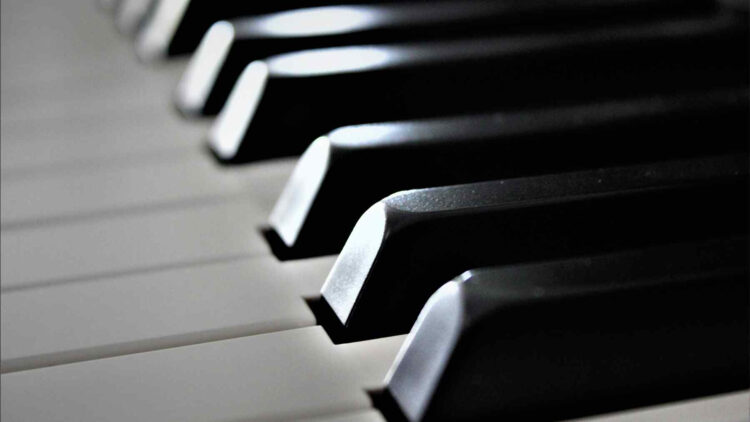
For decades, musicians have been saying that touch shapes how a piano note is heard.
Two musicians can press the same keys, yet produce different sounds. Now there’s a clear explanation why.
New mapping reveals that a musician can change the color of a piano’s sound through pure technique.
This supports a message that musos have been trying to get across for years.
Is it illusion, or is there a hidden physical mechanism behind the unique voice every artist drops on the keys?
How science is finally proving a 100-year-old musical legend right
People have been talking about measuring a pianist’s finger movements for over a century. It’s their dexterity and speed that draws all the attention.
It’s nearly impossible to record the minute adjustments during individual finger movements.
To get past the complexity, researchers had to develop new tech.
Tracking a musician’s finger motions and the exact location of each finger on the keys needed supreme recording accuracy.
Using this method of detailed analysis, researchers were able to pick up the slightest variations.
Of course, the elite of pianists were targeted in the study.
Researchers then asked professionals to try creating a variety of sounds from a single note. But the volume had to stay the same.
The directive was not to play the notes softer or louder.
They were only asked to change the nature of the tone.
The results clearly indicated that listeners could distinguish differences.
Even non-musicians were consistent in identifying tone differences.
As it turns out, the theory was right all along: the difference in sound is 100% real.
Beyond the notes: A single touch can alter the color of sound
There’s a clear link between the way a pianist played a particular key and how it sounded.
Researchers managed to pick up the slightest nuances in their recordings. They went even further and linked this to what listeners perceive.
The study showed that touch is not one simple motion.
It is a set of small, simultaneous actions.
Pressure, speed, acceleration, and coordination shift throughout a single keystroke.
Each shift changes how energy moves through the keyboard before the hammer strikes the strings. This is even though the hammer releases before impact.
What happens before release still shapes the sound that follows.
The recordings revealed repeatable movement patterns.
These patterns produced repeatable tone differences. In other words, the way the key is moved predicts the character listeners hear.
This is more than a loose connection.
It points to a direct cause-and-effect link between movement and tone quality.
For the first time, “touch” can be described in physical terms.
Interestingly, this also makes it a teachable skill. Players can practice the movements that produce the tone they want.
Teachers can give more focused feedback.
Students can learn more efficiently and are less likely to develop inefficient techniques.
This study, “A century-old piano mystery has just been solved,” published by the NeuroPiano Institute via Science Daily, details the explanation.
Why does this change how we understand sound?
Beyond music education, this study demonstrates that even small variations in human movement can produce significant, predictable differences.
This relationship is not exclusive to piano playing: the insights could contribute to our understanding of learning processes.
Ultimately, this study establishes a relationship between artistic expression and objective measurement.
Pianists were not merely expressing feelings about differences in tone
Researchers picked up real measurable differences in tone. After more than a century of argument, we now have evidence.
If small aspects of skill contain layers influenced by movement, how much more complex are the skills we describe as “feel”?
And how many of them are potentially measurable and awaiting further study?