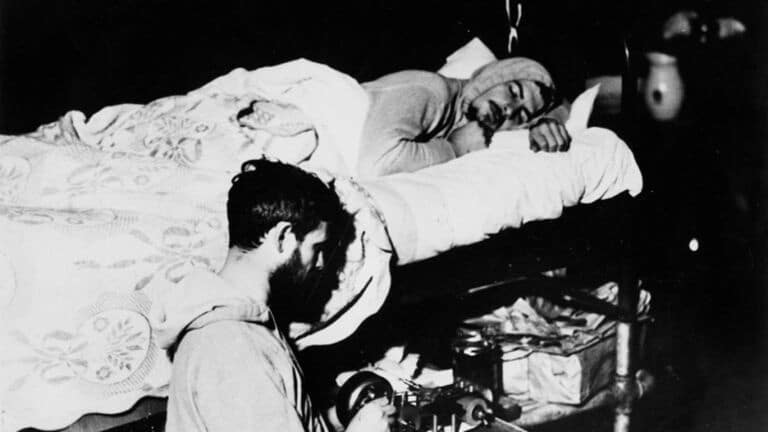
In late 2021, a Spanish climber named Beatriz Flamini climbed down into the dark and pulled the world shut behind her.
Her plan was to live alone 230 feet below a mountain in southern Spain.
No sunlight, no visitors, and no way to call the surface.
She carried in everything she would need and left nothing to chance.
She would stay for 500 days underground, longer than a year and a half.
What nobody could predict was how fast her own mind would let go of time.
The cave that had no clock
The cave sat north of the town of Motril, in the hills of Granada.
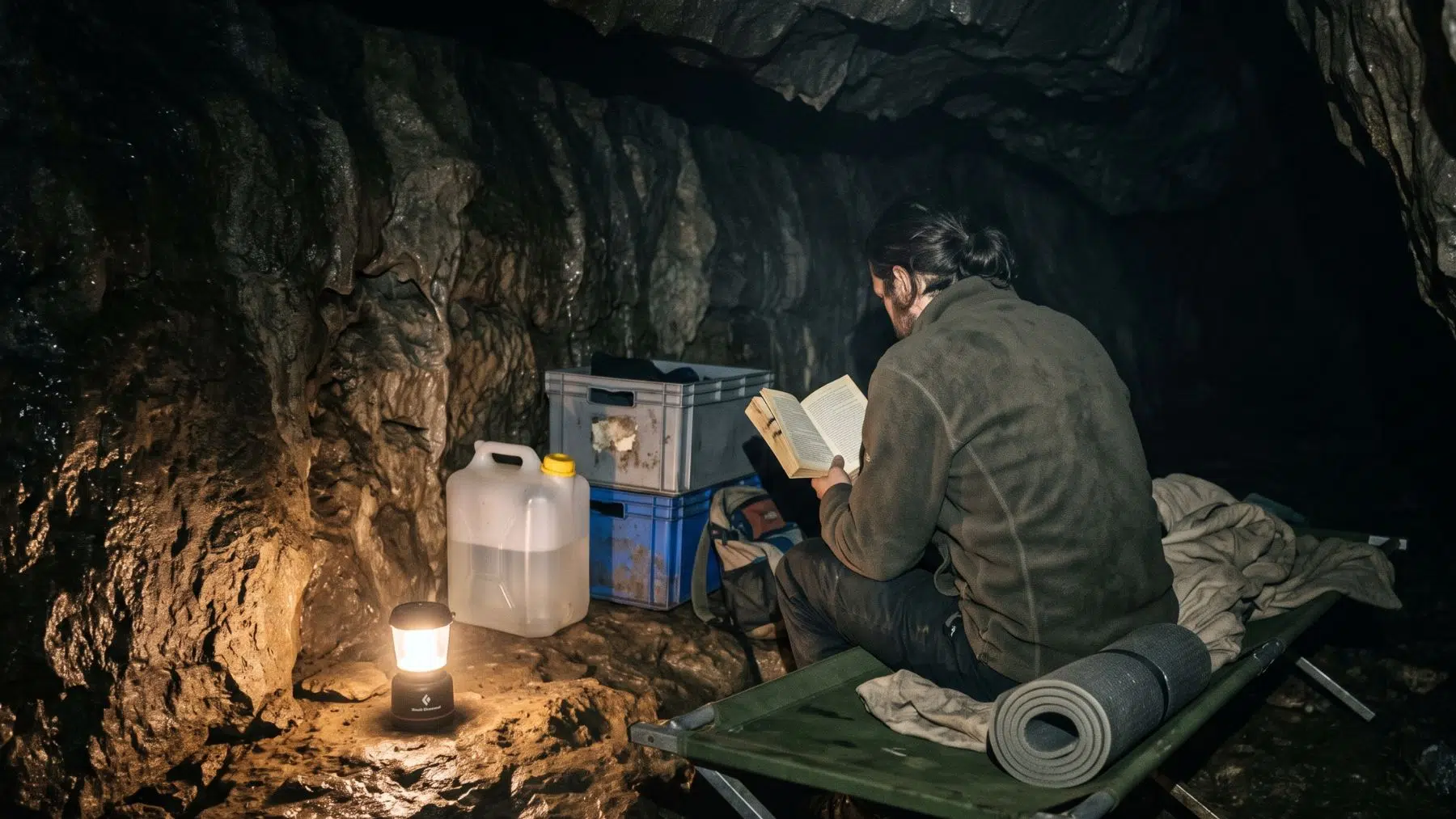
Its main chamber was about the size of a small apartment, with a ceiling three stories up.
A single lantern and her headlamp were the only suns she would ever see.
Down there the air never changed and the dark never lifted.
Flamini brought two GoPro cameras and filmed short messages every few days.
She read her way through 60 books and kept her body moving with daily exercise.
A support team left food and water without ever showing their faces.
From the moment she descended, every marker the brain uses to tell time was gone.
There were no windows to check and no sky to read.
Day 65 and the clock stops
For the first two months, Flamini tried to keep score of the days.
She counted sunrises she could not see and marked time as best she could.
She leaned on her body, her hunger, and her sleep to guess the hour.
Then, around day 65, the whole effort simply fell apart.
After that she stopped counting and let the calendar go.
It began to feel, she later said, like it was always 4 in the morning.
Without a sunrise or a sunset, one hour bled into the next.
Days, weeks, and months folded into a single long present.
The past and the present started to feel like the same blurred moment.
Why the brain loses track underground
The reason lies in a clock you carry in your own head.
Deep in the brain sits a cluster of cells that sets the body’s daily rhythm.
Left alone, that internal clock does not run on a clean 24 hours.
It drifts a little longer, closer to 24 and a quarter hours each day.
Daily light is what resets it and keeps it locked to the real world.
Think of it as a watch that runs slightly slow and needs a daily nudge.
Meals, chores, and contact with other people help hold it steady too.
Take all of that away, and the clock is free to wander.
Cut off from the sky, it slowly loosens its grip on the calendar.
What the 500 days finally showed
When the support team came to bring her out, Flamini could not believe them.
She guessed that only about 160 to 170 days had passed.
In truth she had been underground for the full 500.
That is a gap of more than 300 days between what she felt and what was real.
Already? No way, she told the crew who opened the cave.
To her, the extra months had never happened at all.
She had gone in at 48 years old and came out at 50.
Chronobiologists from the University of Granada and the University of Almería studied her along with the sleep firm Kronohealth.
They tracked how her body clock and her sense of time drifted across the months.
The data offered a rare look at a healthy brain cut loose from daylight.
Her long drift echoed the French explorer Michel Siffre, who lived six months in a Texas cave in 1972 and slid into 48 hour days.
The clock you never knew you needed
Most of us never notice this clock until something knocks it loose.
Jet lag is the same drift in miniature, packed into a single long flight.
Night shift workers fight it every week, awake when the body begs for sleep.
Even a late night of bright phone screens nudges the clock off its mark.
Flamini simply ran the most extreme version anyone has tried on purpose.
Yet the same forces tug at everyone who crosses time zones or works nights.
Her 500 days underground show how thin the thread to real time really is.
Like the steady pull that turns an offshore wind farm, the clock runs on cues we rarely count.
It is the same hidden loss as a fox chased off its land by solar panels, real but easy to miss.
The clock you never think about is the one keeping you tied to the day.
Read the whole thing?
Get the week's signal, not the noise
Our sharpest reporting on energy, climate and nature — free, once a week.