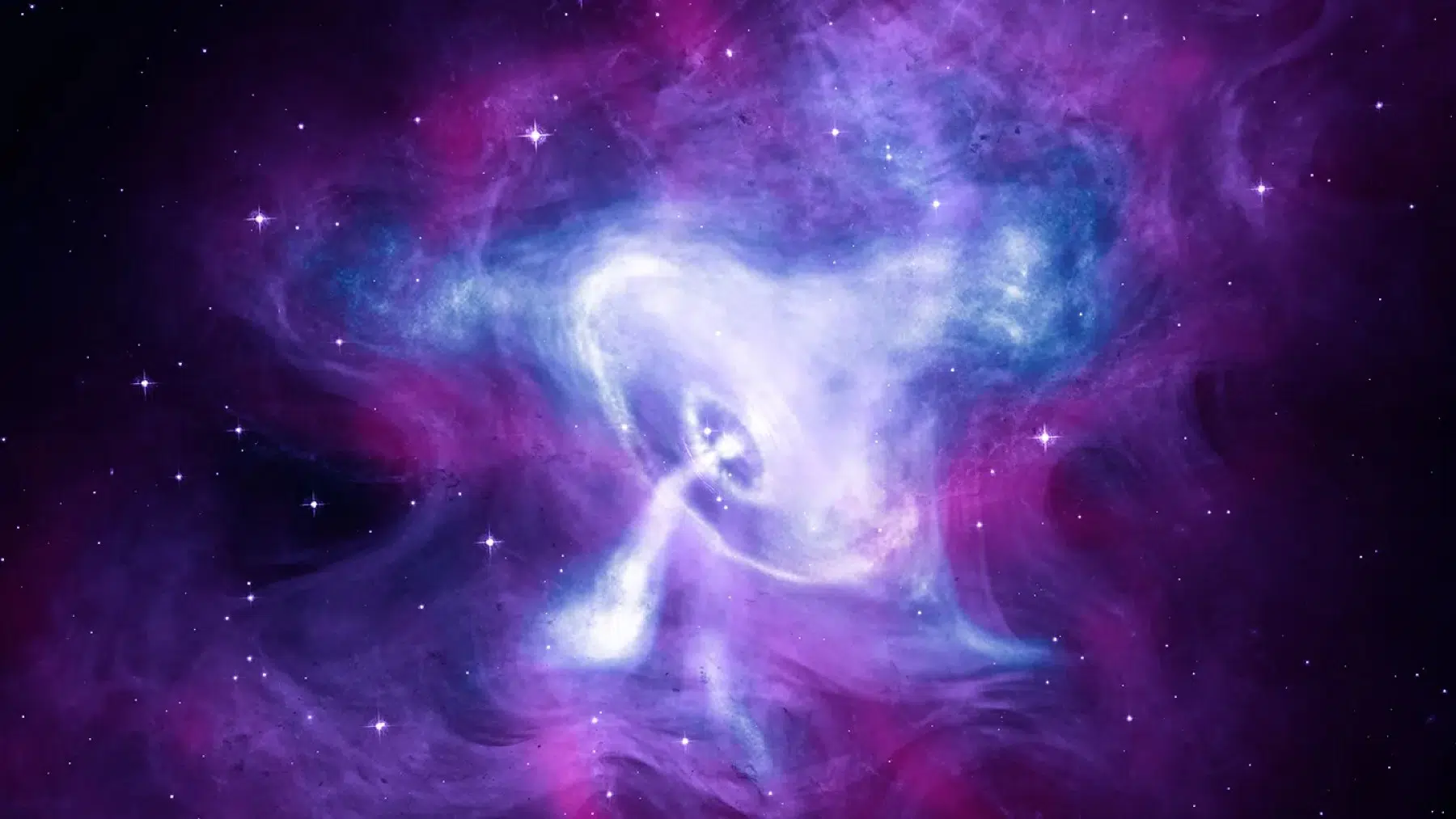
The search for life in outer space is a continuous effort by scientists to resolve one of humanity’s biggest questions: Are we alone in the universe? Earth is the only place in the cosmos that has the perfect environment for living organisms to proliferate, but NASA continues to search for any signs of life. In 1974, Carl Sagan and Frank Drake sent a message to whatever is out there, and they never heard back from it. Now, over 50 years later, there’s something sending signals toward Earth, and it’s driving astronomers crazy.
Signals have been sent to Earth for millions of years
Signals coming from deep space are not something new to scientists, and usually come from interstellar dust orbiting black holes. When the dust falls into the event horizon, it is sometimes expelled at near-light speed, and can travel millions of light-years until arriving on Earth. During these reactions, cosmic objects can emit flashes of light, but it takes time to be visible to scientists, astronomers, and researchers.
When scientists observe something ‘new’ in outer space, it means that light has traveled down to Earth to make things visible to us. It might seem like it’s happening right now, but in reality, we are just seeing what it looked like when light left the object, which means humanity is always late to get the breaking news of the universe. On the other hand, the same thing happens in reverse.
While studying the cosmos using two telescopes, scientists discovered another cosmic object sending a signal to Earth, but the most intriguing characteristic of this one is its rhythm – a pulse repeating every 44 minutes. Usually, bursts or jets are typical of dying stars when the gas cloud expands and some particles interact. But this one is more consistent than the previously recorded, with a pattern never seen before, and scientists are trying to figure out what it means to the Earth.
Astronomers have discovered a new object thousands of light-years away
Astronomers discovered a cosmic anomaly sending out pulses of radio waves and X-rays every 44 minutes. The object, named ASKAP J1832- 0912, was detected by the Australian Square Kilometer Array Pathfinder (ASKAP), a radio telescope, and NASA’s Chandra X-ray Observatory, two of the most powerful telescopes. Astronomer Andy Wang from Curtin University and lead author of the research that disclosed the discovery to the public in the Journal Nature stated that scientists have never found something like this before.
In a press release, Wang also said that finding out the ASKAP J1832-0912 was emitting X-rays ‘felt like finding a needle in a haystack‘. The unidentified cosmic object emitting the signal is located in the constellation Scutum, and it was only found due to a remarkable coincidence of both telescopes observing the same area in the night sky – if both were not ‘working together’, the discovery would have never been made.
The discovery was made ‘by mistake’
The Australian Square Kilometer Array Pathfinder radio telescope has a wider view of the sky, while NASA’s Chandra X-ray Observatory is aimed at only a fraction of it, sacrificing volume for a more precise analysis of a specific region. Luckily, both telescopes were pointing to the same area at the time, allowing the X-ray pulses to be detected from Chandra and the radio emissions captured by the ASKAP.
The cosmic phenomenon is classified as a Long-Period Transient based on the interval between the pulses. If the time of 44 minutes were reduced to seconds or milliseconds, then it would be in the class of the pulsars, whose time interval is a blink of an eye.
Read the whole thing?
Get the week's signal, not the noise
Our sharpest reporting on energy, climate and nature — free, once a week.