At 00:52 local time on May 19, 2026, a Vega-C rocket lit up the predawn sky above French Guiana and carried the Smile spacecraft into orbit. The mission it carries is deceptively simple to describe: photograph Earth’s magnetic shield.
For nearly four billion years, that invisible bubble has quietly deflected the solar wind — yet humanity has never been able to watch it work in real time. Smile, a joint ESA–Chinese Academy of Sciences mission, is equipped to change that, carrying X-ray and ultraviolet instruments no spacecraft has flown before.
A shield four billion years in the making
For nearly four billion years, Earth’s magnetosphere has deflected the relentless stream of charged particles the Sun sends our way. Without it, the solar wind would gradually strip away our atmosphere, leaving behind a rocky, lifeless surface not unlike Mars. The magnetic bubble generated deep within Earth’s core is, in the most literal sense, what makes life here possible.
That protection isn’t always seamless. When the solar wind intensifies into geomagnetic storms, the effects can be severe: satellites knocked offline, GPS signals degraded, power grids destabilized, astronauts exposed to elevated radiation. Understanding how the magnetosphere absorbs and responds to those impacts carries direct, practical consequences.
Decades of satellite missions and ground-based observations have still left the precise mechanics of that response frustratingly unclear. Scientists have never had a way to watch the whole system react in real time. Smile is designed to close that gap.
What Smile will do that no mission has done before
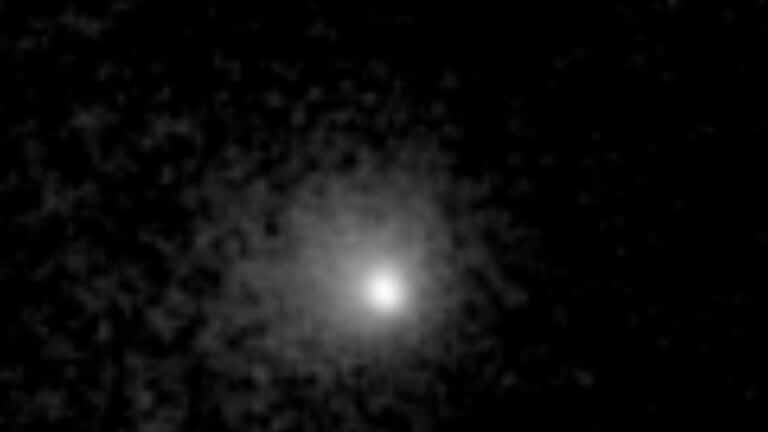
The spacecraft’s most novel instrument is its soft X-ray imager — the first ever to observe Earth’s magnetosphere directly in X-ray light. X-rays are emitted where the solar wind interacts with the magnetosphere’s outer boundary, making them a direct tracer of where and how the shield is being struck. No previous mission has captured that process as an image.
An ultraviolet camera will simultaneously record the full auroral oval — the complete ring of northern lights encircling the North Pole — continuously for up to 45 hours at a stretch. The last mission to observe the full auroral oval in ultraviolet was in 2008. Smile not only resumes that capability but extends it considerably.
The real value lies in combining both datasets at once. By comparing X-ray images of the magnetosphere’s boundary with ultraviolet images of the resulting auroras, scientists will be able to track how Earth responds to each solar event as it unfolds — in real time, start to finish.
The orbit and timeline: how Smile will collect its data
Getting Smile into position requires both time and precision. Over the month following launch, 11 engine burns will gradually raise the spacecraft into a highly elliptical orbit reaching 121,000 kilometers above the North Pole — far enough to image the entire magnetosphere in a single frame. It then descends to just 5,000 kilometers above the South Pole to downlink data.
Before science operations begin, the team must complete instrument commissioning: unfolding booms, opening camera covers, running system checks. That process is scheduled to conclude before July 2026, when full data collection begins. The mission is planned to run for three years — long enough to produce a dataset that could meaningfully reshape scientific models of Earth’s magnetic environment.

A genuinely international spacecraft
Smile carries a distinction beyond its instruments. It’s the first mission jointly selected, designed, built, launched, and operated by ESA and the Chinese Academy of Sciences — a milestone ESA describes as the culmination of 25 years of ESA–China cooperation.
The hardware reflects that breadth. Airbus Defence and Space in Spain built the payload module, while the X-ray camera was developed by the University of Leicester in the UK, in collaboration with the Mullard Space Science Laboratory, the Open University, and partner institutions across Europe. Contributions span 14 European countries, with ESA’s financial share reaching €130 million across more than 40 companies and institutes. Hundreds of engineers worked on the project for seven years.
Why the findings will matter beyond pure science
The science Smile produces will have consequences well beyond academic journals. Improved models of how the magnetosphere responds to solar activity will sharpen space-weather forecasts — the kind that warn operators before a geomagnetic storm can damage satellites or disrupt power infrastructure. As more assets enter orbit, and eventually more people, that forecasting capability becomes increasingly critical.
Smile builds on proven heritage. ESA’s Cluster mission has studied the magnetosphere with multiple spacecraft since 2000, and XMM-Newton pioneered the soft X-ray imaging technology Smile now applies in a new context. The foundation is established; what changes is the view.
ESA project scientist Philippe Escoubet has noted that the data could ultimately help keep astronauts and space technologies safe for decades to come. With Smile now in orbit and science operations approaching, that future is no longer hypothetical — it has a launch date.
Read the whole thing?
Get the week's signal, not the noise
Our sharpest reporting on energy, climate and nature — free, once a week.