
When you picture solar power, you probably see flat panels tilted toward the sun, either blue or black, rigid, and predictable.
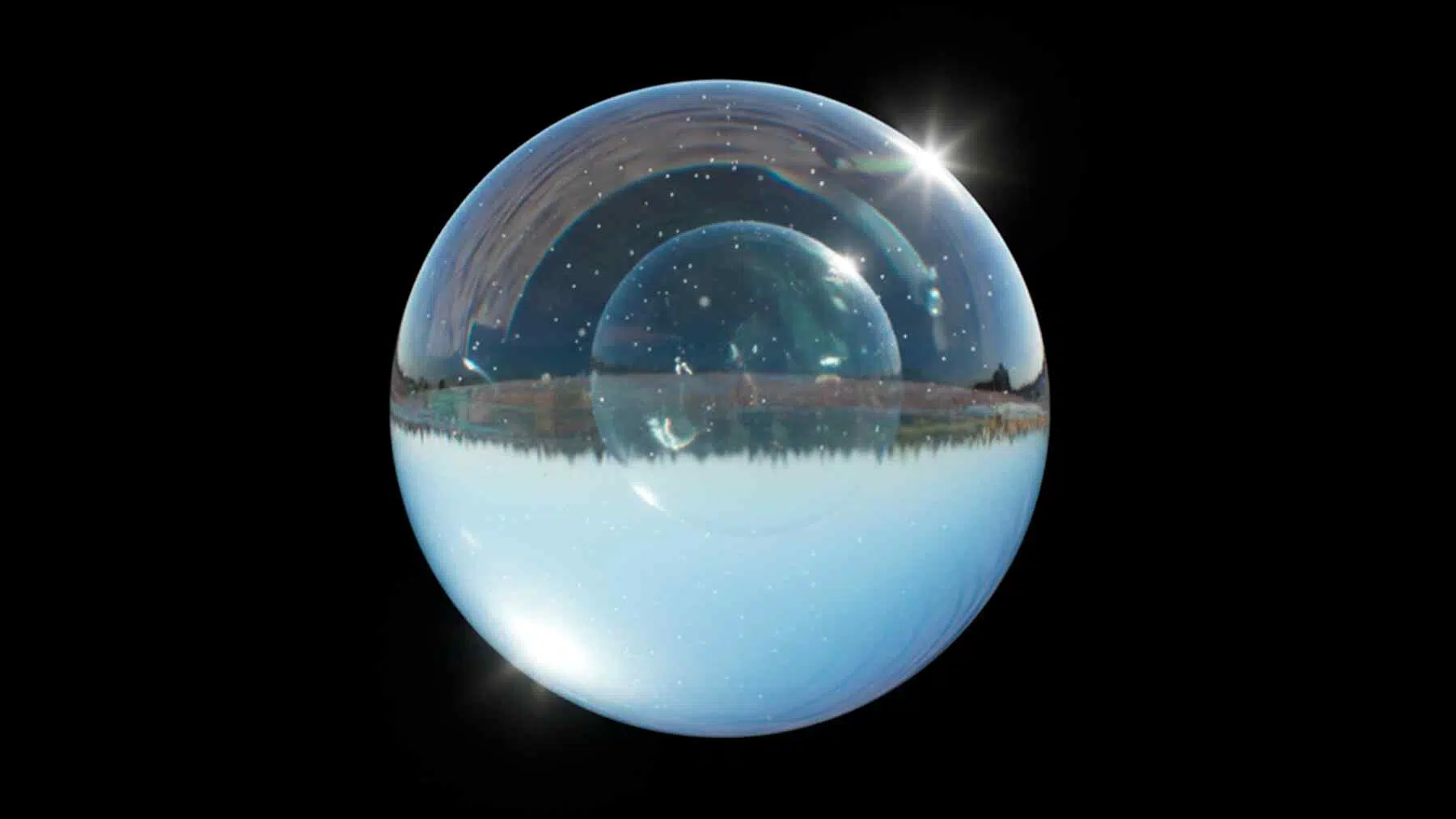
Now imagine something completely different — a small white sphere in the place where a panel would normally be.
It doesn’t look like a solar breakthrough, but researchers say this unusual shape may concentrate sunlight in ways traditional panels simply can’t. If they’re right, the future of clean energy might not be limited by physics, but by habit.
An unconventional shape: How a sphere concentrates light
Engineers in labs and design studios have been experimenting with something far removed from the solar panels we’re used to: transparent spheres that capture light from every direction.
One of the most talked-about examples came from Rawlemon. Instead of a flat surface, the system uses a fluid-filled, spherical glass lens that bends and concentrates sunlight onto a tiny solar cell tucked underneath.
Traditional panels work best when sunlight hits them directly at the right angle from clear skies in full brightness. These spheres, however, don’t depend on perfect conditions. They collect light when it is diffuse, when the sun is low, and even when the sky isn’t cooperating, which one man has a different solution for.
This lens focuses whatever light it finds into a tight, powerful beam that hits a much smaller photovoltaic cell, which means far less material is needed compared to a standard panel. And this is where it gets interesting.
Some of these systems can keep generating power under weak ambient light—think overcast days or even moonlight. Visually, they don’t scream “tech”; they look more like architectural features in that they are sculptural, minimal, and verging on decorative.
If something that subtle can quietly produce energy, what else have we been overlooking?
Data that will change perspectives
At first glance, it sounds like classic internet exaggeration: “10,000 times better.” You’ve seen claims like that before about miracle materials and breakthrough panels. Headlines that don’t survive basic math, but here’s where this one gets interesting.
Rawlemon’s spherical device isn’t claiming to create energy out of thin air. It’s not saying it produces 10,000 times more electricity than the sunlight it receives. It’s saying it concentrates light intensely: up to 10,000 times at a single focal point. That distinction matters.
Instead of spreading sunlight across a flat panel, the transparent, fluid-filled sphere bends incoming rays over and over as they pass through. The geometry does the work as the light converges into a tight, high-intensity spot, which means you don’t need as much photovoltaic surface area to capture it. This supercell has a similar effect but uses a different method.
Up to 10,000 more light, but there’s something else
In theory, that quality changes the equation due to less material required, a smaller footprint, and higher conversion efficiency at the focal point. Testing has suggested gains of up to 70% compared to traditional flat panels, which is not a small bump. That’s the kind of number that makes engineers lean forward.
Reviewers keep warning people not to oversell it. The 10,000 figure refers to optical concentration — how tightly the light is focused — not a multiplier on total electrical output. So which is it? A clever optical trick that delivers incremental improvements, or something that quietly reshapes how solar systems are designed?
If geometry alone can push efficiency that far, it raises a bigger question: Have we been thinking about solar panels the wrong way this whole time? That’s the part that deserves a closer look, like this solar cell that uses the same material as your jewelry.
Disclaimer: Our coverage of events affecting companies is purely informative and descriptive. Under no circumstances does it seek to promote an opinion or create a trend, nor can it be taken as investment advice or a recommendation of any kind.
Read the whole thing?
Get the week's signal, not the noise
Our sharpest reporting on energy, climate and nature — free, once a week.


