
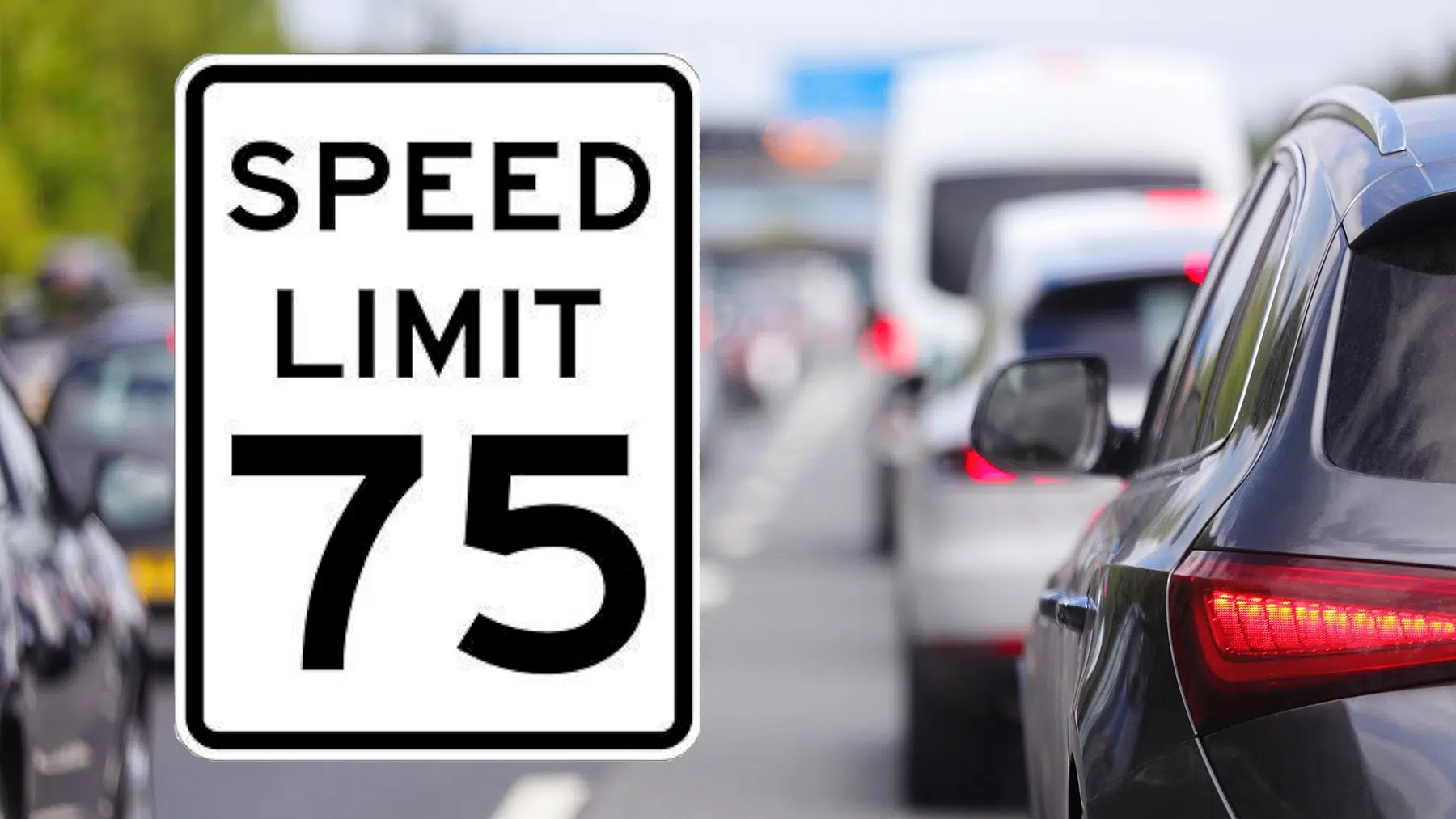
One state is raising their speed limits, but not without facing resistance from secondary parties. For decades, speed limits in the U.S. have been a tug-of-war between efficiency and safety. After the federal cap of 55 mph was lifted in the mid-1990s, many regions began raising their limits—some to 75 mph or even 80 mph on long, open stretches. Supporters argued it kept traffic flowing with modern vehicle capabilities, while critics pointed to studies showing higher speeds often bring higher crash rates.
Speed limit discussion never faded: states pushing for new limits on highways
That national debate hasn’t slowed. In recent years, more regions have looked at raising limits again, citing traffic patterns, road improvements, and public demand. The push comes as vehicle technology—from better braking systems to lane-keeping assistance—has given lawmakers new reasons to reconsider. Still, safety advocates warn that even the most advanced cars can’t change the laws of physics when collisions happen at high speeds.
Now the discussion has landed in one of the country’s fastest-growing regions, where busy interstates and long rural highways create their own mix of challenges and opportunities. Lawmakers there are weighing a plan that would put the state in line with its higher-speed neighbors, but only after detailed safety reviews. The proposal has already cleared key hurdles—and is about to take the next step.
New bill in Florida: If passes, speeders will have more room to drive
A transportation bill moving through Florida’s Legislature aims to raise the state’s maximum speed limit as part of the Department of Transportation’s plans for high-speed highways. However, Sen. Nick DiCeglie, R-Pinellas, presented an amendment to Florida Bill 462 that removes provisions authorizing an increase in speed limits. The Senate passed the bill 37-0 with that amendment, stripping out the language that would have raised Florida’s top speed limit by 5 mph, from 70 to 75 mph.
Raising speed limits has been a recurring topic in recent legislative sessions, with at least seven states seeking increases last year. Florida passed a similar bill in 2014, but then-Gov. Rick Scott vetoed it, citing concerns from local law enforcement about the risks involved.
Scott pointed out that while higher speeds may not directly cause all traffic accidents, they do tend to make crashes more severe, resulting in more serious injuries and deaths. The speed limit increase language remains intact in the companion House bill (HB 567) sponsored by Rep. Fiona McFarland, R-Sarasota, which passed its last committee stop and now heads to the House floor. If the House passes the bill with the speed limit increase, it would have to return to the Senate.
The bill changes everything: speed limit on roads, highways and more
- Remove the 40 mph minimum speed limit on roads with four lanes or more, allowing the Florida Department of Transportation (FDOT) to set minimum speeds.
- Raise the maximum speed on limited-access highways from 70 to 75 mph
- Increase the top speed on divided highways with four or more lanes from 65 to 70 mph
- Let FDOT set speed limits on other roads, raising the maximum from 60 to 65 mph
Dr. David Harkey, president of the Insurance Institute for Highway Safety, warns that increasing speed limits can undermine vehicle safety advances such as airbags and stronger designs. He explains that the higher a driver’s speed before a crash, the less chance they have to reduce speed to a survivable level, even if they brake before impact.
Safety concerns remain: AAA advocating against in multiple areas
Law enforcement and safety groups oppose raising speed limits. A 2021 study from AAA found higher speeds increase the risk of severe injury or death in crashes. Currently, 18 states allow speeds of 75 mph or more on some roads, usually rural highways. These include: Arizona, Arkansas, Colorado, Kansas, Louisiana, Maine, Michigan, Nebraska, New Mexico, and North Dakota.
Eight others — Idaho, Montana, Nevada, Oklahoma, South Dakota, Texas, Utah, and Wyoming — have maximum speed limits of 80 mph. Texas law allows speeds up to 85 mph where the road is designed for it, though no such limits are currently in effect. Meanwhile, another area is pushing for a 50mph limit.
Read the whole thing?
Get the week's signal, not the noise
Our sharpest reporting on energy, climate and nature — free, once a week.


