
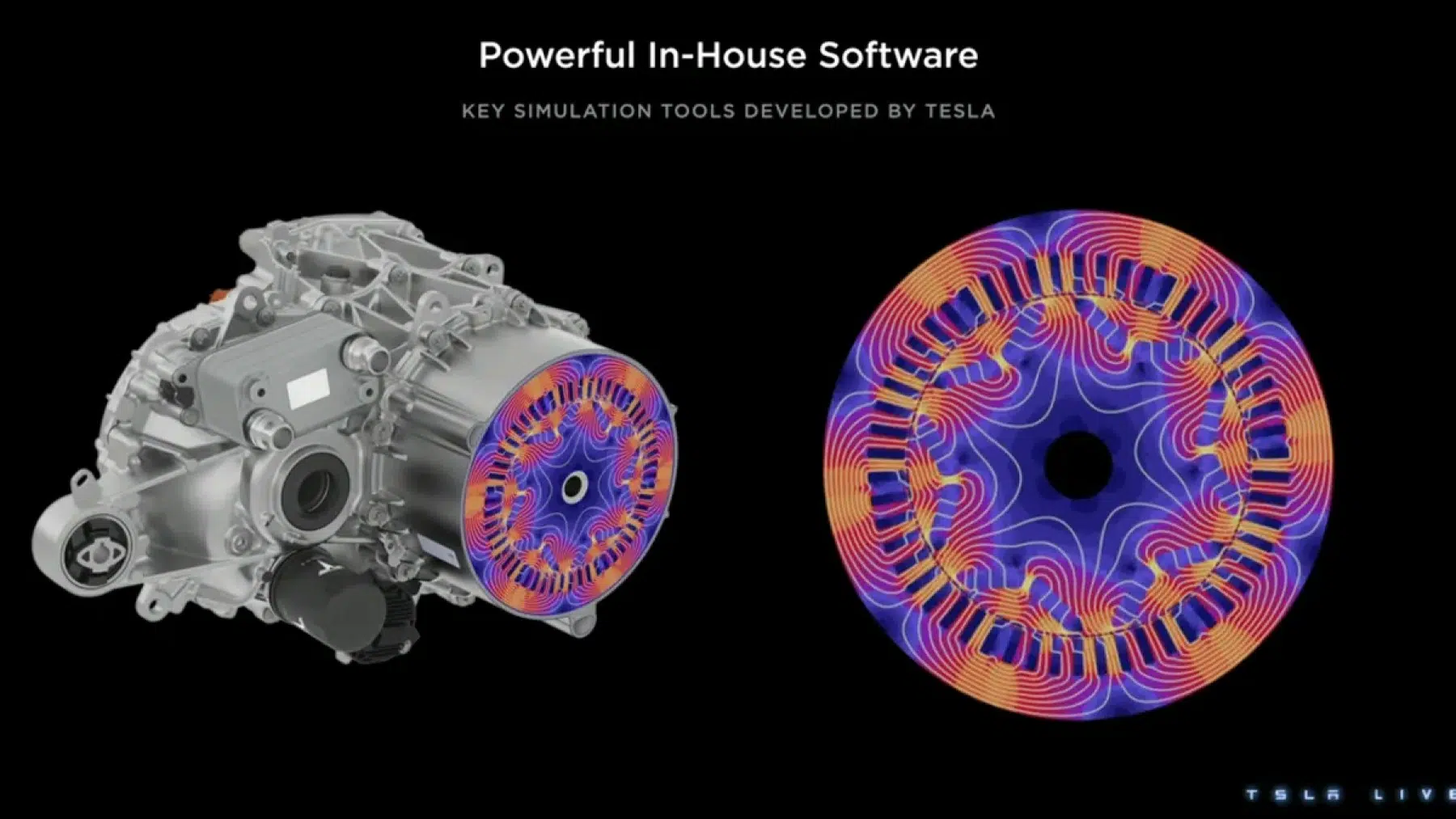
Tesla has always been at the forefront of innovation when it comes to electric cars and design for futuristic vehicles. Now, they are about to unveil one of the most advanced engines – and engineers are working on something never seen before for the new car. The company launched a couple of sporty models back in the days, before Musk became CEO, and only recently is making its way back to the supercar world with a new model that wasn’t supposed to come out, but a former employee spoiled the plans.
Engines are getting stronger – and cleaner
They need to power the future with an engine that could deliver the best performance, but also create something that remains carbon-free, which is increasing. Old-school drivers don’t seem to like electric cars because of the visceral part of combustion: the smell of burning gasoline, the noise, and the chassis vibrating – if the car is strong enough to make things like this happen. On the other hand, most electric cars are able to beat almost any car in a ten-second race.
There are a couple of videos of a Tesla Cybertruck beating Lamborghinis in a street race. This leaves the buyers confused. How a state-of-the-art supercar lost to the Cybertruck? The answer is in the engine. Electric powertrains respond faster than gasoline. Now, they are working on an engine so powerful – and clean – that will make European automakers question if combustion will still be viable.
The answer is in the Model S
One of the most closely guarded innovations in Tesla’s new Model S Plaid lies under the hood — or rather, in its new high-performance electric motor. Developed in-house, the motor is wrapped in a carbon fiber sleeve, a unique design that allows it to spin at much higher revolutions per minute (RPM) than conventional setups.
With three of these motors — two on the rear axle and one on the front — the Plaid delivers jaw-dropping performance: over 1,000 horsepower, a 0 to 100 km/h (0–62 mph) time of just 2.2 seconds, and a top speed of 320 km/h (198.8 mph). A previous version of the engine is inside the Tesla Roadster – which Elon Musk launched to the atmosphere in a SpaceX mission to showcase the power of the rocket.
But Tesla’s ambitions don’t stop there
According to CEO Elon Musk, the carbon-sleeved motor is “the most advanced ever used in a street-legal car,” rivaled only by specialized lab equipment. He also hinted that what we’ve seen in the Plaid is only the beginning. Musk suggests the next-generation Roadster — still in development — will push these innovations even further. While much of the engineering remains secret, Musk has confirmed that Tesla’s team is already working on ways to increase the motor’s torque and RPM limits. The upcoming Roadster will be the real test for these advancements.
Unveiled back in 2017, the second-generation Roadster has faced repeated production delays. But the company now claims the vehicle is on track for final development, with production potentially beginning soon. When it arrives, it’s expected to go beyond Plaid-level performance — featuring even greater range, faster acceleration, and possibly a rocket-assisted boost system developed by SpaceX.
Elon Musk has full focus on cars and spaceships from now on
Elon Musk appears to be concentrating his efforts on Tesla and SpaceX after stepping down from his advisory role with Donald Trump. Most recently, the EV company launched its first fully driverless taxi, operated entirely with its own vehicles. While other companies have also developed autonomous ride-hailing services, they rely on vehicles manufactured by third-party brands. For example, Alphabet’s Waymo uses Jaguar I-PACE models to power its driverless fleet, but hit on some bumps along the way with the National Highway Traffic Safety Administration.
Read the whole thing?
Get the week's signal, not the noise
Our sharpest reporting on energy, climate and nature — free, once a week.


