
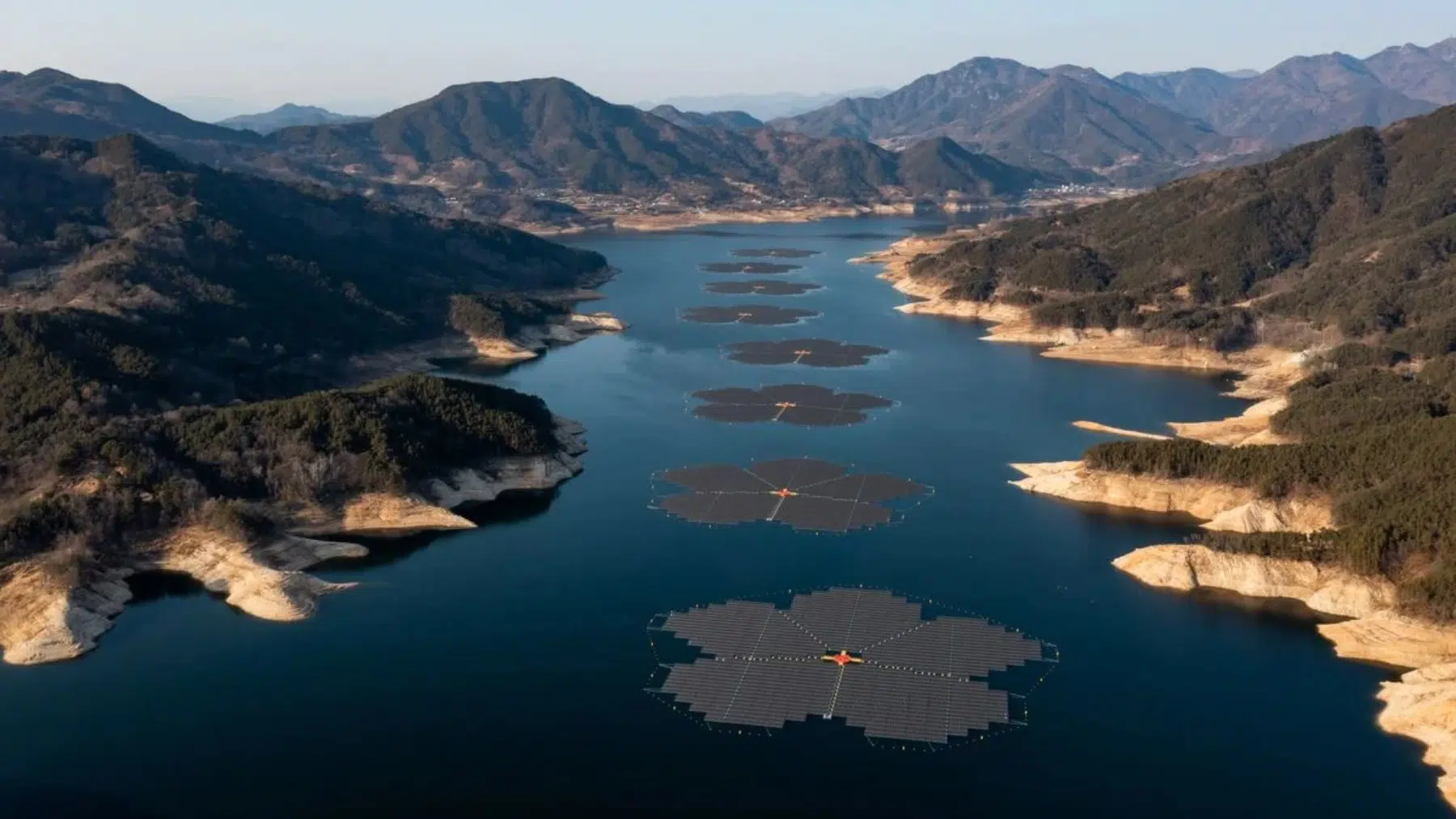
If you’ve ever wondered where to travel next, then this fun nation should be your next destination. It is a mountainous country meets island paradise, meaning you have many unique sights and picture opportunities. They also have 92,000 ‘powerful waterlilies’ ignited, marking the end of solar panels as we know them. So, the next time you visit, make sure to pack your camera or smartphone. Just remember to say “Kimchi!” when you’re taking a selfie or two.
The fun nation with 92,000 powerful waterlilies
South Korea is a fun nation that has always been connected with waterlilies through natural settings and cultural symbolism. This connection was taken one step further between 2021 and 2022, when the country’s solar energy capacity increased from 18.16 GW to 20.97 GW, thanks to floating solar facilities that resemble waterlilies. These powerful water lilies became the top power producers in Asia. Traditional solar panels started to be less practical due to mass urbanization and agricultural expansion, reducing usable land.
As waterlilies’ popularity and deployment increased, the Saemangeum Floating Solar Power Project came under commission. The project is situated in North Jaella, measuring 11.6 square miles, and will reportedly be the biggest floating solar power plant in the world. According to Solar & Storage Xtra, the Saemangeum Floating Solar Power Project commences commercial operation this year.
More powerful than anyone could imagine
The Saemangeum Floating Solar Plant will be more powerful than anyone could imagine. In full operational capacity, the facility can produce enough power for 1 million households. Its power will be delivered to Korea Hydro and Nuclear Power under a Power Purchase Agreement (PPA). Saemangeum Floating Solar Plant’s available capacity is 300 MW.
The Saemangeum Floating Solar Plant stands out from other projects because it allowed the community to invest. The investment of 1,400 residents resulted in $2.6 billion, which covered 4% of the project’s costs with a 10% yearly return over 20 years.
However, this is not the first floating solar facility in South Korea. The country saw its first powerful waterlilies with the Hapcheon Dam Floating Solar Power Project. This project comprises 92,000 waterlilies (or solar panels) and has been in operation since 2021. The project is situated on the 17-mile-long reservoir in Hapcheon and has a capacity of 41 MW. That is enough to supply electricity to 60,000 people, which is more people than the county’s total population of 44,434.
It will be the end of traditional solar panels
Hapcheon Dam Floating Solar Power Project is one of the biggest of its kind in the world and helped South Korea catch up in the global transition to renewable energy, seeing as it still heavily depends on fossil fuel imports. According to Moon Jae-in, South Korea’s president, these powerful waterlilies will assist the nation to be carbon neutral by 2050, whilst providing additional power of 9.4 GW (or nine nuclear reactors’ equivalent) to the energy grid.
These waterlilies have various benefits besides their power, including:
- Increased installation options, such as canals and reservoirs
- The ability to combine solar panels with water decreases the solar panels’ temperature
- Decreasing the temperature results in an increased efficiency of 10%
- Easier to connect to the power grid due to an existing hydroelectric plant grid or a reservoir’s close proximity to urban areas
- Solar panels help prevent the blooming of algae
While these types of solar plants have many benefits, numerous socio-economic problems prevent them from succeeding, including strict land laws and regulations, and public opposition. If these problems cannot be solved, the options for suitable locations for these plants become limited. According to The World Bank, these solar plants are also 18% more expensive than traditional plants. Further research and development will be required to make these powerful waterlilies more economically viable before they will ignite the rest of this fun nation and the rest of the world.
Read the whole thing?
Get the week's signal, not the noise
Our sharpest reporting on energy, climate and nature — free, once a week.


