History is filled with some of the greatest collaborations across various fields, including the dynamic duo of Lennon and McCartney and Watson and Crick, who discovered the DNA structure. Another historic collaboration combined science, art, and clean energy to solve the UK’s solar problem. The solution is planting energy trees with 36 flowering leaves. Discover why it is believed that the UK is too dark for traditional solar panels, and why these energy trees are the perfect solution.
The UK is too dark for solar panels
It is not entirely accurate to believe that the UK does not have enough daylight to produce sufficient solar energy, as the Met Office reports that the UK receives approximately 1,000 to 1,600 hours of sunlight annually, depending on the region. However, the efficiency may not be as desirable as one may hope, especially during certain weather and seasons.
Traditional solar panels are highly reliant on weather conditions and seasons. The following types of conditions in the UK impact solar panel efficiency:
- Overcast weather
- Decreased solar energy production
- Snow and frost
- Depending on the panels’ installation, heavy snowfall accumulates on the panels, preventing efficient solar production
- Combined with wind, it significantly reduces solar production
UK winters have the fewest daylight hours, and tend to have a higher occurrence of the abovementioned weather conditions, making traditional solar panels even less effective. However, the solution is planting energy trees if utilised on a larger scale.
The solution is planting energy trees
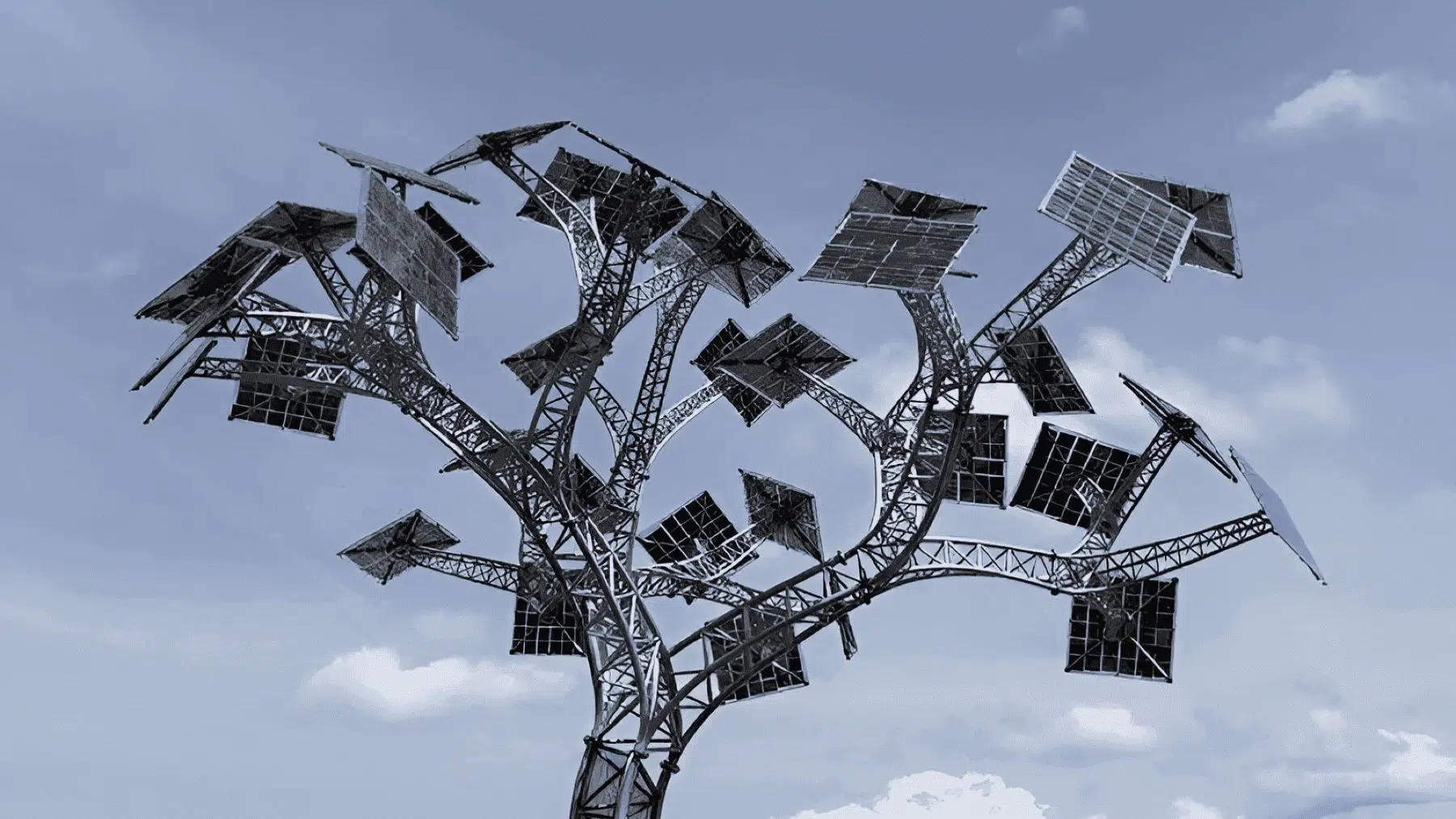
A collaboration in Bristol, South West England, resulted in something equally artistic and innovative. An English sculptor named John Packer, together with Demand Energy Equality, We The Curious, and the Bristol Drugs Project, combined science, art, and clean energy in a community project to create ‘The Energy Tree.’ It is essentially a metal sculpture that consists of 36 solar panel leaves.
The combination of art, science, and clean energy is not a new concept, and numerous designers have designed equally transcendent sculptures, such as the kinetic sculpture that dances with wind energy, better known as ‘The Gift of Wind.’ However, ‘The Energy Tree’ in the UK is remarkable, as it could potentially address the solar challenges the country may face during seasonal weather.
Additional advantages of the 36 flowering leaves
This 15 ft metal tree, installed in 2015 in Bristol, is not merely for aesthetic purposes, as its 36 photovoltaic (PV) leaves generate solar power and provide visitors in Bristol with free Wi-Fi and charging points for their cell phones. However, imagine if these metal energy trees could be enhanced and planted in areas across the UK to increase the use of efficient solar energy.
This will effectively reduce the country’s carbon footprint and address the higher cost of energy that Britons face during the colder winter months. According to the Bristol Green Capital Partnership, a 13-year-old naturalist was the inspiration behind the tree, and:
“He proposed that by mimicking the way in which trees grow, it might be possible to increase the energy captured per unit of surface area over the course of a year by an array of solar panels.”
There’s a reason they say that children are the future leaders of the world! The UK is not the only country that has embraced combining nature, art, and technology to create a revolutionary piece of engineering. In fact, scientists around the world are continually working to improve PVs, enabling them to be integrated into the most creative designs ever. An example is Dubai, which has struck new riches in something beyond oil. Visitors and locals are now enjoying Dubai’s photovoltaic palms, which are lighting up the skylines.
Disclaimer: Our coverage of events affecting companies is purely informative and descriptive. Under no circumstances does it seek to promote an opinion or create a trend, nor can it be taken as investment advice or a recommendation of any kind.
Read the whole thing?
Get the week's signal, not the noise
Our sharpest reporting on energy, climate and nature — free, once a week.