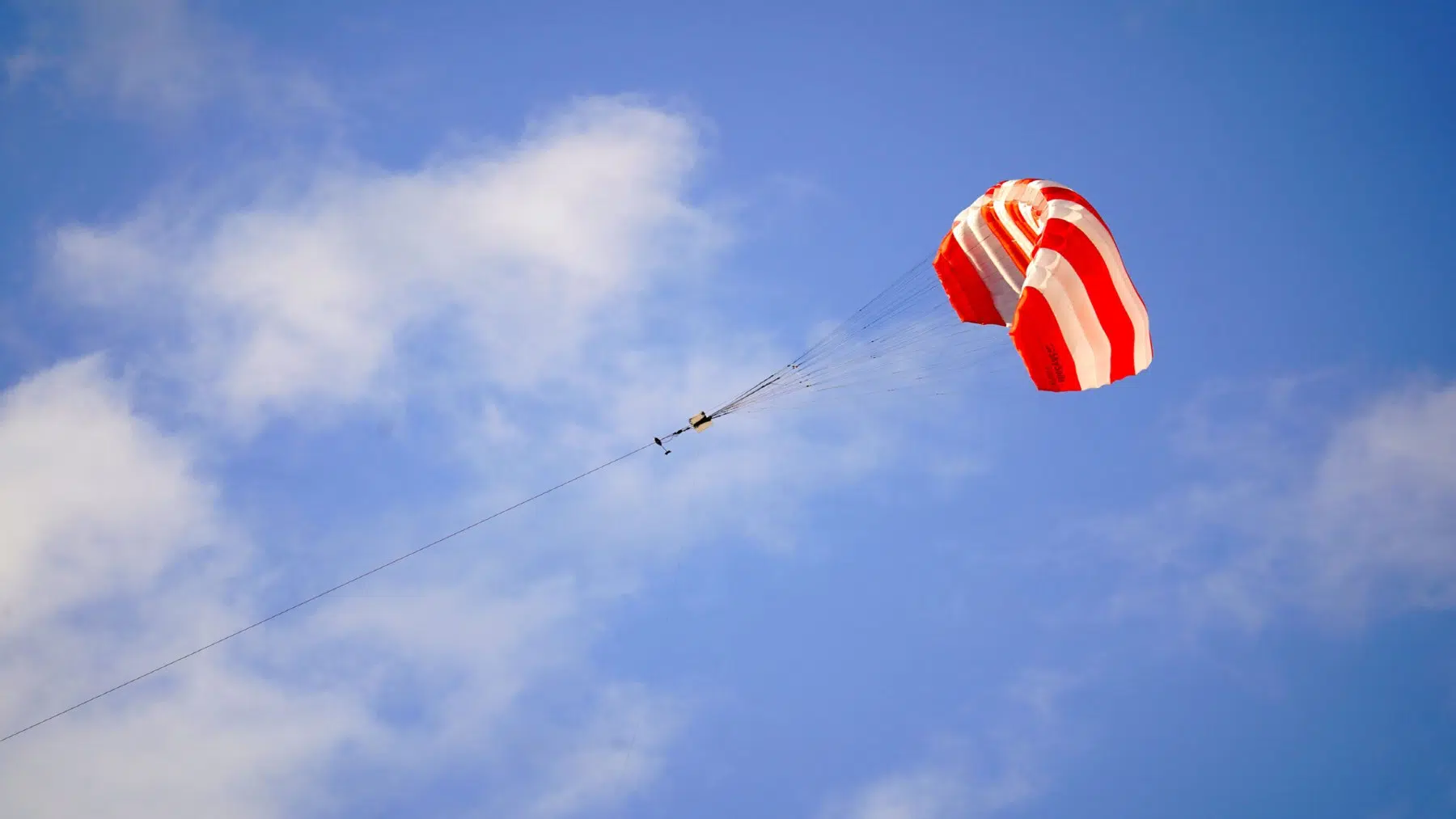
At first glance, it looks harmless. Almost playful. Something you’d expect at a beach or in a park on a windy day. No giant tower. No spinning blades. Just something light moving through the sky in smooth, looping patterns.
But don’t be fooled — this “toy” isn’t playing around. While traditional wind turbines stay rooted to the ground, this system goes exactly where the power is strongest: high above our heads.
Why the sky is the real powerhouse
Wind doesn’t behave the same everywhere. Near the ground, it’s messy — slowed by buildings, trees, and terrain. Up high, it’s a different story. Winds are stronger, steadier, and far more predictable.
That’s why engineers have been looking upward for years. If you can reach higher altitudes, you don’t need massive steel towers to catch more energy — you just need a smart way to stay airborne.
And once you do, the potential is enormous.
A system that lives in a shipping container
Instead of concrete foundations and heavy construction, this system starts on the ground inside something surprisingly ordinary: a 30-foot shipping container.
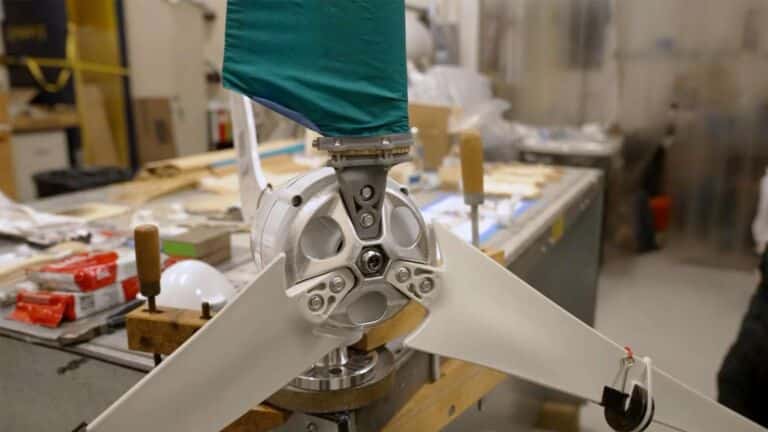
Inside that container sits everything needed to generate electricity — a generator, control systems, a winch, and grid connection hardware. No cranes. No months of construction. Just drop it in place, connect it, and let it work.
Once activated, the flying system climbs hundreds of meters into the air, where it begins repeating smooth figure-eight movements, completely on its own.
How the flying “toy” actually makes electricity
This is where the trick is revealed.
The flying device is connected to the ground by a strong tether. As it moves through the sky in wide loops, it pulls on that tether with significant force. That force turns a generator on the ground, producing electricity.
Each cycle has two simple steps:
-
During the power phase, the tether is pulled out and energy is generated
-
During the rewind phase, the system gently pulls the tether back using only a small fraction of the power it just made
This loop repeats automatically, day and night, without human control. The system flies itself, adjusts to wind conditions, and keeps producing energy as long as the wind cooperates.
Why this could replace traditional wind turbines
Now the full picture comes together.
The flying system — known as Venyo, developed by SkySails Power — can capture wind energy up to 750 meters (2,460 feet) above ground, where winds are far stronger than at turbine height. By flying in optimized patterns, it can capture up to four times more energy than conventional designs of similar size, producing up to 200 kW of power.
Because it’s lightweight, mobile, and made from high-performance textile materials, it uses far fewer resources than steel towers. There’s no massive foundation, little visual impact, and almost no noise.
Venyo is also fully autonomous, digitally monitored, and designed to operate in a wide range of wind conditions. It can be deployed in remote locations, fragile environments, or temporary setups where traditional turbines simply don’t make sense.
From islands and mining sites to disaster relief and hybrid energy systems, this flying “toy” shows that the future of wind power may not stand on the ground at all — it may fly above it.
And if that future takes off, the sky itself could become our next clean-energy infrastructure.
Read the whole thing?
Get the week's signal, not the noise
Our sharpest reporting on energy, climate and nature — free, once a week.