
The beans were ordinary cargo.
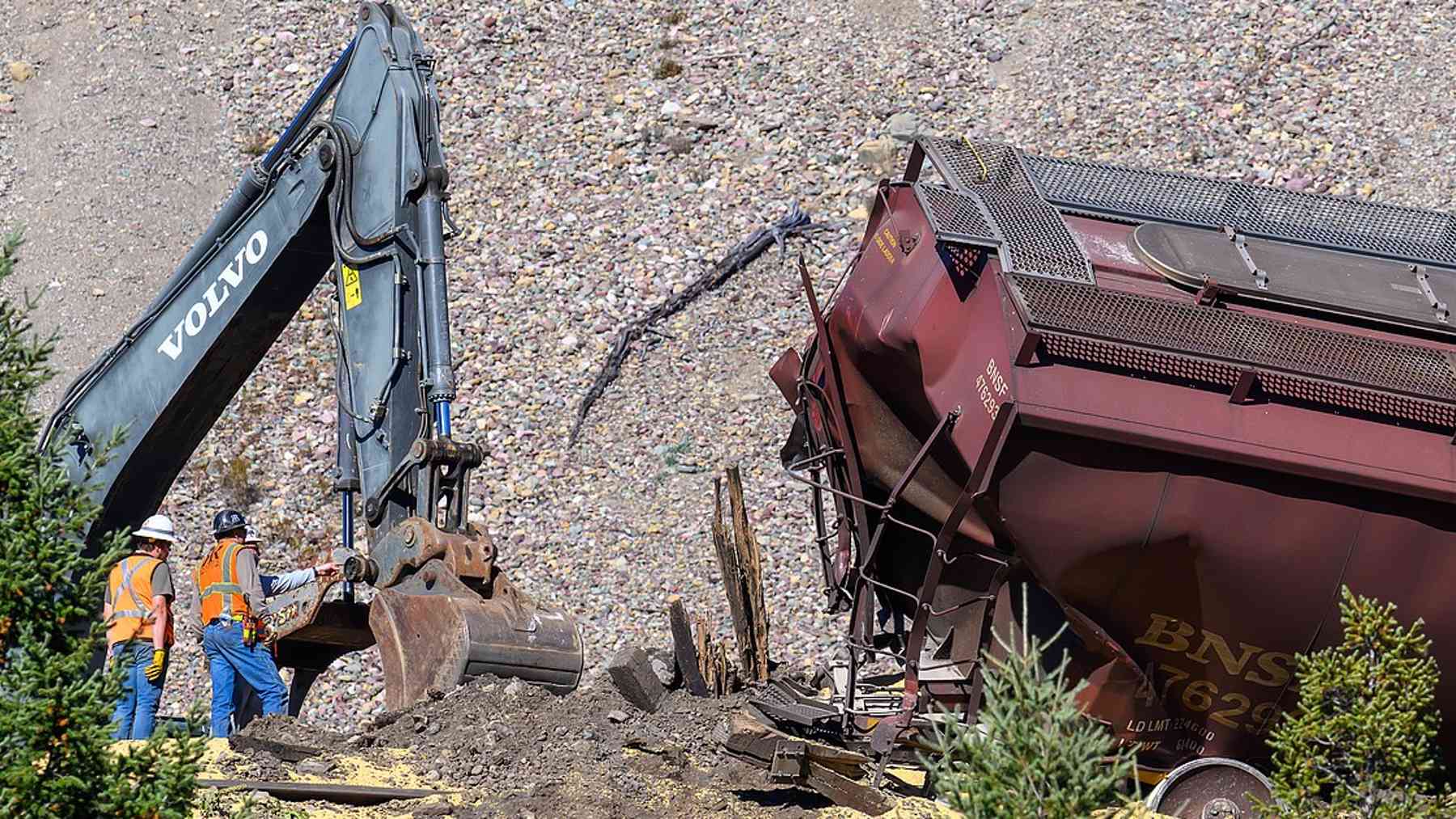
Hoppers on a westbound freight, rolling a corridor that links the Midwest to the Pacific Northwest.
Twelve cars tipped off the rails before dawn.
Two of them slid down a steep bank above the highway.
Nobody was hurt.
The problem was what spilled, and where.
Why spilled grain turns a railroad into a bear magnet
Soybeans do not sit inert on a wet slope. They take on rain, swell, split and ferment, and that is the whole reason a grain spill in this valley gets treated as a wildlife emergency rather than a housekeeping job. Local reporting on the railroad’s bear program describes the sequence plainly, soybeans left in the open ferment and draw bears straight onto the right of way.
That is a dangerous place for a grizzly to eat. Energy dense food pulls bears onto the railbed to forage, where they can be struck by trains, and many of the bears killed along the southern edge of Glacier have been found with grain in their stomachs.
Layer that onto autumn, when bears are feeding hard before denning, and a loose pile beside live track reads as an enormous, effortless meal. So when a loaded grain train leaves the rails here, the clock starts immediately.
What actually happened on the mountainside
A busy rail corridor through northwest Montana closed after a westbound grain train derailed at about 5:42 in the morning near Bear Creek, roughly four miles east of Essex, spilling hundreds of tons of grain on the southern edge of Glacier National Park. Twelve cars left the tracks, about two miles from the Goat Lick and just above the Bear Creek river access site on the Middle Fork of the Flathead.
Two cars went down the steep bank toward U.S. Highway 2, one of them stopping about 150 feet from the road. The load turned out to be soybeans rather than the corn it first appeared to be.
Both main line tracks were blocked for hours. Amtrak passengers were bused between Whitefish and Shelby around the wreck, while large trucks with heavy vacuums were staged to suck the beans back off the mountainside. It looked less like a cleanup than a harvest running in reverse.
How you clean a mountain, not just a railroad
By the following Monday, the railway said all derailed cars had been cleared and that the soybean removal process had been completed, adding that it remained in close communication with Montana Fish, Wildlife and Parks and the U.S. Forest Service about plans heading into winter and early spring. Bear fencing, game cameras and noisemakers were installed, with the site monitored under a mitigation plan.
Total removal was never realistic, and nobody involved pretended otherwise. Cleanup methods have improved substantially over the decades, though it is nearly impossible to recover every scattered bean from a slope like that one.
The Glacier Two Medicine Alliance, a conservation group that visited the site, reported that concentrations of soybeans remained on the hillside, plainly visible from the highway, and warned the residue could attract grizzlies once it began to ferment in spring. A record breaking electric fence went up around the spill, with motion triggered deterrents where fencing was not possible.
The Flathead National Forest’s Hungry Horse Ranger District, which manages the land, asked anyone seeing a grizzly nearby to report it. That gap, between a cleaned site and a demonstrably safe one, is what the cameras were there to measure.
A pattern that stretches back decades on this exact stretch
This derailment did not happen in isolation. After a series of bear deaths in the late eighties, the railroad formed an environmental stewardship area to reduce the number of bears struck by trains, and fast grain cleanup was always the key part of that effort.
Earlier spills were handled far more crudely. In one case, workers tried to simply bury the grain. It fermented, drew a host of bears, and some were then struck by trains.
A federally approved habitat plan now commits the railway to a rapid response protocol for grain spills and carcasses. Similar margins show up elsewhere in heavy transport, where inches decide outcomes, as with an oversize load that struck a bridge anyway, or a barge that misjudged a riverbank on the Ohio River.
What the hillside says about living next to a freight line
Months after the cars were hauled away and the track rebuilt, soybeans were still visible from the highway, a faint gold stain on a green slope. That residue is the coda to every grain derailment in bear country.
It is also a reminder that a derailment’s environmental story rarely ends when the tracks reopen. The fencing, cameras and deterrents left behind are not symbolic; they are ongoing infrastructure for a risk no single cleanup erases.
What the slope draws in any given spring is something monitoring answers, not a completion notice. The protocol, at least, keeps getting sharper with each mountainside it has to clean.
Read the whole thing?
Get the week's signal, not the noise
Our sharpest reporting on energy, climate and nature — free, once a week.


