
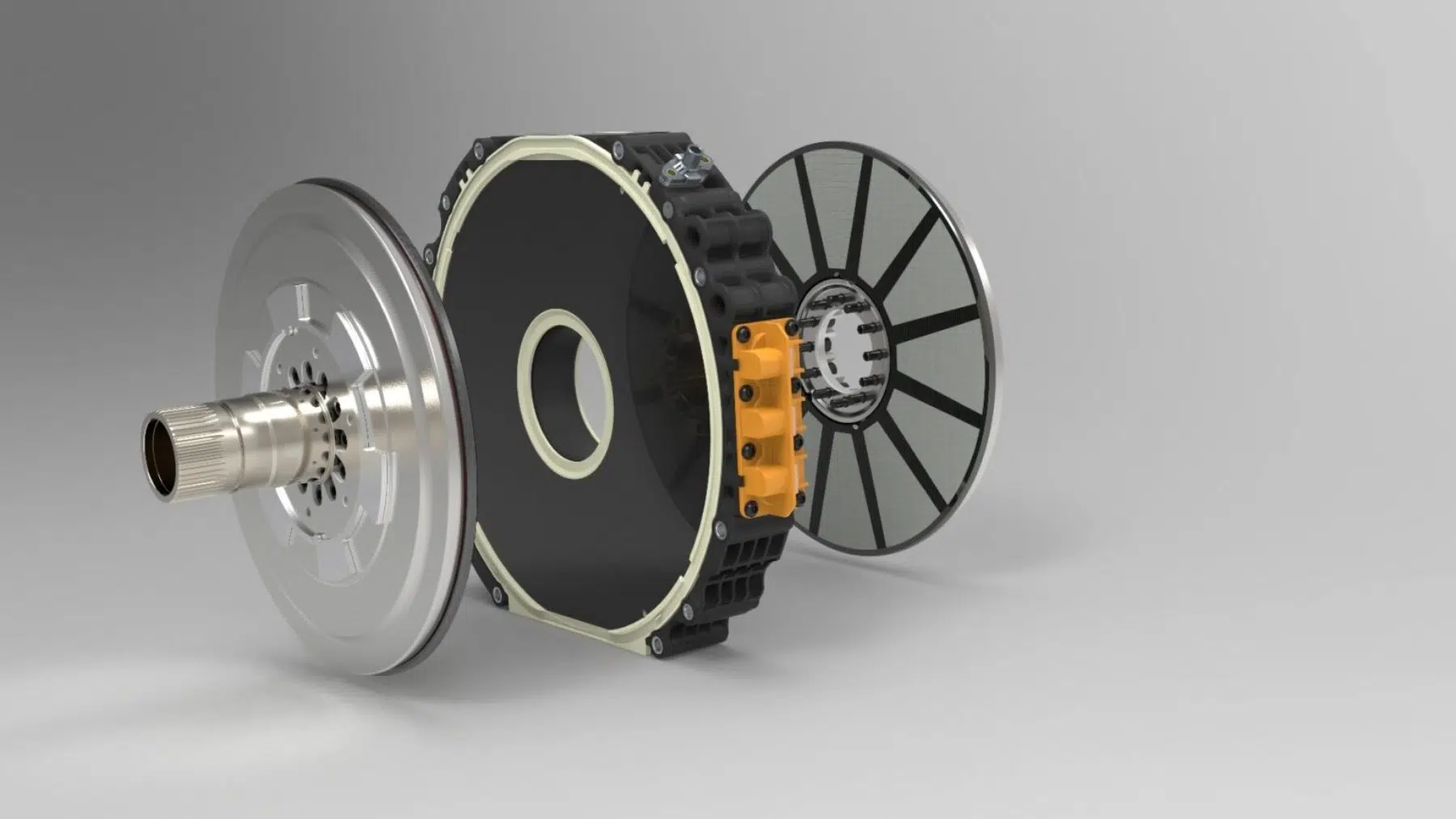
When it comes to being the pioneer and forefront of automotive engineering, Germany takes the trophy. Engineers have invented a ring-shaped motor, which is believed to be a threat to traditional electric powertrains. This new technology, called an axial flux motor, promises to revolutionise the electric vehicle (EV) market by producing motors that are lighter, more efficient, and more powerful.
In the race to introduce new and exciting electric vehicles, automakers are not only focusing on battery packs, but electric motors are also developing at a rapid pace. According to many industry experts, advancements in motor and power electronics will contribute as much to EV efficiency gains in the years to come as new and advanced battery packs.
Although hydrogen fuel cells were originally thought to be the clean transportation of the future, this innovative motor design may reduce the necessity for hydrogen-powered passenger vehicles. However, why is this ring-shaped motor so special, and why do experts think it has the potential to completely transform the automotive industry?
A ring of power: The operation of the Axial Flux Motor
According to Lammotor, the dual-rotor, single-stator design of YASA’s electric motor facilitates automated mass production and streamlines manufacturing. Between 2000 and 9000 rpm, these motors can reach a power density of 10 kW/kg. The new axial flux motor functions entirely differently from conventional electric motors, which depend on radial flux designs.
A flat, disc-like construction is used in the ring-shaped motor in place of large, cylindrical motors with hefty copper windings. More power in smaller packaging, less energy wasted in heat, ideal for performance-focused EVs, and a longer lifespan due to prevention of overheating are all made possible by this. It is nothing new; YASA, a British-founded company now operating as a subsidiary of Mercedes-Benz, has been manufacturing these motors.
Benefits of the dual rotor, single stator design
The magnetic field route is optimised in the Rotor-Stator construction, eliminating the requirement to go through the stator’s core. By eliminating the core, problems such as magnetic saturation in the stator are resolved and the magnetic circuit becomes more effective. This reduction in the stator size and weight results in a more compact motor.
Why hydrogen cars may be coming to an end
Hydrogen has always faced the same problems, and those are storage and infrastructure, which has led it to be very costly to manufacture and export if countries were to manufacture it. Therefore, if nothing changes, it is risking being overtaken. Another thing: compared to networks of EV charging stations, there are relatively few hydrogen refuelling stations.
Axial flux motors have made it possible for electric vehicles to operate more efficiently and effectively than ever before. Since EVs with ring-shaped motors will be more affordable, quicker, and easier to maintain, hydrogen-powered vehicles will have little chance of competing in the passenger car segment. According to some analysts, this development may signal the beginning of the end for passenger cars that run on hydrogen.
A ring-shaped motor: Is it a dominant future?
The latest advances in axial flux technology are changing the EV market, and numerous automakers are already making significant investments in axial flux technology. If these motors perform as promised, the market may be dominated by lighter, more potent electric automobiles, rendering hydrogen-powered passenger vehicles less relevant.
Although hydrogen might still be used in heavy-duty transportation and industrial settings, axial flux motors are the obvious choice for passenger cars due to their superior performance and efficiency. With this engineering at the forefront, transportation may become lighter, faster, and fully battery-powered in the future, displacing hydrogen in the passenger segment.
Electric motor advancements are crucial and may have a big effect on employment in the automotive industry. Compared to a combustion-powered car, an electric vehicle typically requires 30% less labour and has 50% fewer parts. Many automakers are aiming to create electric motors in-house to keep jobs. While Mercedes, Stellantis, and Volvo are also working towards in-house motor manufacturing, companies like Renault are already creating their motors.
Read the whole thing?
Get the week's signal, not the noise
Our sharpest reporting on energy, climate and nature — free, once a week.


