
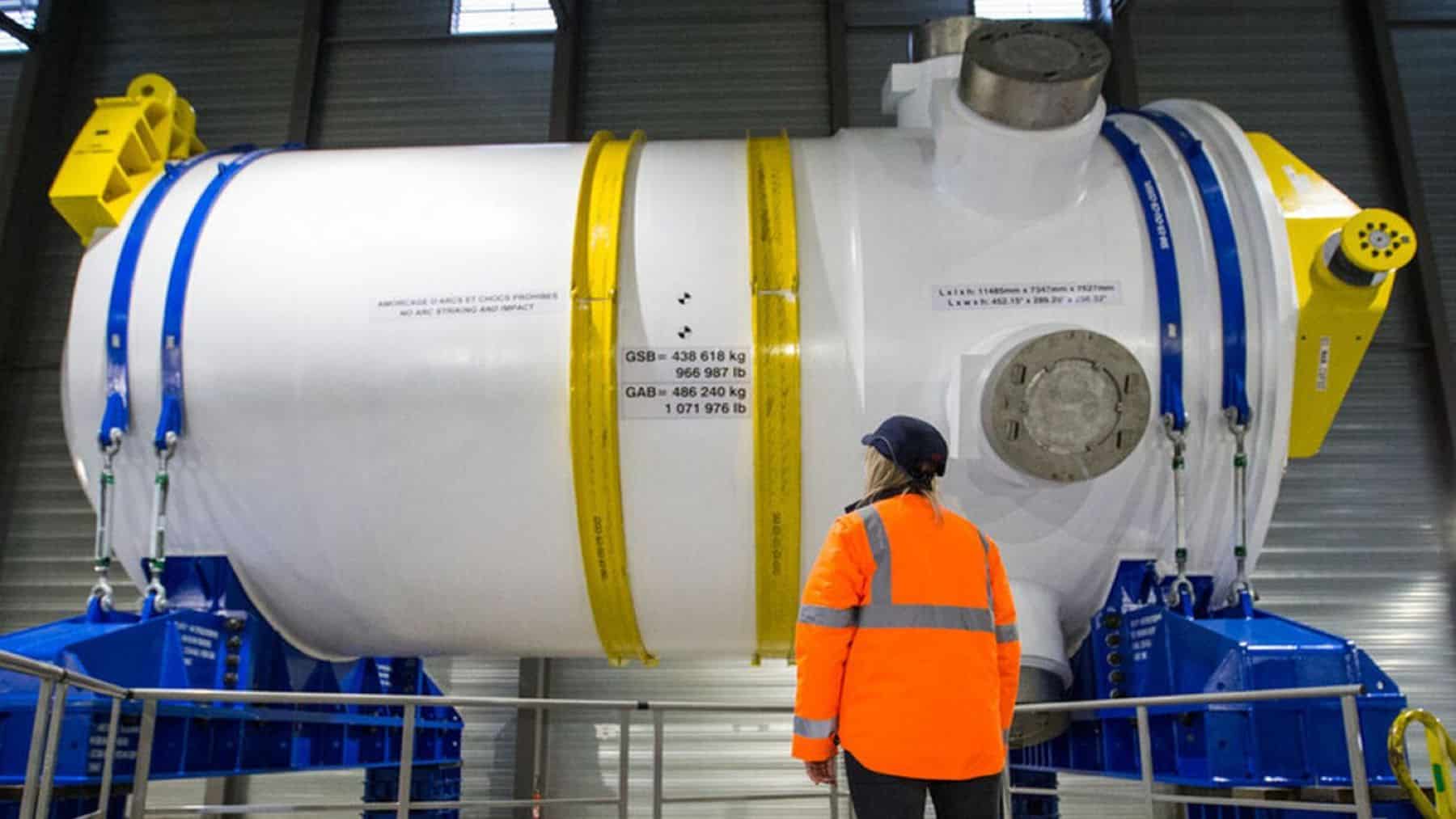
From a riverside heavy‑engineering site in eastern France, an enormous steel component has started its trip toward the Somerset coast—an industrial move with big implications for the UK’s power system in the 2030s.
The shipment is a reactor pressure vessel made for Unit 2 at Hinkley Point C, Britain’s first new nuclear plant in more than three decades and one of the country’s most politically contested energy projects.
The 500-ton component heading to somerset
French nuclear manufacturer Framatome completed the reactor pressure vessel for Hinkley Point C Unit 2 on 28 November 2025. The vessel was forged and machined at the company’s Saint-Marcel site near Chalon-sur-Saône.
According to the details published with the announcement, the vessel weighs about 500 tonnes and is roughly 13 metres long. It is designed for the EPR (European Pressurised Reactor), a third‑generation nuclear design planned for Hinkley Point C’s two units.
Why a reactor pressure vessel is so critical
In simple terms, the reactor pressure vessel is where the reactor core will sit. It must contain the fuel assemblies and control systems, while holding high‑pressure coolant water in extreme operating conditions.
The source notes that temperatures inside can exceed 300°C and pressures can top 150 bar. The metal is also expected to resist neutron bombardment for decades—up to 80 years—raising the stakes for quality control in forging, welding, machining and inspection.
How it travels: barge, sea crossing, then heavy-haul convoy
Moving a component this heavy is a logistics operation in itself. The vessel’s planned route involves multiple stages: it leaves the factory by river barge, then crosses the Channel by sea transport, before completing the final stretch via heavy-haul road convoy to the Hinkley Point C construction site on the Somerset coast.
Its arrival also follows another visible milestone at the site: the reactor dome for Unit 2 had already been installed shortly before the pressure vessel departed France.
Hinkley point C: a new nuclear build after decades of pause
Hinkley Point C is the UK’s first new nuclear power plant in more than 30 years. On-site construction began in 2018 and the project will ultimately include two EPR units.
Each unit is rated at 1,630 MW, making it more powerful than any currently operating British reactor, as highlighted in the source article. Together, the two units are expected to supply around 7% of the UK’s electricity demand.
Timelines and milestones mentioned so far
- Main construction works began: 2018
- Reactor dome installed on Unit 1: late 2023
- Reactor vessel 1 reached the UK: 2023; installed: December 2024
- Reactor vessel 2 completed in France: November 2025
- Planned commercial operation: Unit 1 in 2030; Unit 2 in 2031
Cost pressure, long lifetimes, and what EDF says comes next
The project’s price tag remains central to the debate. The article cites official estimates at £31–34 billion in 2015 money, higher than earlier expectations. EDF, which leads the project, has argued that the costs reflect “first-of-a-kind” challenges in the UK and the scope of the build.
Supporters also point to longevity: once operational, Hinkley Point C is expected to run for 60 years or more, with the possibility of extensions subject to regulatory approval.
The next giant parts: steam generators are also in the pipeline
The pressure vessel is only one major ingredient of an EPR. Framatome is also producing steam generators—towering components that transfer heat from the reactor’s primary circuit to a secondary loop that produces steam for the turbines.
Each steam generator is around 25 metres tall and weighs about 520 tonnes, according to the source. The first steam generator for Hinkley Point C arrived in Somerset in May 2024 and was installed in Unit 1 two months later. For Unit 2, two steam generators have already left the factory, with remaining deliveries scheduled by 2026 to match the installation plan.
Why the shipment matters for the UK’s energy strategy
Beyond the engineering, the delivery highlights a broader policy shift. With wind and solar supplying record shares of electricity but varying with weather, the UK is looking again at nuclear power as a low‑carbon source that can run consistently.
That strategy comes with trade-offs—long build times, heavy upfront capital costs, and politically sensitive issues such as waste and decommissioning. Still, the arrival of the Unit 2 pressure vessel underlines that the UK is committing to large-scale nuclear as part of its future power mix.
Summary
- Framatome completed Hinkley Point C Unit 2’s reactor pressure vessel on 28 November 2025.
- The vessel weighs about 500 tonnes and is roughly 13 metres long.
- Hinkley Point C will use EPR reactors rated at 1,630 MW per unit.
- Construction at Hinkley Point C began in 2018; commercial operation is planned for 2030 (Unit 1) and 2031 (Unit 2).
- Steam generators—about 25 metres tall and around 520 tonnes each—are also being delivered, with more shipments planned by 2026.


