
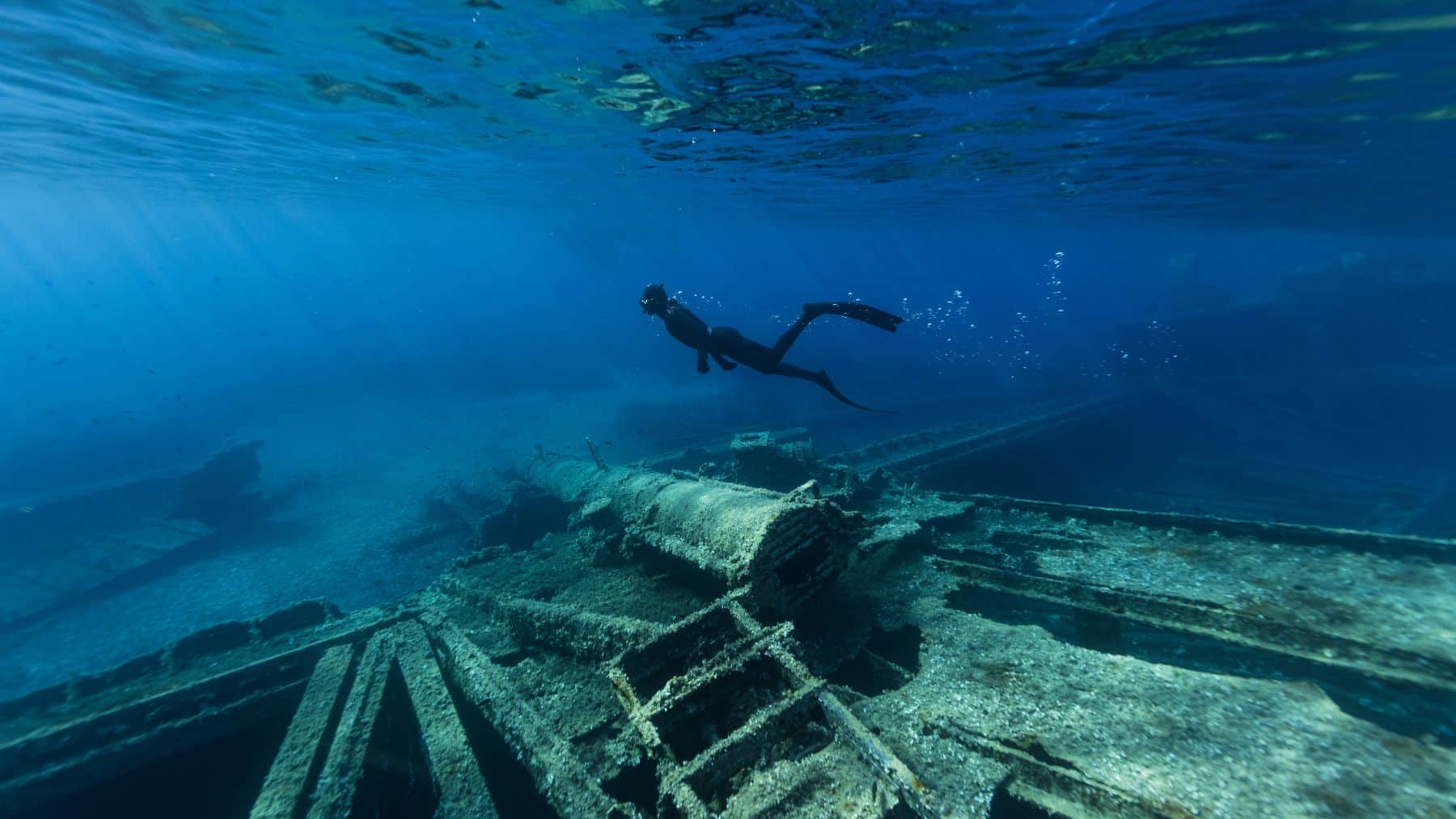
As drought alerts spread across regions at the start of 2026, one of the most intriguing water experiments isn’t happening on land at all. Off Norway’s west coast, engineers are preparing to place a working desalination system hundreds of meters below the surface—where the ocean’s own pressure can do much of the heavy lifting.
The idea comes from Flocean One, a project designed to operate far from crowded shorelines and traditional concrete-heavy plants. Instead of building larger facilities on the coast, the team is betting on a compact, modular approach: a sealed capsule that produces drinking water on the seafloor and sends it back to land through a pipeline.
How the “underwater plant” uses depth to reduce pumping
The Flocean One deployment is planned off Mongstad, Norway. The system is intended to operate at depths of 300 to 600 meters, where seawater pressure rises to levels that can help push water through reverse osmosis membranes—a core step in turning seawater into freshwater.
Conventional desalination plants typically rely on extremely large pumps to generate the high pressure required for reverse osmosis. Flocean’s approach aims to replace part of that energy-intensive work with the pressure already present in deep water. Engineers still need robust membranes and controlled internal conditions, but the subsea setting changes the economics of creating pressure from scratch.
Why deep seawater can mean less pre-treatment and less downtime
Beyond physics, the underwater location offers a second advantage: the water itself is often easier to process. At several hundred meters below the surface, sunlight is minimal, and biological activity tied to photosynthesis drops sharply. That typically means fewer algae-related issues and less organic material that can clog filters.
Surface intakes often struggle with fouling from plankton blooms, suspended particles and seasonal variability—factors that can drive up chemical use, maintenance time and operational interruptions. Flocean’s early engineering estimates indicate that using deep intake water could reduce pre-treatment equipment needs by up to 60%, while allowing longer periods between membrane cleanings.
A modular capsule designed to scale from one unit to dozens
Flocean describes its equipment as a self-contained unit that descends to depth, produces freshwater, and sends the output back to shore. One capsule is expected to deliver about 1,000 cubic meters of drinking water per day. The article notes this could cover domestic needs for roughly 37,500 people, depending on consumption and storage.
The larger promise is scalability. A single location could host multiple capsules, with total output reaching up to 50,000 cubic meters per day. For utilities and municipalities, that modular design could make it easier to add capacity over time instead of committing immediately to one massive coastal build.
The system is also presented as a way to reduce the visible and physical footprint of desalination along the shoreline. The article highlights that this approach avoids large above-ground buildings and reduces the need for extensive intake channels and settling basins on prime coastal land.
What the numbers suggest about energy, cost and land footprint
According to figures presented in the source, the subsea system is expected to reduce energy use compared with typical reverse-osmosis plants, with energy savings of 30–50% reported. The article also states that capital cost per cubic meter is reported as 7–8 times lower, while coastal land use could drop by about 95% due to the offshore, underwater design.
Brine management remains a major concern in desalination worldwide. In this concept, concentrated brine is released in deep water without added chemicals, shifting discharge away from shallow coastal zones where ecosystems can be more sensitive. The long-term environmental impact still depends on local currents and permitting assessments, but the discharge strategy differs from near-shore releases common in many plants.
Why desalination is back at the center of water planning
The resurgence of interest is tied to a widening gap between demand and supply. The article cites UN estimates suggesting that by 2030, global water demand could exceed available resources by about 40%. Population growth, agriculture, industrial needs and declining aquifers are all part of that pressure.
Desalination is already a major source of drinking water in some regions, but its expansion has often been constrained by three issues: high electricity demand, heavy upfront investment and concerns about brine discharge. By leaning on natural deep-sea pressure and potentially reducing pre-treatment complexity, Flocean One is positioned as an attempt to make desalination more feasible for places that have avoided it so far.
From a norwegian test site to global coastal demand
The project’s visibility has grown. The article notes that TIME listed Flocean’s capsule among its best inventions of 2025, and that water-technology company Xylem has taken a strategic stake. In Norway, the municipality of Alver plans to connect initial units to its network.
Future target regions mentioned include the Mediterranean, the Red Sea, the Indian Ocean rim, the Caribbean and Pacific island states—areas combining rising water stress with coastal access and limited space for large shoreline facilities.
Summary
- Location and depth: Flocean One is planned off Mongstad, Norway, operating at 300–600 meters below sea level.
- Core innovation: Deep-water pressure helps drive reverse osmosis, reducing reliance on massive high-pressure pumps.
- Cleaner intake water: Low light and reduced biological activity at depth can cut pre-treatment needs by up to 60% (per early data cited).
- Modular output: About 1,000 m³/day per capsule, scalable up to 50,000 m³/day across multiple units.
- Efficiency claims: Energy use estimated 30–50% lower, with major reductions in coastal land footprint and reported capital-cost advantages.
What comes next
The key question for the next few years is performance in real-world conditions: corrosion exposure, currents, long-term membrane behavior and the monitoring of deep brine dispersion. If the Norwegian deployment delivers stable output at the promised efficiency, underwater desalination could move from pilot concept to a practical option for countries looking for new freshwater sources without expanding industrial infrastructure along already crowded coasts.


