China is the global leader in the renewable energy sector. Now, the country plans on digging a little deeper, 6,000 ft below the surface, to be precise. China is set to construct a deep-sea research facility beneath the South China Sea, with the potential to revolutionize marine exploration and unlock key scientific discoveries. From scientific discoveries to industrial breakthroughs, China has been keeping busy.
China is digging a little deeper
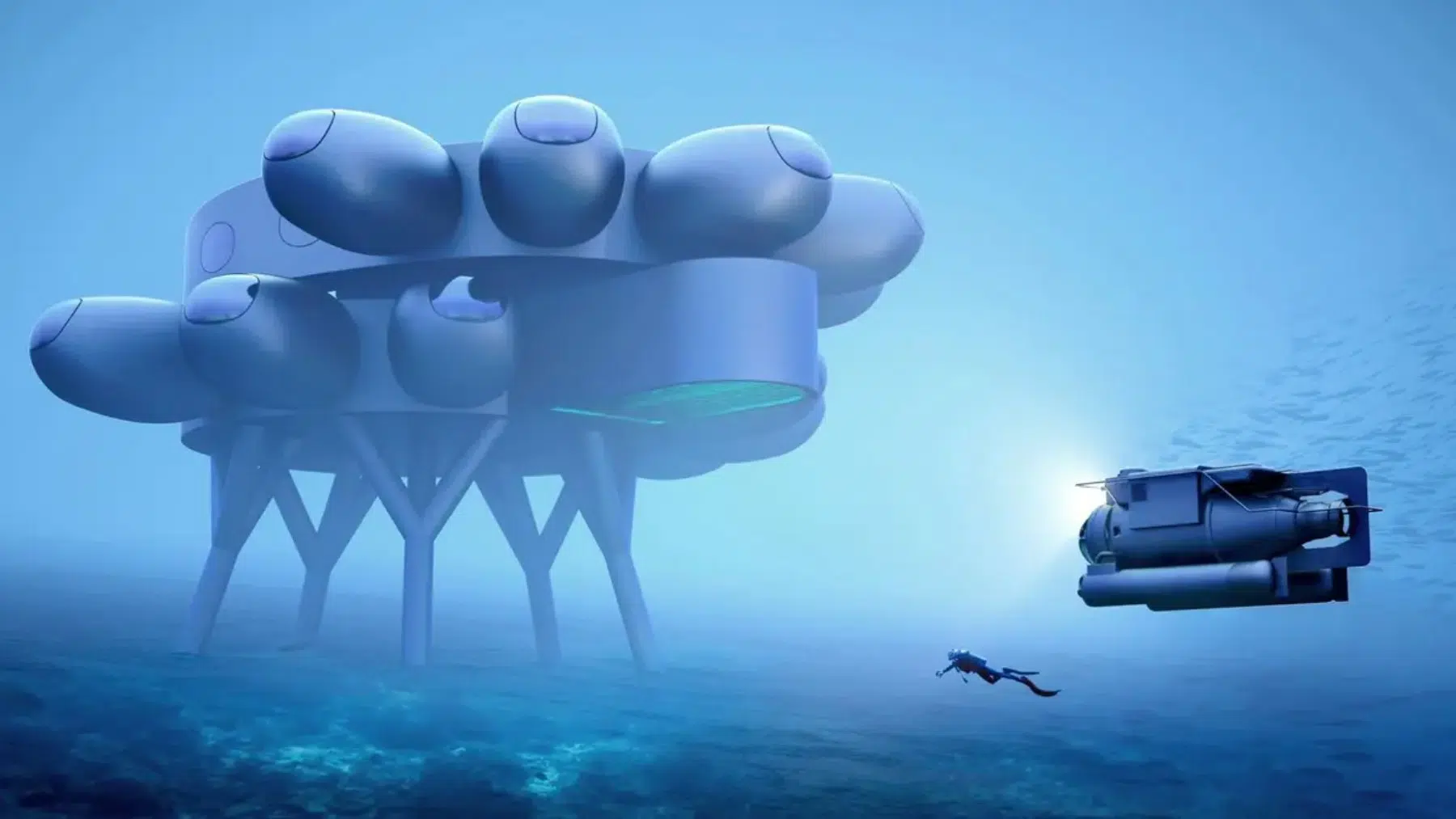
Ambitious and pioneering. Two terms to describe the Chinese as the word got out about their latest venture. China is digging a little deeper with hopes of investigating extreme marine areas and enhancing sustainable ocean resources. They will construct a deep-sea research facility over 6,000 feet below the surface of the South China Sea. The facility will reportedly have the potential to revolutionize marine exploration.
According to Oceanographic Magazine, the facility is called the Research Facility of Cold-seep Ecosystem and will be managed by the South China Sea Institute of Oceanology under the Chinese Academy of Sciences. Construction of the facility is set to kick off in 2025 and will be completed within five years. Once completed, it will reportedly be able to accommodate up to six scientists, which would utilize the facility for no more than one month at a time.
The facility will focus on three main research topics, i.e., the evolution of cold-seep ecosystems, the adaptation of organisms to extreme conditions, and the interaction of methane with marine environments. This research will advise climate policies and counsel eco-friendly deep-sea energy development.
A deep-sea research facility 6,000 ft below the surface
“Cold seeps hold keys to understanding Earth’s carbon cycle, life in extreme environments, and the safe extraction of resources like methane hydrates. This facility will position China at the forefront of deep-sea science and green ocean economy innovation.” – Li Chaolun, director of the South China Sea Institute of Oceanology and leader of the project
Constructing a 6,000 feet below the surface facility is one thing, but functioning in the facility is another story. The facility will comprise a state-of-the-art life support system to assist scientists for their one-month missions at that depth. Scientists will be able to observe methane levels, tectonic activity, and ecological changes with a permanent monitoring network. They will also partner with a network of submersibles, ships, and seabed observatories, establishing a ‘four-dimensional’ monitoring system.
Great ventures are not without criticism. Many believe the deep-sea facility, associated with the Greater Bay Area, to be controversial, as it will encompass vast regions of the South China Sea, bringing up long-running territorial contests.
Scientific discoveries could lead to industrial breakthroughs
The Greater Bay Area is high in sought-after resources, which, according to Li, in collaboration with the project, will establish China as a leader in global maritime and achieve zero carbon. Combining all of that with land-sea research capacity will ensure the Greater Bay Area becomes an innovation hub to address climate change and sustainable resource use.
According to the South China Morning Post, the area has vast methane hydrate reserves of approximately 70 billion tonnes. That is reportedly half of China’s present oil and gas reserves. Methane hydrate has great potential as an energy resource, not to mention the area’s other valuable mineral deposits, such as cobalt and nickel.
This deep-sea research facility, 6,000 feet below the surface, will establish China’s position as a mineral leader in the South China Sea, as well as maintain its position as a global renewable energy leader. While facilities such as this one are important to improve our understanding of marine life and ecosystems, careful management is necessary to prevent disturbing and destroying natural ecosystems.
Read the whole thing?
Get the week's signal, not the noise
Our sharpest reporting on energy, climate and nature — free, once a week.