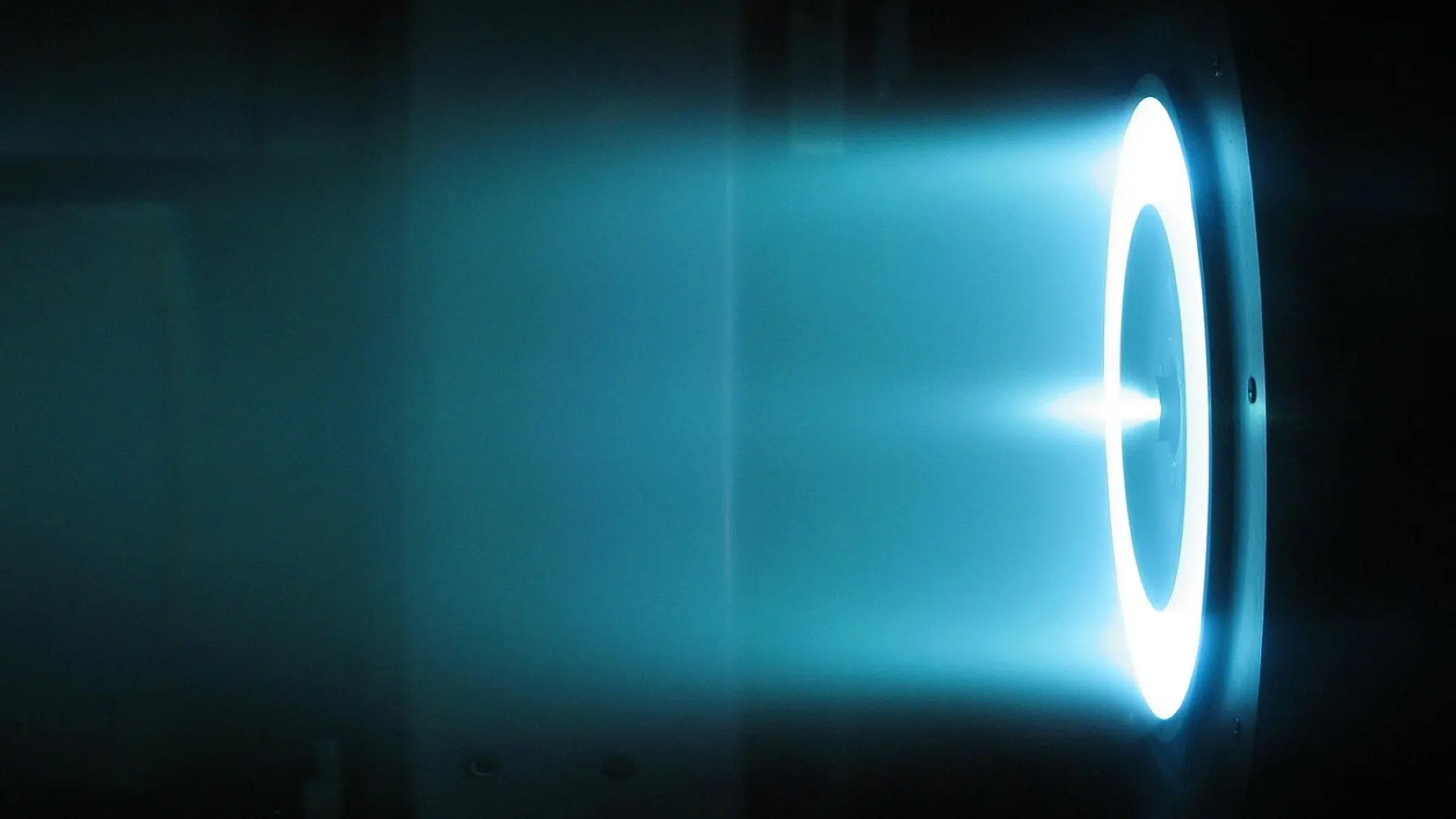
NASA has been working on different options of fuel for space exploration for decades, but none seem viable. For most astronauts, a trip to space wouldn’t be feasible for a while, depending on the distance. If there isn’t enough fuel, they would be stranded in space forever without fuel to return to Earth. This applies to other closer frontiers, like going back to the moon or finally landing on Mars – something the space agency has been working on for a while now, beyond just sending rovers to study the planet.
NASA has been working on a project that could change space exploration forever
The Red Planet is the only cosmic body in our solar system, beyond Earth, where humans would be able to travel and land on it. Unlike other planets, it remains a key target for future crewed missions. Rovers have been searching for biological life forms, any water pockets under the surface, and collecting rocks for a future retrieval mission led by NASA. Now, it might happen, but the correct propulsion system should be on point.
Enter the Pulsed Plasma Rocket, a propulsion system that’s currently under development by NASA along with Howe Industries. The project was supposed to be functioning in 2024, but faced regular problems in the test phase. After over a year, they have news: it’s now in phase II, and the updates are exciting.
Astronauts need a reliable source of fuel: nuclear energy is the answer
The Pulsed Plasma Rocket (PPR), being developed by Howe Industries, aims to revolutionize deep space travel. Its design promises far greater efficiency than current propulsion systems, potentially cutting the trip between Earth and Mars to just two months. The key is its high specific impulse (Isp), a measure of how effectively a rocket generates thrust, which could allow astronauts and cargo to move faster and more efficiently than with existing spacecraft, according to the agency.
The PPR builds on the Pulsed Fission Fusion concept, using a fission-based nuclear system to produce thrust. Compared with earlier designs, it is smaller, simpler, and less costly, while still capable of supporting heavier spacecraft. This extra capacity could allow for improved shielding, helping crews withstand the high-energy radiation of deep space, known as Galactic Cosmic Rays.
After over a year, the PPR is finally in phase II: here is what’s happening now
NASA officials describe the PPR as opening the door to a new era of space exploration. The project has moved into Phase II of the NASA Innovative Advanced Concepts (NIAC) program, following a Phase I study that focused on everything from reactor physics to spacecraft design, magnetic nozzle testing, and trajectory planning.
Phase II will refine the engine, run proof-of-concept tests, and design a spacecraft that better protects crews during Mars missions that are scheduled to happen before 2030. While only robots have reached the Red Planet so far, the PPR could bring humans closer to establishing a permanent presence there. However, one of the problems is that if they are coming back in the future, it’s one of the issues in the equation.
NASA didn’t send astronauts to Mars for a reason: they can’t come back
The space agency has sent multiple rovers to the Red Planet over the years, though none were meant to come back to Earth. The most recent rover to land on the Red Planet was Perseverance in 2021. Its job is to collect samples from the rocky soil for researchers to study in the future. However, they don’t know when a retrieval mission could happen. Currently, there isn’t enough fuel for astronauts to go and come back to Earth – one of the reasons the space agency and other countries are racing for a spot on the moon.
Our coverage of events affecting companies is purely informative and descriptive. Under no circumstances does it seek to promote an opinion or create a trend, nor can it be taken as investment advice or a recommendation of any kind.
Read the whole thing?
Get the week's signal, not the noise
Our sharpest reporting on energy, climate and nature — free, once a week.