If it is endless amounts of beaches and extremely unique wildlife you are looking for, then we recommend you look at the “Land Down Under,” better known as Australia, as around 87 percent of its mammals and at least 93 percent of its reptiles, amphibians, flowering plants and conifers cannot be found in any other place in the world. Yet, it offers even more, as it showcases a unique kinetic artwork with its Halo sculpture. The world of renewable energy technologies could change forever, as this kinetic work of art could inspire unique, innovative turbine designs in the future.
This is why traditional designs need to be reimagined
Renewable energy sources such as wind power are popular alternatives to burning fossil fuels for power production, especially considering the global effort to mitigate the effects of climate change. While wind turbine farms have significantly increased over the years, their applications in certain environments, such as urban settings, are still very limited.
According to the Green Vibe, traditional turbine designs face the following challenges in urban environments:
- Lower efficiency due to the turbulent and unreliable wind caused by buildings
- Vibration and noise pollution
- Visual pollution
- Limitations on installation space
- Potential harm to surrounding wildlife, such as birds and bats
Thankfully, Australia is home to a unique kinetic artwork design known as Halo. Should this design be utilized for purposes such as power production, it could revolutionize the entire renewable industry, or even inspire new innovative designs that could address all the challenges that are faced by traditional designs in urban environments, and elsewhere.
Australia’s Halo kinetic sculpture
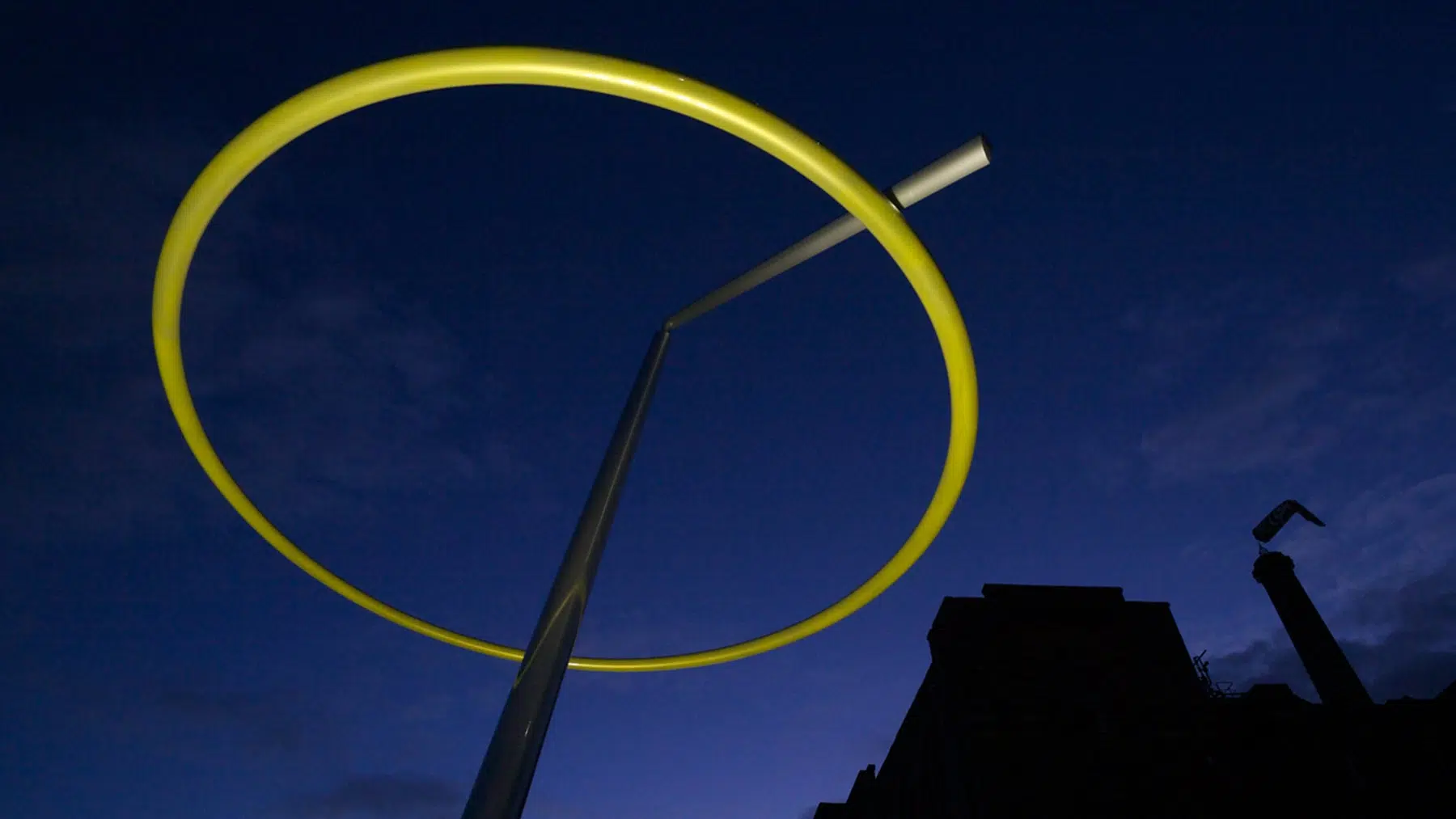
Something that is becoming more of a trend in urban environments is kinetic sculptures, which use natural sources such as wind energy to power their movements, changing kinetic energy into mechanical energy, as per Artists and Climate Change. An example of such a piece of artwork that effortlessly moves in gentle breezes and withstands high wind speeds is the Australian kinetic sculpture, Halo.
According to CPP, Halo can be seen in Sydney’s Central Park Urban Village Development. This unique design was created by Jennifer Turpin and Michaelie Crawford of Turpin and Crawford Studio and showcases the association with nature by acting on the wind’s kinetic energy. The kinetic sculpture is 13 meters high and leans at an angle. It has a 6-meter cantilevered arm pivoted by a 12-meter carbon fiber ring.
The Halo could inspire unique, innovative turbine designs
According to the UNFCCC, these sculptures are versatile in renewable energy for the following reasons:
- Serving as educational tools to inspire public interest and reflection on clean energy
- Serving as functional art to produce power from natural sources
- Enriching public spaces
- Fostering sustainability conversations
Kinetic artwork combines engineering and artistry and explores notions of nature, motion, and science. They change static forms into mesmerizing works that can be thought-provoking, relaxing, and captivating, which could be useful when it comes to pushing renewable energy designs and goals. Just imagine urban buildings powered by turbine designs inspired by the Halo.
These captivating, awe-inspiring kinetic pieces of art not only bring a unique blend of technology and nature to urban landscapes, but could also inspire pioneering turbine designs for areas where installation space is limited and visual pollution could urge resistance. An example of a combination of wind power with artistic designs to produce power is the Seaflute, which smashed all other wind turbine designs in America. These types of designs indicate that mankind is starting to prioritize aesthetics as well.
Read the whole thing?
Get the week's signal, not the noise
Our sharpest reporting on energy, climate and nature — free, once a week.