Europe’s been pursuing clean energy for ages. The continent has something new on the table now, and it isn’t just another wind farm or a new stretch of solar panels in Spain. This would be way bigger: imagine a belt of enormous solar power satellites circling the planet.
Europe to deploy a terawatt belt around Earth
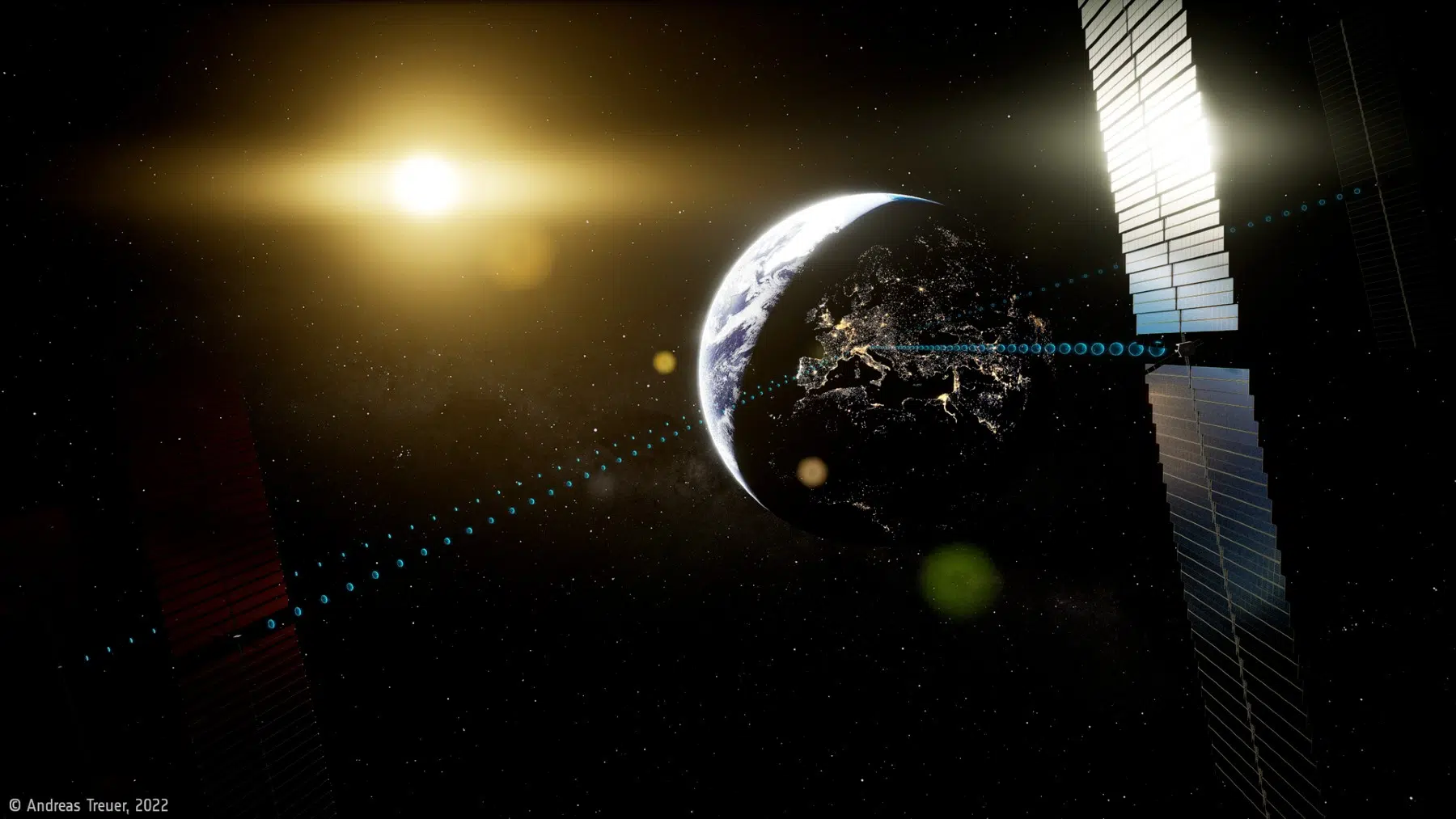
The plan is to have a ring in orbit, soaking up sunlight 24/7. This energy would then be beamed down as electricity. It may sound far-fetched, but the intention is real and growing. Airbus is among the commercial partners involved, trying to figure out if this bold plan can actually happen before 2050.
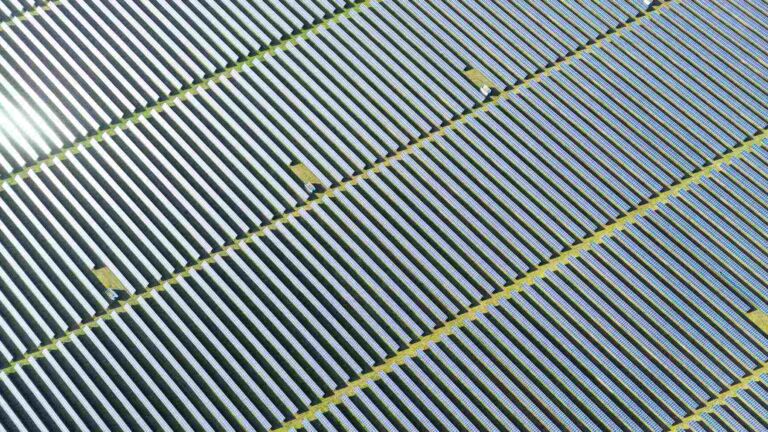
Europe’s terawatt satellites wouldn’t look like anything that’s been sent up before. They’d be massive and way bigger than anything we’ve launched. Europe’s terawatt belt would be covered in solar panels and sent up so high that night and clouds wouldn’t matter.
Europe’s terawatt belt would be the peak of solar energy
Sunlight would hit the solar panels on this belt all day: no breaks in supply; no winter drop-offs. If this belt performs as they hope, it could generate more power than a vast array of conventional plants.
The European Space Agency calls the project SOLARIS, and they’ve started pushing it hard lately.
The numbers this terawatt belt would yield are significant. A single satellite roughly a kilometer across could beam around 2 gigawatts down to Earth — roughly the same as a terrestrial nuclear power plant — and with hundreds or thousands of them in orbit, the scale would grow enormously.
How Europe’s terawatt belt would work
The idea would involve one giant satellite that could send around 2 gigawatts down to Earth. If they had hundreds, maybe thousands of them in orbit, suddenly the math starts working. Sunlight isn’t filtered by clouds or the atmosphere at the heights where these satellites would be stationed.
No rainy days and no land battles, just consistent solar energy all day. The world could stand to benefit a great deal from an idea like renewable energy delivered from space. It sounds elaborate, and hopefully it will be possible.
How would this terawatt belt send the energy back down to Earth?
This would be the tricky part of things. How would they get all that energy down without causing chaos? Europe plans to use microwave beams to shoot the power to giant receivers on the ground.
Europe’s plan might sound like something you’d see in a Sci-Fi film, but think of this beam more like a wide, gentle beam. Most of the basics have been tested in small experiments for years, but nothing close to this scale. In September 2022, Airbus demonstrated microwave power transmission over a distance of 36 meters, using it to light up a miniature city.
How Europe’s terawatt belt would change the energy game forever
Airbus research project leader Yoann Thueux noted that having successfully tested the key components of a space-based solar power system on a small scale, the next step is to take power beaming further. Figuring out what’s possible and what’s just science fiction remains the challenge. Engineers are deep in the process of establishing launch logistics, robotic assembly, and keeping satellites steady.
Everything is being looked at closely. This includes the intricacies of the power beams and how to dodge space junk. ESA is teaming up with the UK and other partners, while private investors and captains of industry are being approached.
The benefits of the terawatt belt would be endless
It is a bold idea, and it also makes the world of sense. Unlimited solar power from space changes the game. If the belt’s up and running by 2050, Europe could light up whole countries with these beams. Should Europe pull this off first, it’d reshape the energy game as we know it.
This would be a very big moment for the pursuit of clean energy. The grid would get steady power: no more juggling loads or blackouts every time a cloud rolls by. No more huge energy imports, no more coal plants waiting on standby. Only time will tell if all of this is feasible. A close eye will be kept on the progress being made, but it is a vision that would change things for Earth forever.
Read the whole thing?
Get the week's signal, not the noise
Our sharpest reporting on energy, climate and nature — free, once a week.