An unassuming field lay before a dimming Connecticut winter sky.
Heavy mud stuck to boots traveling over a thin layer of gravel on the narrow road.
The solar project still existed only in mounds of papers. It all seemed so clearly defined, mapped out, measured out, and determined.
And then the frogs showed up and completely changed everything.
Everything pointed toward an easy project
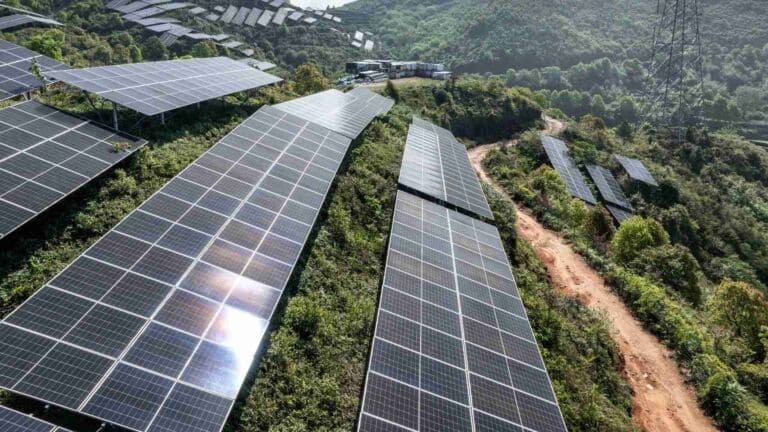
An area along East Street in Southington, with more than 100 acres of land, lay ready for use by developers.
Planners envisioned large sections covered with solar panels and the necessary equipment.
Everything suggested the project would move forward.
Nobody expected the problem to be underwater.
Visitors who stopped by would likely have passed these low-lying areas without a second thought. To passing drivers, they barely existed.
By midsummer, many would vanish completely.
Then the frogs started calling.
The sound carried across the entire property.
All of a sudden, it sounded like the earth was responding back. The noise was warning them about something underfoot.
The chorus of sounds told us about something that was underfoot
We just knew we were hearing it.
As soon as someone located the source of the calls, they headed towards some water hidden in the foliage.
Environmental surveys prepared for the Connecticut State review documented what was hidden inside those seasonal pools.
What they found would complicate everything.
Hundreds of frogs had already beaten the developers there.
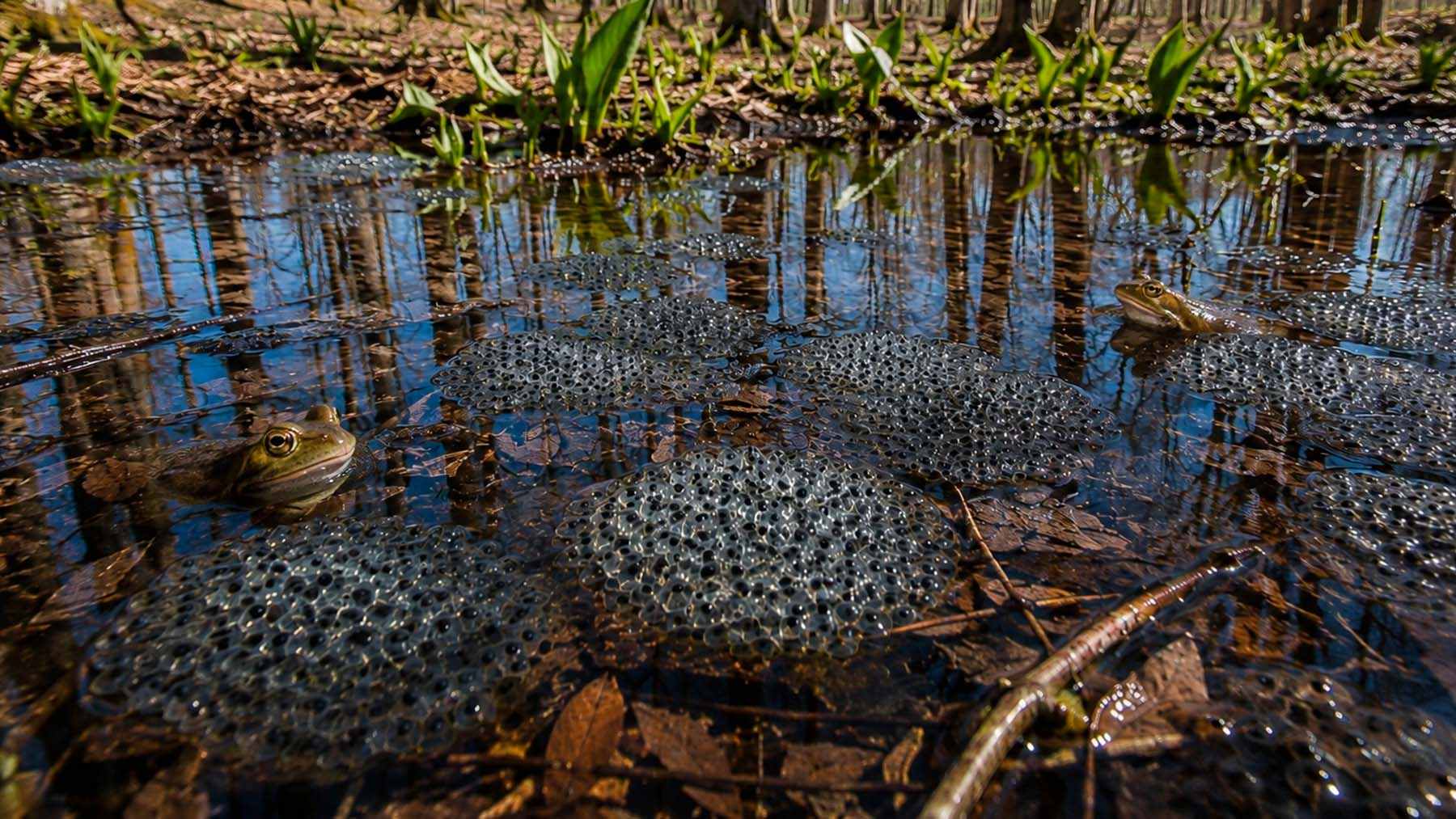
Right next to the edge of the pool sat an initial collection of frog eggs. Just minutes later, another collection was seen nearby.
Soon after, additional collections of this shape were visible throughout the property.
With every new addition, the idea of ignoring the property got harder.
Notes filled page after page with observations. By the end of the survey, researchers had documented 425 clusters of frog eggs.
That number turned temporary ponds into places nobody could ignore.
Water may evaporate without anyone noticing it is gone.
But hundreds of egg masses are impossible to miss. The developers were planning a solar farm. The frogs were already using it.
The frogs had already made their case
Frogs never went to any meeting regarding the property. Attorneys representing frogs never showed up during the discussion phase.
Frogs never signed any formal objections to the developer’s plans.
None of that mattered.
Another report from the Connecticut State explained how the documented breeding activity became part of the environmental review for the proposed project.
The evidence was floating in plain sight. That evidence ended up becoming part of the documentation used to evaluate the project.
Each cluster represented another successful reproductive effort. Together, the clusters told a much older story.
No one forced the frogs off the property that season.
On the contrary, their presence made it impossible for anyone else to ignore them.
The land remembered what happened
Sunlight continued falling across the landscape as usual. Large trees still framed the remote corners of the property from afar. Looking from afar, little seemed dramatically different.
Nothing on the property looked different.
But people saw it differently now.
Something else had been living there long before the plans arrived. What appeared to be empty land was supporting life year after year. The frogs exposed what had always been there.
Summer arrived, and gradually the water level decreased in each of those shallow pools.
Finally, the call ceased.
If late-season visitors visited the location, they probably wouldn’t see anything particularly unusual happening there.
By that point, however, the real story had long since disappeared.
The record remained. So did the count.
The discovery became part of the environmental assessment prepared for the proposed solar project.
The solar plans were new. The frogs were not.
And 425 clusters made sure nobody forgot it.
Read the whole thing?
Get the week's signal, not the noise
Our sharpest reporting on energy, climate and nature — free, once a week.