Solar panels are generally pictured on sunny roofs or in quiet fields.
An exposed mountain in winter seems quite the opposite.
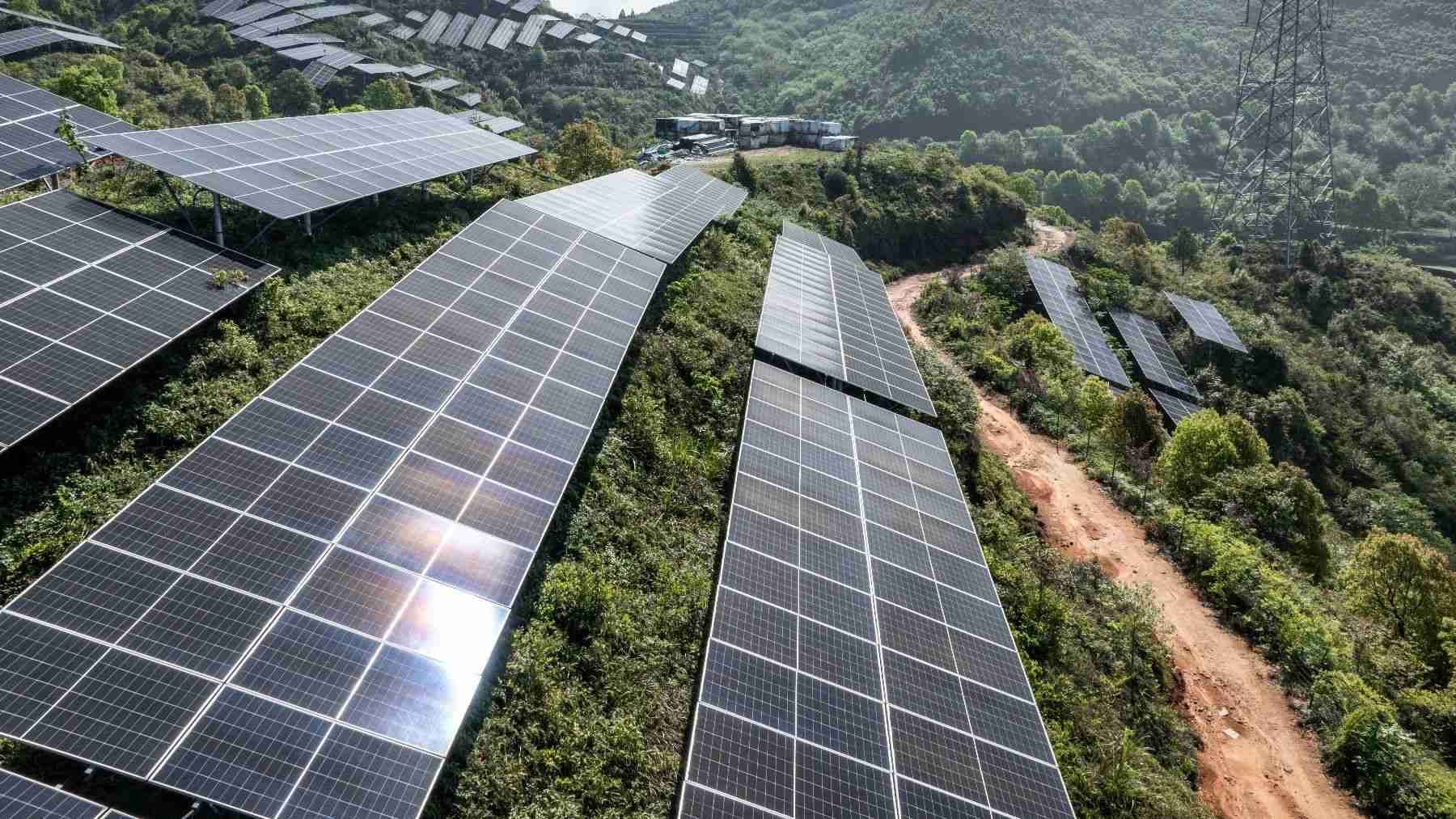
Yet above Innsbruck, in Austria, solar panels now stand at almost 2,000 metres on the Patscherkofel mountain, next to a cable car.
How do panels survive where the weather is so harsh?
A solar plant on a mountain above Innsbruck
Rising around 2,000 meters above Innsbruck, Austria, sits the iconic local mountain called Patscherkofel.
The mountain serves as a year-long outdoor playground, with skiing in winter and mountain biking in summer.
A cable car climbs the tall mountain, and cable car stations are dotted up the slopes.
But these are not only used for sports enthusiasts.
In September 2025, a photovoltaic plant was officially commissioned, using the cable car and its stations.
It is one of the largest projects of IKB Sonnenstrom GmbH.
The project has followed an intensive planning and construction phase that has resulted in the ability to supply the ski resort with sustainable solar power.
This is due to its 1,143 modules and a total output of around 500 kWp, according to Aerocompact and IKB.
An enormous feat at that altitude.
The highest station stands at 1,965 metres, around 6,450 feet.
At this height, strong winds, heavy snow and extreme temperatures are everyday features. The infrastructure has to be extremely tough to survive such conditions.
The solar plant on Patscherkofel is not one block of panels. It is made up of three separate stations with their own share of production.
Each station has its own specific setup to accommodate its unique weather.

Three solar stations along the mountain
According to Innsbrucker Kommunalbetriebe, the valley station has 207.9 kWp, the intermediate station has 204.68 kWp, and the mountain station has 90.05 kWp.
In this system, power goes where it is needed. So at the valley station, the aim is to supply a stable source of power for the lift operations and infrastructure.
Then, at the mountain station, the solar panels supply the restaurant and the infrastructure around it.
So, for skiers enjoying a hot chocolate at the top of the slopes, they are doing so in part because of this plant.
While the altitude means the development must be very tough, it also brings the benefit of more intense solar radiation, which helps production.
But this benefit has a price.
Every panel has to be able to stay anchored through big storms and under heavy snow.
How the panels stay in place in rough weather conditions
The key to this system is its mounting.
The installer of the development, Aerocompact, used its COMPACTFLAT SN 2 system at all three of these solar stations.
While the valley station needs only simple installation, those further up the slopes are more complex.
The middle station experiences storms and snow loads that could be a problem. But Aerocompact’s system there combines an aerodynamic design with ballast-optimized fixation.
This entails a weight that holds the system down. Here, it keeps the panels anchored without damaging the roofing.
At the mountain station, even more complexity is needed.
At almost 2,000 metres, the wind is very extreme, so the company built a special version of their system.
While their standard system fastens with two attachment points, this mountain version uses a stronger clamping system with three feet.
The extra foot gives crucial stabilization against the wind up there.
Aerocompact’s design hopes to show that sustainable energy is possible even in the most challenging terrain. But yearly reports are not out yet. These solar panels aim to cope with even the harshest weather, but evidence will be needed for long-term proof. If the mounts hold, other mountain stations may follow. Aerocompact argues that ski resorts can then cover their energy needs efficiently.
Read the whole thing?
Get the week's signal, not the noise
Our sharpest reporting on energy, climate and nature — free, once a week.