A wind farm off the coast of France was undergoing standard inspections when engineers picked up something not so standard.
The mooring lines were covered in marine life. This is expected when structures meet the seafloor. But it is the species that gathered around the deepest sections that raised a biological question.
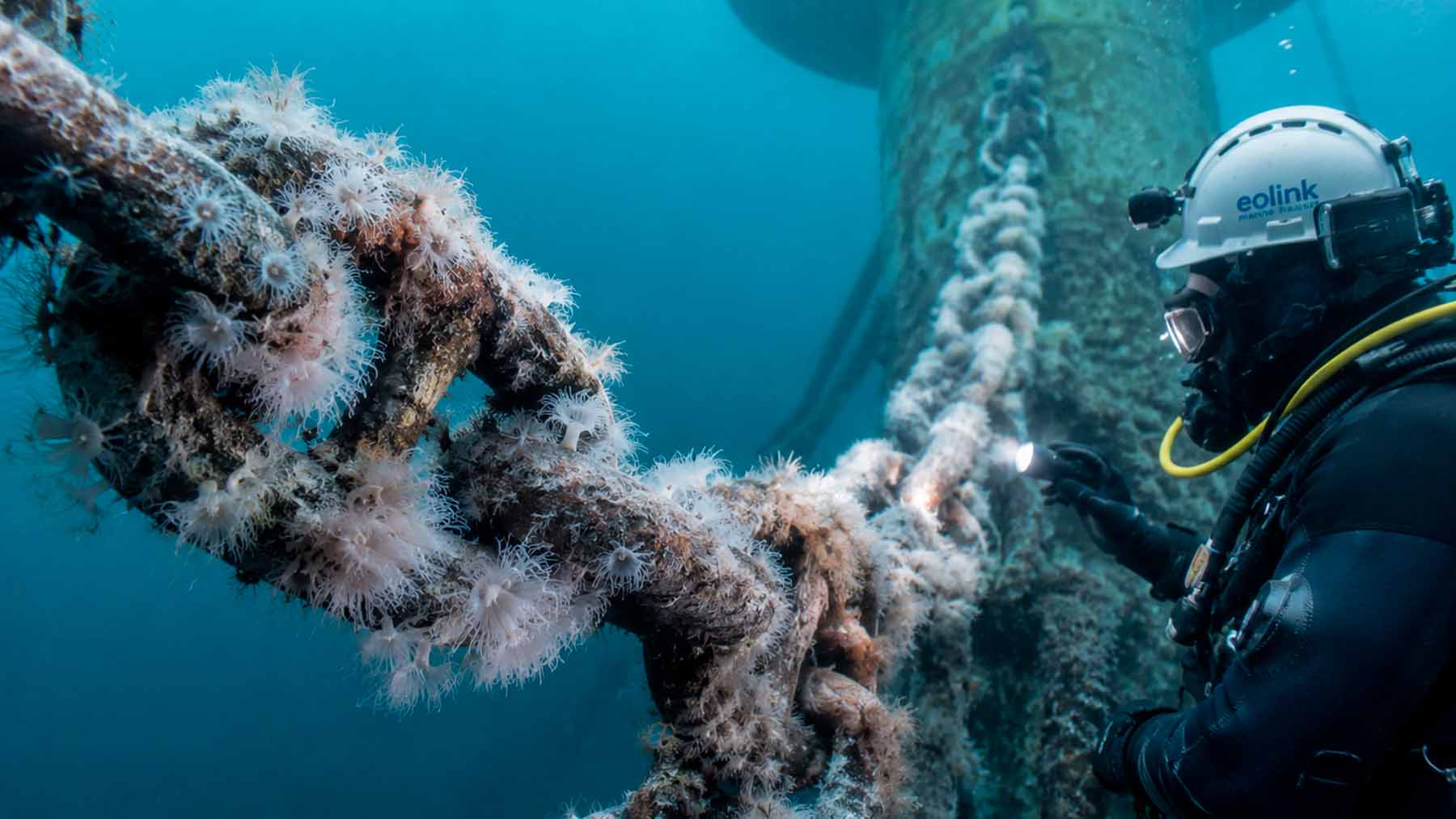
Under the normal hard-shelled species found at the top sections of the chains, dense colonies of feathery sea anemones had claimed the bases.
What was it about this infrastructure in particular that allowed the anemones to thrive?
How man-made ocean infrastructure facilitates vertical ecosystems
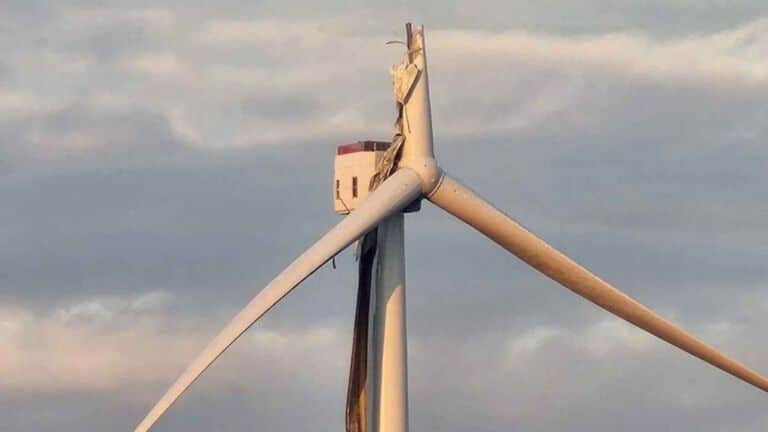
Floatgen is France’s first operational, grid-connected floating offshore wind turbine. The pioneering facility at the SEM-REV test site uses a Vestas V80 unit with a two-megawatt capacity, delivering electricity to around 5,000 residents onshore.
The floating platform sits 13.6 miles off the coast of Le Croisic and is anchored to the seabed 108 feet below the surface of the Atlantic Ocean with huge chains.
We know from decades of environmental monitoring that submerged energy plant components do not stay bare for long. A biological takeover starts occurring on the mooring lines almost as soon as they are installed.
There are distinct biological zones that form on the mooring chains based on depth, lights, and motion. Hard-shelled organisms like mussels and barnacles like the waters close to the surface, with wave action and lots of sunlight.
Further down, the pressure increases, light decreases, and instead of the choppy surface movements, the water settles into a steady flow.
The result is a single continuous cable with changing micro-environments the further down it goes.
The densest growth happened under the highest pressures and least light
Four years of monitoring picked up clear differences in how marine life occupied the infrastructure over time. The upper parts of the cables reached ecological saturation relatively quickly.
But the deepest sections saw a much slower, continuous expansion. While the upper parts of the mooring lines reached a point where no more organisms could fit, the growth on the lower sections kept increasing.
The entire physical profile of the lines changed. The lower sections are wrapped in thick layers of organic matter. The darkness and pressure of the depth do not prevent a species from thriving. It means, however, that only some organisms can thrive.
This is the unique setup that attracted the plumose anemone (Metridium senile).
An interaction between nature and infrastructure that benefits both
Plumose anemones have distinct feathery white appendages that wave around in the water as they are moved by slow ocean currents. The turbine chain base was the ideal environment for this species, with low light and steady currents.
Soft-bodied suspension feeders need to be anchored in places where there is no heavy wave action. Beyond depths of 90 feet, the anemones expand into dense colonies, catching nutrients as they drift above the sea floor.
The study “Spatio-temporal evolution and engineering implications of biofouling communities on floating wind turbines mooring lines,” published in Estuarine, Coastal and Shelf Science, explains the factors behind the cable colonization.
Anemone colonization brings advantages for engineers
This specific form of colonization has benefits for offshore wind engineers. Soft-bodied anemones form a layer that flexes against the currents, unlike the heavy, rigid layers of rough mussels and barnacles higher up the chains. The result is less hydrodynamic drag around the anemone colonies, which also means less mechanical stress on the infrastructure.
Developers need to understand how biological patterns depend on depth to predict structural loads and optimize maintenance schedules. This is growing more and more important as wind farms move further and further offshore into deeper waters.
Wind farms in other parts of the world are noticing different patterns of wildlife behavior to account for, such as the way seal behavior is changing. Long-term reliability depends on ecological interactions, and marine installations must adapt to survive in their ocean environment.
Read the whole thing?
Get the week's signal, not the noise
Our sharpest reporting on energy, climate and nature — free, once a week.