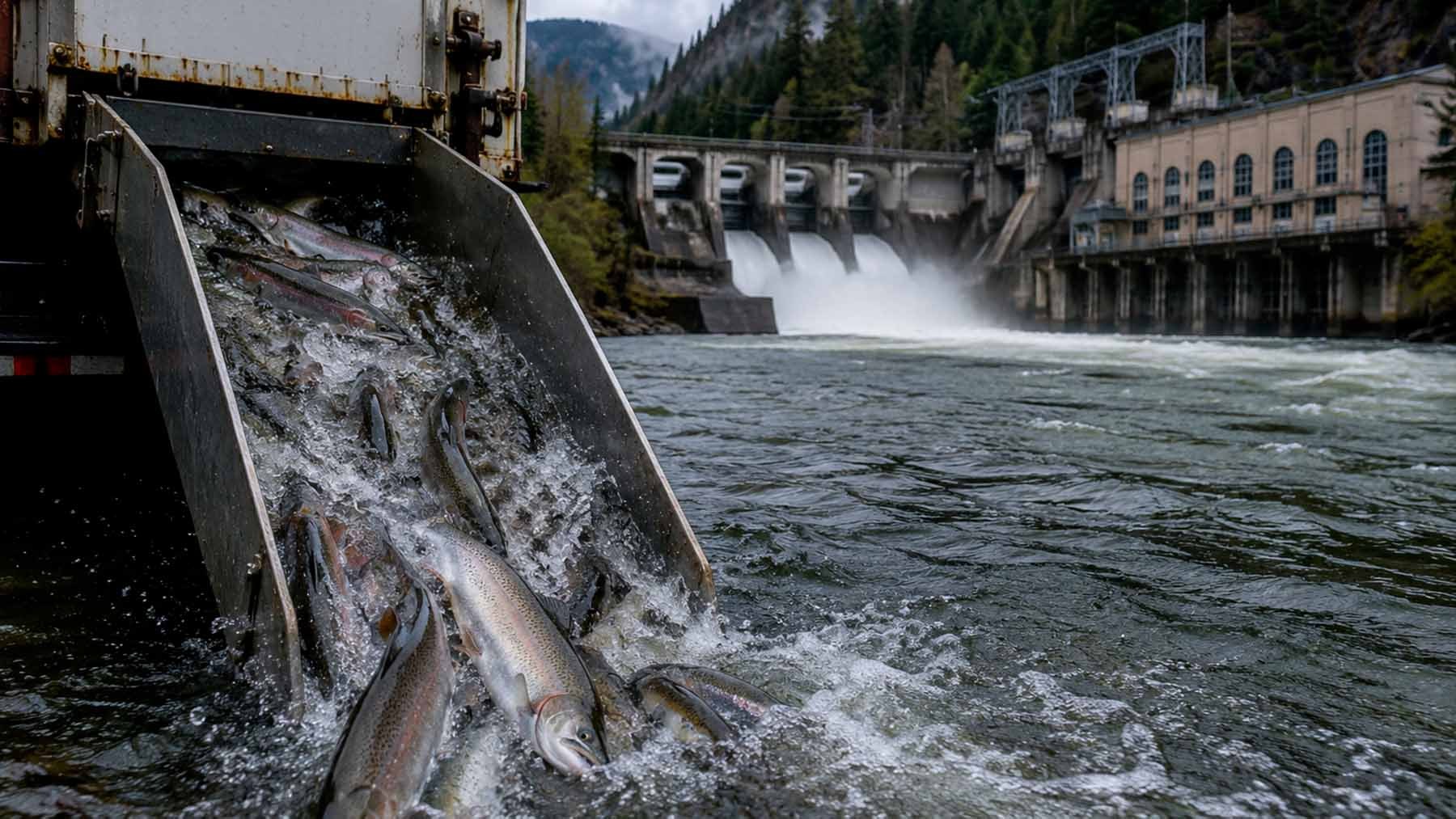
When a hydroelectric dam released 950 steelhead downstream, more than 600 returned.
They made it back to their natal stream after nearly two years in the ocean.
Wild steelhead were reintroduced into the upper Deschutes River with the first generation.
A group of conservation biologists, engineers, and stakeholders worked together to restore a historic migratory route.
Native steelhead had been cut off from this route by dam construction for more than 50 years. Their population decline was closely tied to blocked migration routes.
The six-hundred-mile mystery
Portland General Electric and the Confederated Tribes of Warm Springs initiated a restoration project in 2010. They identified barriers to the migration of ocean-going salmon.
They resolved these through years of negotiations involving tribal members and fishermen’s organizations.
To facilitate fish migration, restoration projects require establishing access points along the migratory route.
Engineers developed a water diversion system close to Lake Billy Chinook. Young steelhead migrate through this system.
They pass three major dams to enter the lower Deschutes River. This forms a 300-mile stretch leading directly to the ocean.
About 100 miles of their journey occur within the Deschutes River.
Another 200 miles follow until they reach Bonneville Dam.
A final 10 miles lead out to the ocean.
Once they arrive at the ocean, they become invisible.
Additional tracking stations follow parts of their marine distributions. These allow researchers to track broader ocean movements of the fish.
During their time spent in the Pacific Ocean for approximately two years, they encounter many predators. They face changing ocean conditions and other barriers to their migration.
Yet despite those challenges, some of these fish still find their way back to their home watershed.
The real story was not 950 fish
More than 950 adult steelhead migrated past Round Butte Dam when the season wrapped up. That total exceeded yearly targets built on historical data and predictive models.
Not only was it the highest return since the project began, it also marked a generational high point for the basin.
Portland General Electric helped support long-term restoration efforts that contributed to this historic steelhead return.
The numbers raised an obvious question about the fish themselves.
Tracking tags further verify successful homing behaviors among multiple sub-basins. Biologists map these return routes to measure the success of the reintroduction program.
Improved habitats and innovative technologies greatly increased juvenile steelhead survival rates.
Examples of such innovations include new fish guidance nets, stress-reducing ponds, and acclimation techniques.
The Deschutes River Conservancy has supported watershed restoration projects benefiting fish habitats throughout the basin. Spawning activity has been documented in several regions of the basin.
Meanwhile, the Oregon Department of Fish & Wildlife continues monitoring fish populations and habitat conditions across the watershed.
And a cycle restored
Native fish species exhibiting inherent behaviors can demonstrate those behaviors when they inhabit restored natural habitats.
According to scientists, positive ocean conditions helped the fish complete their migrations. Some attribute these migrations to collaboration among scientists, tribal leadership, and stewardship groups.
This record-breaking run exemplifies much more than merely survival.
It suggests that restoring ancestral travel corridors can allow ecological processes to resume across entire river systems.
How did they find their way home?
Scientific studies indicate that these anadromous fish utilize an innate olfactory memory. They also use geomagnetic orientation as an internal compass.
Together, these mechanisms help identify their exact historical migration routes back to freshwater streams.
Steelhead disappeared into the Pacific Ocean for nearly two years and still found their way home. Their return suggests that ancient behaviors can reappear when migration routes are restored.
Similar restoration projects are exploring whether other migratory fish can reclaim historic routes blocked for generations once more.
Read the whole thing?
Get the week's signal, not the noise
Our sharpest reporting on energy, climate and nature — free, once a week.